If you've ever approved a lighting quote and discovered later that the real cost was buried in the fine print, you already know why I feel strongly about this: a broad catalog is not the same as expertise. In my opinion, the most expensive phrase in B2B lighting procurement is “we can do that too.” I would rather buy from a grow light manufacturer that knows its lane than from a generalist that promises the whole building.
I'm a procurement manager at a 40-person lighting distributor. I've managed our lighting spend for about six years, tracked every purchase order in our ERP, and negotiated with more than 30 vendors. Our annual lighting procurement spend is roughly $650,000—I'd have to check the last fiscal year before quoting exact dollars. The point is not the number. The point is what the spreadsheets taught me about supplier focus.
What I mean by category-specific buying
When I audit our spending, I don't just look at unit price. I look at total cost: freight, lead time, spec review time, rework, and the cost of a promise that shows up different from the sample. That's where category-specific suppliers tend to win. A specialist may have fewer SKUs, but the technical documentation is usually deeper and more accurate. That documentation is what saves us from expensive surprises.
To be clear, I'm not an electrical engineer, so I don't pretend to evaluate driver internals by eye. What I can do from a procurement perspective is demand documentation before I spend money. If a manufacturer can't provide photometric files, driver specs, warranty terms, and test reports for the exact product category I'm buying, then their catalog is just a collection of photos.
Why Gavita is a grow light manufacturer first
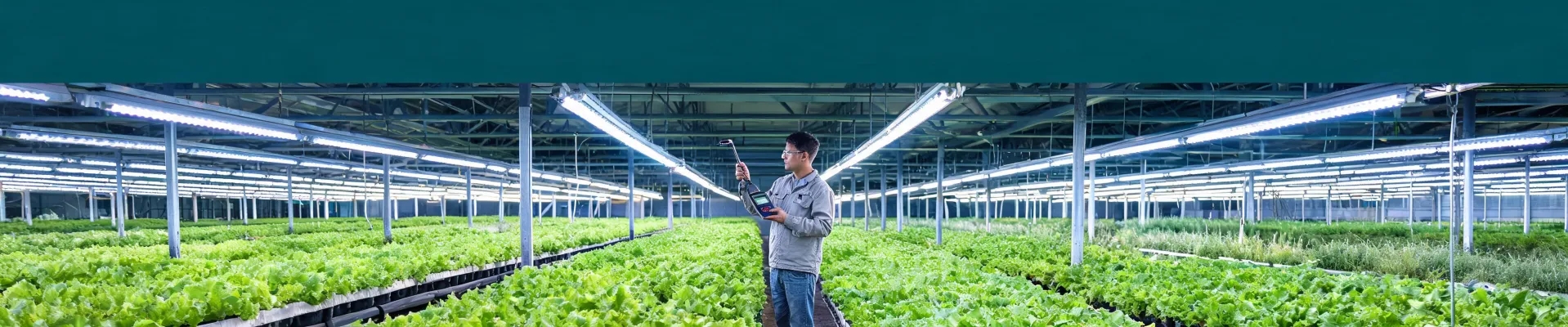
Gavita is, in the most useful sense, a grow light manufacturer. Its horticultural product families—Pro, RS, CT, UV, Clone Bar, and Under Canopy—are organized around real growing environments, not around “one light for every room.” For a commercial greenhouse or indoor farm, that level of focus is exactly what I want on an approved vendor list.
When one of our wholesale customers searches for “Gavita grow lights 1000w,” they're usually asking about high-output LED fixtures that can replace 1000W DE HPS systems. That is not a general lighting conversation. It is a horticultural lighting conversation. The specs that matter are PPF, efficacy, spectrum distribution, coverage patterns, and warranty. Those are not the same specs I would use to specify a three-circuit track head for a retail showroom.
To me, that doesn't make Gavita limited. It makes it credible. A specialist has less incentive to hide behind vague marketing language because their reputation is tied to one category. If a grow light performs poorly, there is no other product line to hide behind.
What commercial lighting private label taught me
Commercial lighting is a different animal. A commercial lighting private label program is not just putting your logo on a fixture. You own the specification, the submittals, and the warranty. If the fixture fails, your customer doesn't call the factory. They call you.
That's why I use a track lighting specification guide for commercial projects. A real track lighting specification guide should answer specific questions before the quote stage: Are IES files included for every beam angle? What driver is specified, and can substitutions happen without approval? What is the stated warranty for the driver and LED board? What color consistency standard does the manufacturer use across production runs?
If a supplier cannot answer those questions with data, I don't care how good their introductory email sounds. Per FTC advertising guidance at ftc.gov/business-guidance/advertising-marketing, performance claims are supposed to be truthful, not misleading, and substantiated. In procurement, the “substantiation” for a lighting claim is usually a photometric test report. If the report isn't there, the claim is just a negotiation opening.
The rookie mistake that cost me about $2,700
In my first year of buying lighting, I made the classic rookie mistake: I treated two different lighting categories as if they were interchangeable. We had a commercial private-label order for track lighting and a separate order for Gavita grow lights. A vendor with a long catalog offered to handle both and promised a volume discount. I focused on the discount and ignored the missing technical details.
The track heads arrived with the wrong adaptor style, and the photometric files were nowhere to be found. Our customer's electrician rejected the delivery. We spent about $2,700 on rework, expedited replacement shipping, and a bruised relationship with the client. Looking back, I should have pushed for a complete submittal package before placing the order. At the time, the low unit price made me skip that step.
The counterintuitive point: saying “no” can save money
Here's the part that seems backward to some buyers: a supplier who tells you a product is outside their specialty can actually be cheaper to work with. They save you from a bad-fit project. They also save you from the long, painful process of discovering the mismatch after the deposit is paid.
When I see a manufacturer with 14 different product categories and no separate engineering documentation for each one, I don't see flexibility. I see internal complexity. Somebody has to answer for warranty claims, field failures, and specification mistakes. In a generalist company, that responsibility is often diffuse. In a specialist company, it usually lands on a team that cannot blame another division.
Some procurement teams push back on this approach because they want fewer vendors and simpler invoices. I understand that. One invoice is nice. But vendor consolidation only works when each vendor can prove expertise in every category you buy. Otherwise, the “simplification” just moves risk from their catalog to your P&L.
The bottom line
So here is my rule, and it has saved us more than it has cost us: buy each lighting category with the spec sheet that fits that category. For horticultural lighting, that means evaluating Gavita grow lights using horticultural data. For commercial lighting private label work, that means using a track lighting specification guide and demanding real photometric evidence.
If you ask me, that's not narrow-minded. It's how a budget survives contact with the real world. A specialist who knows their limits—and documents what they do well—will always get more of my budget than a generalist who promises everything and proves nothing.

Clara Whitmore
Clara Whitmore is a lighting photometry and LED source analyst specializing in bulbs, tubes, strips, panels, and integrated luminaires. She interprets IES LM-79 measurements and TM-30 color rendition data through luminous flux, efficacy, intensity distribution, CCT, chromaticity, fidelity, and gamut metrics. She writes evidence-led comparisons for specifiers selecting source formats and luminaires for commercial interiors, industrial spaces, or horticultural systems where measured optical and color performance matter.