In March 2023, I approved a $14,600 track lighting wholesale order that looked perfect on paper. Eight weeks later, I was standing in a warehouse looking at 340 fixtures that could not be installed in the building they were purchased for.
This is the story of that mistake. And it's also the reason I now keep a four-page pre-order checklist that has caught 47 potential errors in the past 18 months.
How I Got Into Commercial Lighting Sourcing
I'm not a lighting designer. I never claimed to be one. My background is operations and procurement — I've been handling B2B lighting and electrical component orders for about six years now, first for a regional distributor, then for a commercial fit-out contractor.
When I first started sourcing recessed lighting and track fixtures, I assumed the lowest quote was the smartest choice. That's how most people buy things, right? You compare unit prices, check the specs, and go with the number that makes your purchasing manager happy.
Turns out, unit price is maybe 40% of the actual decision.
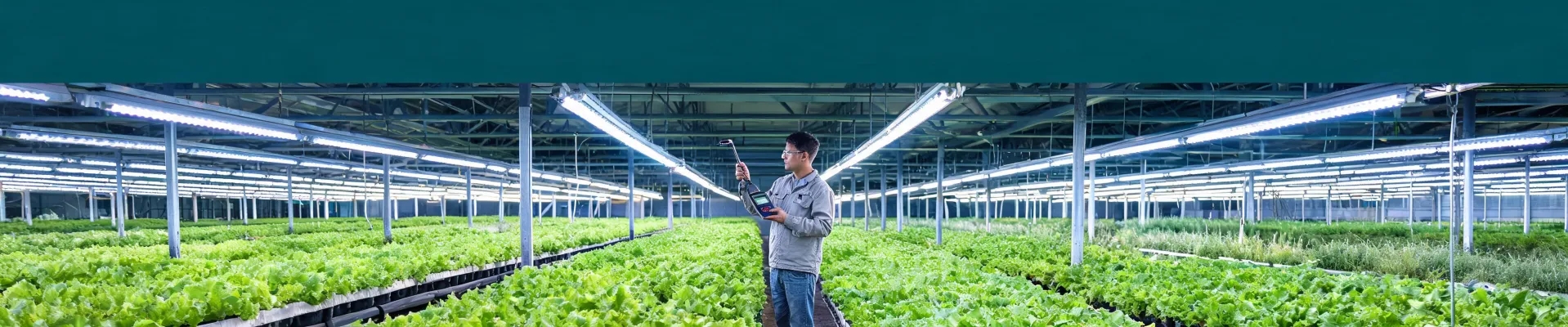
This order started in a pretty normal way. One of our clients — a retail chain opening a new location — wanted a modern track lighting setup for their main sales floor. They also needed some recessed downlights for the back-of-house areas. And somewhere in that same week, the owner of a cannabis cultivation facility called us about LED grow lights. He specifically asked for Gavita grow lights, the 1000w equivalent category. That part, honestly, was the easiest to handle.
The Part I Thought I Understood: Gavita Grow Lights 1000w
I'll get to the track lighting disaster in a moment, but let me talk about the Gavita part first because it's a useful contrast.
The cultivation client wanted to replace some older fixtures. He asked for “Gavita grow lights 1000w.” Now, here's where a lot of people trip up: “1000w” in the commercial horticultural lighting world doesn't always mean the fixture draws exactly 1000 watts. It's often a comparison to the output of a legacy 1000W HPS lamp.
I knew enough to ask the right questions. Gavita's Pro series, for example, includes models like the Pro 1700E, which replaces a 1000W HPS but draws less power. We ended up recommending the Gavita Pro 2400E for the main canopy area because the client's ceiling height and coverage requirements were a match. The specs were clear. The compliance docs were easy to pull. Shipping was straightforward.
That part of the order went fine because I asked questions instead of assuming the SKU was the spec.
I did not apply that same logic to the track lighting order.
The Track Lighting Wholesale Cost Trap
Here's the mistake that cost me $2,800 and a very uncomfortable conversation with my boss.
We sourced track lighting from a supplier based on a per-unit price that was about 18% lower than our usual vendor. The fixtures looked right in the product photos. The specs claimed the right wattage and color temperature. I compared the quote line by line and it all matched our request.
What I didn't catch was the track compatibility.
Track lighting isn't just one standard. There are different track systems — some are 2-circuit, some are 3-circuit, some are line voltage, some are low voltage. And even among fixtures that look similar, the mounting adapters can be completely different depending on the manufacturer. Our usual supplier used a system that was compatible with most standard J-type track. This new, cheaper supplier? They used a proprietary adapter system designed only for their own track.
I didn't catch it. Nobody on my team caught it. The fixtures arrived, we sent them to the installation crew, and the first call came about an hour later.
“These won't lock into the track.”
The electrician on site was nice about it. He sent photos. Sure enough, the mounting bracket was shaped differently. It physically could not engage with the track channels that were already installed in the ceiling. The track had been installed two weeks earlier by another subcontractor, following the spec we provided. We were past the point of changing the track.
The whole order — 340 pieces, track heads plus recessed downlights — was unusable for that project. The supplier did offer to take them back, but only with a 20% restocking fee and we covered the return shipping. That was the $2,800: restocking fee plus freight, not counting the labor hours wasted.
To be fair, the supplier's website did list the compatibility spec. It was in the product manual PDF, which I didn't download. It was also, as I later learned, prominently noted on their wholesale ordering portal. I just didn't look. I saw the price, saw the basic specs, and approved.
Why This Matters for Downlight and Recessed Lighting Sourcing
Now, I don't want you to walk away thinking this is just a track lighting problem. The same issue happens with recessed lighting, though in a slightly different form.
Recessed lighting sourcing usually goes wrong in three areas:
- Housing size and ceiling depth: a 4-inch recessed housing needs different clearance than a 6-inch. If you're retrofitting into an existing ceiling, you need to measure before you order. I've seen perfectly good downlights end up in the trash because the ceiling plenum was 2 inches too shallow. (That was a 2022 mistake. $890 cost, one-week delay, and a very firm policy change.)
- IC rating vs. non-IC: if a recessed fixture will be in contact with insulation, it needs an IC-rated housing. This isn't an optional upgrade. Building inspectors check this. In October 2022, I had an order rejected on site because the contractor installed non-IC housings in an insulated ceiling. Every single one had to come out.
- Trim compatibility: the housing is one system, the trim is another. Different manufacturers use different retention mechanisms. If you order housings from one supplier and trims from another, you're taking a gamble. I've learned to always ask for a compatibility matrix before mixing brands.
For what it's worth, these lessons apply beyond just the fixture itself. A lot of what I do now involves checking whether the whole system — housing, trim, track, adapter, driver, control gear — works together. This is one of those areas where buying a complete system from a single manufacturer is often the safer path, even if it costs a little more.
The Gavita Side Lesson: Brand Matters, But Only If It's the Right Product
Let me get back to the Gavita customer for a second, because there's a relevant contrast.
When someone comes to me and says “I want Gavita grow lights 1000w,” I don't just type that into a search and order whatever comes up. The Gavita Pro 1700E, Pro 1900E, and Pro 2400E are all different fixtures with different coverage areas and power draws. If a customer has a 10-foot ceiling in a basement grow tent versus an 18-foot ceiling in a commercial greenhouse, the right product is completely different.
Gavita does a good job publishing specifications, distribution maps, and compliance documentation. That's actually one of the reasons we like working with them for commercial horticulture customers. But having good docs doesn't help if the order is spec'd wrong. I've seen a customer buy a fixture that was too powerful for their space because they assumed a bigger number meant better coverage. (Surprise, surprise — too much intensity can be just as problematic as too little.)
I'm not a horticulture scientist, so I can't speak to PPFD maps and DLI targets in detail. What I can tell you from a procurement perspective is this: if a grow light customer can't tell you their ceiling height, mounting distance, and approximate canopy area, you're not ready to order yet.
What I Do Differently Now
After the March 2023 incident, I rewrote our ordering workflow. It's not a dramatic system — it's a checklist — but it works.
Before I place any track lighting wholesale order, I now verify four things:
- Track system type and manufacturer. If the track is already installed, I ask for a photo of the track channel and the fixture adapter. Not just the brand name. Photos. In April 2023, this caught a mismatch that would have been another $1,400 mistake.
- Housing depth and ceiling clearance. For recessed lighting, the relevant measurement isn't just the ceiling cut-out diameter. It's the depth of the space above the ceiling. This is the one I'd have gotten wrong in 2022 if the building inspector hadn't caught it.
- Driver and control compatibility. Is the fixture compatible with the dimmer system the client already has? Are we using 0-10V, DALI, or line-voltage dimming? Mixing these up is a quiet source of expensive callbacks.
- Return policy in writing. It's not a fun conversation, but I ask about restocking fees and return freight before I place the order. Not after.
For horticultural lighting orders, I add one more check:
Is this the right product for the growing space, not just the brand the customer asked for? When someone requests Gavita grow lights by name, we take that seriously. But we also confirm the intended application. Gavita's own buying guide is actually a decent reference point for this — it breaks down which fixtures suit different coverage areas and mounting heights. (As of March 2026, the Pro series, CT series, and Clone Bar products each serve pretty distinct use cases.)
Hard Truths I Don't Put in Sales Briefs
Here's where I'll be honest in a way that probably breaks some marketing rules:
There is no one best lighting supplier. There is no one best fixture. And the cheapest quote is rarely the cheapest order.
Online wholesale lighting vendors vary in their strengths:
- Some compete on price, and their turnaround times are longer.
- Some compete on speed, and you'll pay a premium that is absolutely worth it for deadline work.
- Some specialize in specific product categories, and their support for those products is better than generalists.
Evaluate suppliers based on what you actually need. If a vendor can't answer a basic compatibility or compliance question in under two business days, that's a warning sign, no matter how good their prices are. If they don't publish specs or compliance documentation, that's another warning sign. Legitimate lighting brands — Gavita included, but this goes for any reputable manufacturer — make their technical documentation easy to find because it reduces their own support load.
I recommend Gavita for commercial horticulture customers when the specs match the application. But if someone has a small home grow with a 4-foot ceiling, I'd probably point them toward something more appropriate. Recommending the most expensive, powerful fixture in that situation would be a disservice. It's about fit.
The same goes for online printing, hotel wholesale, or any B2B purchasing decision, honestly. The only universal rule is that there are no universal rules.
Final Thoughts
I've made a lot of mistakes in lighting procurement. The track lighting incident in March 2023 was the most expensive one that I caused directly through a paperwork short-circuit. The restocking fee hurt, but the real cost was time — six weeks of delay on a retail buildout that had already been pushed twice.
So here's my advice, from one buyer to another:
Slow down. Read the manual. Download the PDF. Ask for the compatibility chart. Verify the ceiling height before you order the 1000w fixture.
The $2,800 I wasted on that track lighting order taught me a much cheaper lesson than some people get. Now the rule is simple: If it's not in writing, it's not spec. If it's not verified, it's not sourced. And if it doesn't fit the track, it doesn't go in the building.

Clara Whitmore
Clara Whitmore is a lighting photometry and LED source analyst specializing in bulbs, tubes, strips, panels, and integrated luminaires. She interprets IES LM-79 measurements and TM-30 color rendition data through luminous flux, efficacy, intensity distribution, CCT, chromaticity, fidelity, and gamut metrics. She writes evidence-led comparisons for specifiers selecting source formats and luminaires for commercial interiors, industrial spaces, or horticultural systems where measured optical and color performance matter.