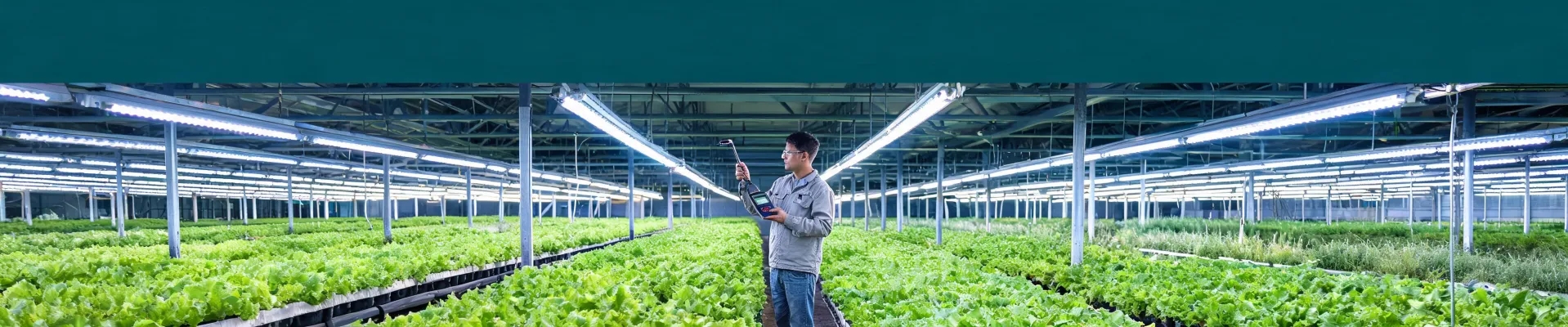
I've been handling lighting orders — grow lights, recessed cans, track fixtures, wholesale greenhouse builds — for about nine years. I've made enough expensive mistakes to fill a binder, and I've turned most of them into a pre-order checklist. Here are the questions I get from new B2B buyers, and the answers I wish somebody had handed me back in 2017.
1. What actually matters on a recessed lighting spec sheet?
Not the marketing line. Ignore "premium quality" and "long lifespan." What matters: lumens per watt (lm/W), beam angle, CCT (2700K / 3000K / 4000K — pick one, don't let a supplier average it), CRI (80+ for commercial, 90+ for retail where color matters), trim and aperture compatibility, and the listing mark. If it isn't UL or ETL listed, you're gambling with an inspector's signature. I learned that in March 2022 — we shipped 220 recessed cans to a Texas project without verifying the ETL listing, and the AHJ flagged 60 of them. That mistake cost $890 in expedited replacements and pushed install back a week. A spec sheet without a listing number is basically a suggestion.
2. How do I know a "wholesale supplier" is actually the manufacturer?
Ask three questions: Can I see the LM-79 test report? What's the factory address? Who do I talk to about a private-label run? A true manufacturer answers all three in a day. A repackager stalls. I used to think every "factory-direct" quote was really factory-direct. It's not. Roughly half of the suppliers I've audited since 2020 were buying from someone else and adding a margin. Not a deal-breaker by itself — sometimes the middleman is efficient — but you should price accordingly. And if they can't produce a TM-21 lifecycle estimate on an LED, that's a red flag. Bottom line: if they can't prove the light source, they don't control it.
3. What's the MOQ trap nobody warns you about?
MOQ itself isn't the trap. The trap is what happens when MOQ meets mixed SKUs. Say you need 400 units across four models. Supplier says "MOQ 200 per model." Fine — you order 200 of the hot one, and the other three sit at 50 each, below MOQ. So you either overorder or split the shipment across two vendors. I did exactly that in Q1 2024 with a greenhouse grow-light order and ended up with $3,200 in inventory I didn't move for six months. Now I always ask two things up front: "Is this MOQ per model or per shipment?" and "Will you consolidate mixed pallets?" About a third of suppliers will negotiate. The other two-thirds won't — that's fine, just know which one you're dealing with before you sign.
4. What compliance paperwork should ship with the order?
Not "should." Must. For a legitimate B2B lighting shipment you want the UL or ETL listing certificate, the LM-79 report, IP rating documentation if it's wet-rated, and — for horticultural fixtures — third-party PPF and efficacy data. Crossing borders? Add RoHS and REACH declarations. I've had shipments flagged at customs because the driver's manifest didn't match the flash-test certificates. Not a fun phone call. Ask for PDFs at quote stage. Anyone who says "we'll send them later" has never had a container held for three weeks waiting on a missing RoHS file. Verify current requirements against the actual authority (UL.com, DLC QPL) rather than trusting a data sheet someone retyped in Canva.
5. Why do two "1,000W" LED fixtures perform so differently?
Because wattage is input, not output. Real comparison metrics: PPF (µmol/s) for horticultural, lumens for commercial, and efficacy (µmol/J or lm/W) to see how efficiently the fixture converts power. Two fixtures can both draw 1,000W — one delivers 2.6 µmol/J, the other delivers 2.1. That's a 24% difference in usable output, which is enormous over a grow cycle or a commercial install. I only started checking efficacy after burning a whole season on a cheaper bar array that measured roughly 30% below its listed output. It took me three years and about 150 orders to understand that wattage is the sticker price and PPF is the truth. Now I won't quote a fixture — Gavita or otherwise — to a client without an independent lab number. Marketing specs are for the website; lab reports are for the P.O.
6. What hidden costs kill the "cheap" order?
Three big ones. Freight reclassification (LEDs sometimes get rebilled as "electronic components" mid-transit), inbound duty if components are assembled overseas, and restocking fees — usually 15–25% if you return overages. Also, lead-time slippage. A factory that quotes "25 days" is often quoting the run, not dock-to-dock. Based on publicly listed freight and supplier terms (mid-2025 quotes; verify current rates), the "cheaper" supplier often lands 12–18% above the "expensive" one once freight adjustments and restocking hit. I still kick myself for choosing the low bid on a 400-piece order in 2022 — that "saving" of about $600 turned into a $1,100 lesson about reading carrier contracts before I signed them.
7. What kills a B2B lighting relationship faster than bad pricing?
Silence after the P.O. is signed. The most frustrating part of wholesale sourcing: you spend weeks dialing in specs, and then the first post-order message you get is "shipping delay, sorry." You'd think a signed P.O. triggers accountability, but for too many suppliers it just triggers quiet. What finally helped was rewriting our own RFQ template to bake weekly status checkpoints into the terms — miss two in a row and payment pauses. That single change cut our late-shipment rate by roughly half in 18 months. It's not glamorous. It's just process. But process is what separates a supplier you keep from a supplier you replace. Honestly, nobody tells you this when you start — you kind of have to get burned once to care.

Linh Tran
Linh Tran is an LED driver and smart-lighting controls analyst specializing in dimming, sensors, switches, wireless control, and connected lighting systems. She checks IEC 61347 controlgear safety boundaries and IEC 62386 protocol functions, then measures power factor, THD, inrush current, standby load, dimming range, addressability, and diagnostic behavior. She writes engineering guides for teams comparing drivers, motion sensors, smart bulbs, and control strategies across new installations and interoperability-sensitive retrofits.