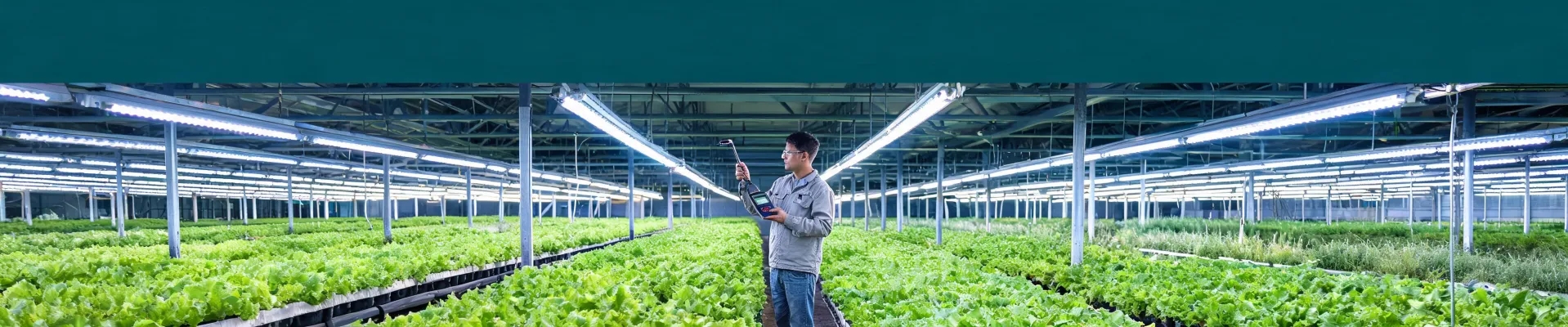
Ask three distributors what they check before placing a lighting order and you'll get three different checklists. A bulk recessed lighting order for a commercial fit-out has almost nothing in common with a horticultural lighting private label program, and both are a different conversation from stocking Gavita grow lights for cultivation customers.
I'm a quality and brand compliance manager at a lighting manufacturer. My job is to review specification sheets, test reports, and physical samples before they reach customers — roughly 200 SKUs a year. If a supplier changes a driver or an LED bin after we have approved a sample, I'm the one who flags it. This light fixture distributor buying guide does not pretend one checklist works everywhere. So let's walk through the three buying scenarios I see and the checks that actually matter in each.
Classify the order before you compare prices
Unit price is a tempting starting point because it is easy to compare. But price is only meaningful once the right spec is defined for the end use.
- Commercial project distribution. Bulk recessed lighting and similar fixtures headed for offices, hotels, retailers, and municipal buildings.
- Horticultural lighting private label. Your own brand on grow lights sold to cultivators. You are not buying a fixture; you are buying an engineering promise that carries your logo.
- Grow light resale. You act as a dealer or distributor carrying established brands such as Gavita and supporting growers after the sale.
Once you know which group an order belongs to, the rest of the guide becomes usable.
Bulk recessed lighting: consistency beats the lowest bid
The most valuable lesson I learned in this category came from a Q3 2023 quality claim. We had approved a recessed downlight sample from a supplier. Across two production orders, the electrical performance was identical: same driver, same lumen output, same nominal color temperature. Visually, though, the two batches were not identical. Installed on one continuous ceiling, the difference between the batches was obvious to anyone who looked up. That issue cost us a $22,000 rework and delayed the project launch.
The supplier did not break the spec sheet. They just changed a component between runs and did not tell us. Since then, every bulk recessed lighting contract I review includes a component-freeze clause: no substitutions or component changes without written approval from our side.
Color consistency is easy to underestimate. If you have ever approved packaging with Pantone brand colors, you know why Delta E tolerances exist: 'close enough' is not a written standard. Light has a similar catch. Two fixtures that both say 3500K can sit in different color bins, and on a large open ceiling the mismatch is visible. For phased projects, it is worth specifying something tighter than nominal CCT — a common commercial quality level is a 3-step MacAdam ellipse — and asking how the supplier controls bin continuity between production runs.
Documentation also separates real suppliers from resellers. Before placing a bulk order, request the LM-79 photometric report, LM-80 lumen maintenance data for the exact LED package and driver combination, and an IES file for your lighting layout. If the project will apply for rebates, check the DesignLights Consortium product list during the quote phase, not after delivery. Honestly, if a manufacturer cannot produce an IES file within a day, distribution support is not their real business.
Horticultural lighting private label: you buy engineering, not a logo
Private label looks like the quickest route to your own product line. You take an existing fixture, put your brand on it, and build margin. That approach works until the first warranty claim. The grower who sees a failure will not call your OEM; they will call you, because your logo is on the fixture.
Let me state my lane clearly: I am not a horticulturist, so I cannot tell you which spectrum a crop needs. From a quality and compliance seat, I can tell you what belongs in a private label agreement before you commit.
First, treat PPF as the headline spec. A datasheet that says 'full-spectrum LED, 300W' and nothing else is marketing. PPF should be stated in micromoles per second at a specified drive current, with the test conditions and ambient temperature noted. The driver brand, dimming protocol, ingress protection rating, and operating temperature range should all be written down. If a supplier resists putting those details in the contract, that tells you how much confidence they have in their own fixture.
An audit story: in Q1 2024 we found a quality issue that did not show up on a bench test. An IP-rated gasket in a horticultural fixture had been changed to a thinner variant after first-article approval. In a humid environment, that difference eventually ruined 8,000 units sitting in storage. The supplier claimed it was still within industry standard. We rejected the batch anyway, because it was no longer within the standard we had approved.
That is why I insist on first-article inspection before mass production. The sample must come from the production line, not from a hand-built prototype. The contract should also include audit rights and a component change notice requirement. In private label, your brand absorbs every silent substitution the factory makes.
Gavita grow lights and the '1000W' search habit
The third scenario often starts with a customer search phrase: gavita grow lights 1000w. Behind that search is usually a grower who is upgrading from 1000W HPS lighting, and distributors inherit the question of what to stock.
I want to be fair to the old technology: HPS still has a place, and I am not going to tell you it doesn't. But wattage does not mean what it used to. In the HPS era, 1000W described a fixture class. For LED, wattage describes how much power the fixture consumes; it does not tell you how much usable light the plant receives. The comparable numbers are PPF in micromoles per second and efficiency in micromoles per joule. If a grower asks whether an LED can replace a 1000W HPS, the answer comes from published photometric data under a defined footprint, not from the wattage in the product name.
From a distributor perspective, there are two practical checks beyond the datasheet. First, serviceability. An LED fixture does not have a replaceable bulb in the way an HPS system does, so ask about spare drivers, repair turnaround, and warranty handling before you stock a new SKU. Second, control compatibility. Find out whether the fixture is designed for a controller or dimming interface your customers already use, and keep that information in the product listing. It saves weeks of phone calls later.
For a distributor, Gavita grow lights are not a hard product to qualify on paper — the models have documentation behind them. The operational work is in making sure your team can explain PPF and service requirements instead of defaulting to wattage comparisons.
How to know which scenario you are in
If the conversation keeps returning to energy codes, rebates, and ceiling appearance, you are in the bulk recessed lighting scenario. If the conversation keeps returning to your brand, warranty liability, and factory audits, you are in the horticultural private label scenario. If the conversation keeps returning to crop response, PPF, and service after the sale, you are in the grow light distribution scenario.
There is a satisfying moment in this job when a complete specification package arrives: the datasheet matches the sample, the certification matches the delivered product, and the documentation is ready before anyone asks for it. After four years of reviewing this stuff, I can tell you that alignment is rarer than it should be. Make it the bar for every lighting purchase, and most of the painful stories above stop happening.
One more thought on efficiency: automating a good review process is a serious advantage. We moved our specification checks into a shared digital folder with component change alerts, and our approval turnaround dropped from five days to two. But automation only helps after you classify the order. If you automate the wrong checklist for the wrong scenario, you simply make mistakes faster. (Mental note: this three-way classification deserves a one-page PDF for our distributor calls.)
Bottom line: any supplier can sell you a fixture. The distributors who last are the ones who know what they are actually promising before they buy it.

Clara Whitmore
Clara Whitmore is a lighting photometry and LED source analyst specializing in bulbs, tubes, strips, panels, and integrated luminaires. She interprets IES LM-79 measurements and TM-30 color rendition data through luminous flux, efficacy, intensity distribution, CCT, chromaticity, fidelity, and gamut metrics. She writes evidence-led comparisons for specifiers selecting source formats and luminaires for commercial interiors, industrial spaces, or horticultural systems where measured optical and color performance matter.