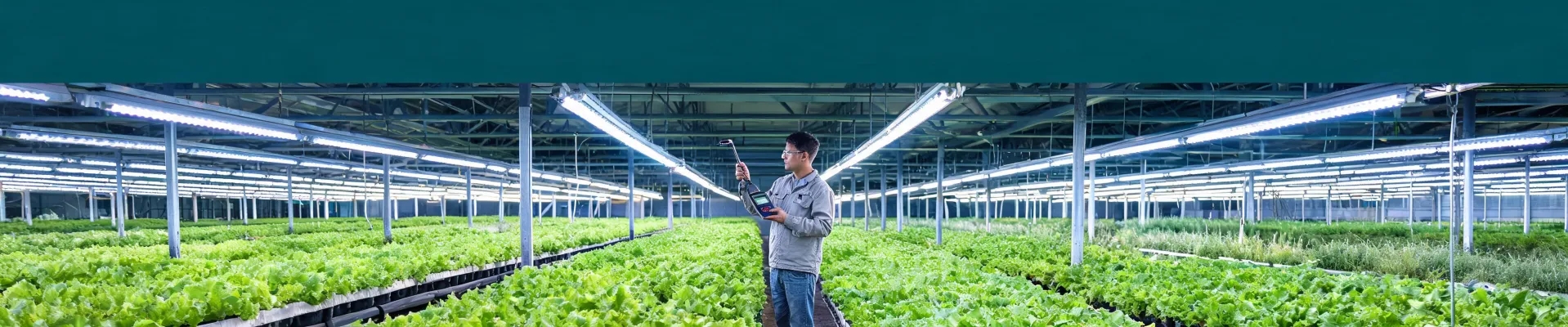
Start with the situation, not the fixture
If you’ve ever typed “ceiling light manufacturer” into a search bar at 10 p.m. with a project deadline hanging over you, you already know how fast lighting procurement can turn into an emergency.
I work on the B2B side at Gavita, where orders range from horticultural grow lights to commercial downlights and ceiling fixtures. In the last three years, I’ve processed about 200 rush orders for growers, distributors, property managers, and contractors. Some had to ship within 48 hours. One was 1,400 fixtures on a truck in five days. Another was 24 fixtures for a flowering room that could not wait an extra week.
When I first started in this role, I assumed fixture specs were everything. Good output, good driver, good warranty — that was the formula. I was wrong. Specs only tell you if a fixture is capable. Whether the purchase is right depends on what that fixture has to survive after installation: a plant canopy, a suspended ceiling, or an inspector’s checklist.
So this is not one of those generic “how to buy lights” lists. It’s three guides for three situations. Match yours first:
- You grow plants under artificial light. Start with Situation 1. This is where search terms like “Gavita grow lights 1000W” show up.
- You’re putting fixtures into a ceiling. Start with Situation 2. Think bulk downlight orders and ceiling light manufacturer lead times.
- You’re importing, specifying, or getting approved. Start with Situation 3. Light fixture compliance requirements are the whole game.
Situation 1: Light is production equipment
In a grow facility, light is not decoration. Light drives the crop cycle. When a fixture fails, you don’t schedule a rework — you lose growth time. That changes how you buy.
A search for “Gavita grow lights 1000W” is usually a search for output. The problem is that output claims on product pages are not the same as output data.
Three numbers matter more than the model name:
- Real input wattage. A label that says “1000W” can describe the marketing class, not the draw from the wall. Many LED models in this class use less power while producing the output your layout needs. If the spec sheet doesn’t list wall input watts, ask why.
- Photon output, or PPF (µmol/s). This tells you how much usable light the fixture actually emits. Without it, “great for flowering” is just a phrase.
- Efficacy, or PPE (µmol/J). Think of this as the fuel economy rating for photons. A higher number means more photons per unit of electricity — which matters when the fixture runs 12 to 18 hours a day.
Coverage area is not a spec, either. Coverage depends on hanging height, spacing, reflectors, and canopy structure. Two identical fixtures can cover very different areas. Use the photon distribution map or a lighting layout, not the product photo.
One more thing: don’t rush by skipping the driver. The driver runs the fixture. In more than one urgent order, we’ve seen fixtures fail early because the driver was not suited to the ambient heat of the grow room. A fixture is only as reliable as its weakest part. Replaceability matters too. If the driver dies in year two, can you buy a replacement without replacing the whole fixture? Ask that before you order, not after.
If you’re comparing Gavita specifically, that kind of data is published on the spec sheets for the Pro and CT lines. I would rather lose a quote than see someone order on a product name alone.
Situation 2: Light is a building component
Offices, warehouses, hospitals, and hotels have a different problem. Once the ceiling is closed, nobody thinks about the lights. If they work, fine. If they don’t, every bad fixture is a service call.
Here, the unit price is the smallest number on the invoice. Installation labor, controls integration, and follow-up visits usually cost more than the fixture does. So a bulk downlight quote that looks low can become expensive by the time it’s installed and working.
When I see a request for hundreds of downlights, I start with two questions:
Is this a standard order or an OEM/private-label order? If you need your brand on the housing, a custom finish, or a specific driver, that’s an OEM project. It takes longer and has minimums. If you’re on a construction schedule, a standard catalog fixture with a known lead time is often the smarter route. Don’t discover this difference after the contract is signed.
Can you reorder the same thing next year? Buildings change. Tenants change. If a fixture fails in year three, you will want a matching unit. A ceiling light manufacturer with stable product lines and documented specs makes that easy. A one-off deal does not.
When comparing ceiling light manufacturers, ask for the driver brand, dimming compatibility, and photometric files. A 0-10V or DALI driver is not a “nice extra”; it is the difference between a fixture that works in the building and one that hums, flickers, or simply ignores the control system.
The counterintuitive part: start with the controls and the installation method, then compare prices. And if a manufacturer does not send a submittal sheet before production, slow down. The submittal is what catches mismatched voltages, wrong color temperatures, and missing emergency battery options before they become your problem.
Looking back at the projects I’ve coordinated, the expensive mistakes were not the fixtures with the highest price tags. They were fixtures that did not match the dimming system, the housing, or the schedule — bought because the fixture itself looked fine in a spec sheet.
Situation 3: Light is a compliance story
Some orders are not about output or design. They are about the certificate on the fixture, because the market or the Authority Having Jurisdiction (AHJ) will not accept anything without one.
Light fixture compliance requirements can kill a project at the border, at inspection, or when the utility rebate is reviewed. That’s why “it works, I tested it myself” is not a valid answer in this scenario.
As of April 2026, the requirements we check most often for North American orders are:
- Safety listing. For standard commercial and industrial fixtures, the common benchmark is UL 1598 (the luminaire safety standard) with a mark from an accredited testing organization. For horticultural lighting equipment, UL 8800 is the dedicated safety standard.
- Emissions. Lighting electronics generally need to meet FCC Part 15 requirements in the U.S., and CE or UKCA requirements in Europe and the U.K.
- Performance listing. Many utility rebate programs expect a DLC-qualified product for commercial fixtures. DLC also maintains a horticultural lighting category for grow lights that qualify for incentives.
A few caveats. This list is not legal advice, and requirements change. They also vary by state, province, city, and project specification. Verify current requirements with the official body or your local AHJ before you order. Certificates in a folder are only useful if they match the exact model number you bought and appear in a public directory.
If a supplier says “we handle compliance” but cannot point to a model-name match on a current listing, treat that as a red flag. The nameplate on the physical fixture is the final proof. An emailed PDF is not. Look up the file number in the public directory yourself — many inspectors will.
Still not sure? Ask three questions
Many buyers sit in two scenarios at once. That’s normal. The way to choose is to identify which failure would cost the most.
- When the light is on, what is it producing? Plant growth, a usable room, or approval to proceed?
- If this order is wrong, what do you lose? A crop cycle, a move-in date, or a compliance sign-off?
- How much time is actually left? Not the ideal lead time. The date the building or plants absolutely cannot wait past.
If you answered “plants” for question one, buy on photon data and reliability, then negotiate price. If you answered “room,” buy a standard, documented fixture with a short lead time and good controls integration. If you answered “approval,” verify the compliance paperwork before you compare price.
The buyers who avoid emergencies are not necessarily the ones with the lowest quoted price. They are the ones who know why they are buying — and ask questions that protect that reason. A supplier who cannot answer those questions is not the right supplier, no matter how fast they promise to ship.
Take it from someone who has coordinated too many after-hours lighting requests: asking these questions upfront feels slow for ten minutes, but it is much cheaper than reordering 400 fixtures in a hurry.

Clara Whitmore
Clara Whitmore is a lighting photometry and LED source analyst specializing in bulbs, tubes, strips, panels, and integrated luminaires. She interprets IES LM-79 measurements and TM-30 color rendition data through luminous flux, efficacy, intensity distribution, CCT, chromaticity, fidelity, and gamut metrics. She writes evidence-led comparisons for specifiers selecting source formats and luminaires for commercial interiors, industrial spaces, or horticultural systems where measured optical and color performance matter.