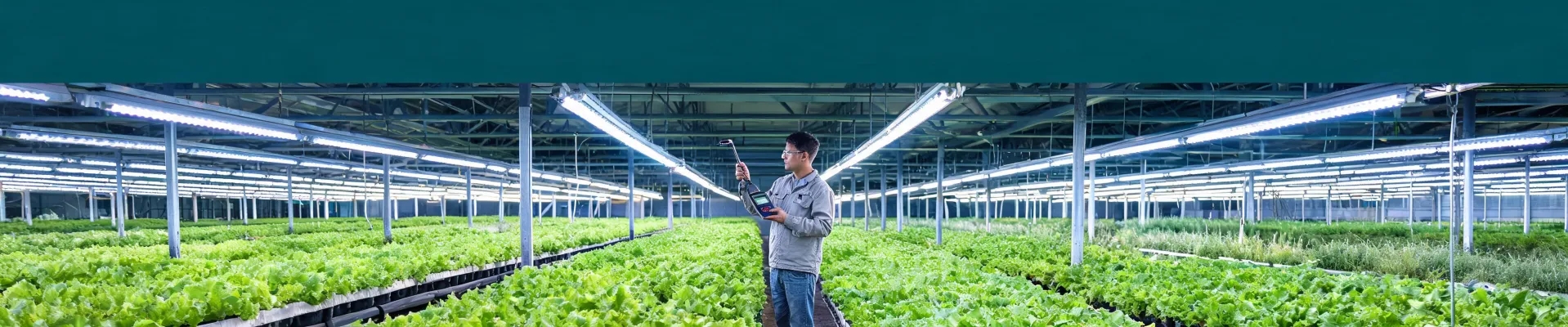
Here's what to look for in a light fixture supplier, in the order that saves me the most headaches: documentation, consistency, and total cost—not unit price. I'm a quality and compliance manager for a B2B lighting company. I review fixture samples and batch orders before they ship to our customers. In our Q1 2026 incoming audit, 38% of first-article samples from new suppliers failed because the spec sheet, the product label, and the certification file did not all agree. If that happens at the beginning, the quote below it is not yet a quote—it is a promise without evidence.
The paperwork question comes before the price question
Before I talk about optics, wattage, or lumens, I ask for three things: a safety listing certificate for the exact SKU, a spec sheet that matches the product label, and a written process for nonconforming goods. If the supplier cannot produce those quickly, I stop. I don't need another PowerPoint; I need to know if their quality system exists.
This sounds strict, but it is the only way to compare a $900 greenhouse fixture with a $200 track-lighting order. Both need evidence. For greenhouse lighting, evidence might include a DLC listing or an IP rating. For a track lighting supplier, evidence might be a UL/ETL listing certificate. The exact certification depends on the destination and the application. The habit does not change.
What to look for in a light fixture supplier
Trust me on this one: a good supplier likes specific questions. A supplier who calls you difficult is often the one with nothing to show. Here is the checklist I give to our purchasing team.
- Verifiable certification. Does the supplier provide a certificate, file number, or listing directory entry for the exact model you're buying? 'UL listed' in an email is not a listing.
- Consistency across documents. Compare the label, data sheet, packaging, and purchase order. Driver brand, current setting, CCT, input voltage, and IP rating should match exactly.
- A clear nonconformance procedure. What happens if 5% of the order has a label mismatch or a damaged lens? Is there a replacement process, or is the answer a shrug?
- Packaging that survives shipping. Track heads arrive with bent rails. LED drivers don't enjoy being tossed around. Ask for a transit sample or real packaging photos before the first big order.
- Honest lead times. A supplier with a three-week quote and a five-week actual delivery shifts your project cost, not theirs.
I'm not looking for a perfect supplier. I'm looking for one whose process catches problems before mine does.
A label mismatch I still remember
Here is what happens when consistency is not checked. In 2025, we ordered 4,000 track heads for a commercial project. The approved first article said the driver was rated at 350 mA. When the shipment arrived, our QC team opened the fixtures and found 420 mA drivers inside. The vendor said this was 'within industry standard.' It was not. Wattage, light output, and the certification label were all wrong. We rejected the entire batch. The replacement took six extra weeks, and that delay cost more than any price difference between suppliers.
Now our PO includes a line that says, 'driver brand and current must match the approved first article, and any change requires written approval.' That sentence cost nothing and saved a project.
Total cost thinking changes which quote wins
Unit price is an input, not the answer. The total cost of a lighting order is not the invoice price. It is invoice price plus freight plus inspection labor plus rejected inventory plus delay cost plus warranty risk.
I remember comparing two quotes for the same 150W LED fixture. One quote was $4,000 lower on a $25,000 order. The cheaper supplier had clean looking product photos but no clear defect procedure. The other supplier had a clean compliance package, model-specific specs, and a written RMA process. I went back and forth for a week because $4,000 is real money. But I knew my inspection team would have to audit every carton from the cheaper supplier. I chose the one with the paperwork. That $4,000 was not waste; it was insurance against another six-week delay.
Gavita grow lights and the phrase 'Gavita plasma grow light'
Since people reach this article with lighting terms, let me talk directly about Gavita. Brand names do not replace inspection in my process. I still check samples. But some suppliers make inspection much easier.
When customers ask about Gavita grow lights, I look for current LED SKUs such as the Pro and CT lines, plus UV, Clone Bar, and under-canopy products. Some search traffic still uses the phrase 'gavita plasma grow light' because older product conversations keep that term alive. I don't let a search phrase define a spec. I ask for an exact model number, pull the current data sheet, and verify the safety listing before approving it.
What I like about Gavita from a quality-control view is that the specifications are model-specific. I can compare the product label to the data sheet without calling three departments. That lowers inspection time, and inspection time is part of total cost.
Where the rules can bend
There is one situation where I relax the paperwork rule: laboratory prototypes or engineering samples that will not be installed in a customer project or sold as finished goods. The compliance file matters less when the fixture is never going to be energized by someone else.
For anything that goes into a building or a greenhouse, do not bend the rule. If the fixture is not listed for its application, you are accepting risk that should be on the supplier. You can test every unit and put liability in writing, but at that point you aren't buying fixtures; you're buying problems.
Bottom line
So, what should you look for in a light fixture supplier? Start with documentation. Then inspect for consistency. Then calculate total cost. Keep the lowest-priced quote in your pocket, but do not let it make the decision until it has passed the same three tests.
There is a quiet satisfaction when an order arrives and the paperwork matches the product. No drama, no six-week redo, just fixtures that match the spec. That is the supplier I want on every project.

Clara Whitmore
Clara Whitmore is a lighting photometry and LED source analyst specializing in bulbs, tubes, strips, panels, and integrated luminaires. She interprets IES LM-79 measurements and TM-30 color rendition data through luminous flux, efficacy, intensity distribution, CCT, chromaticity, fidelity, and gamut metrics. She writes evidence-led comparisons for specifiers selecting source formats and luminaires for commercial interiors, industrial spaces, or horticultural systems where measured optical and color performance matter.