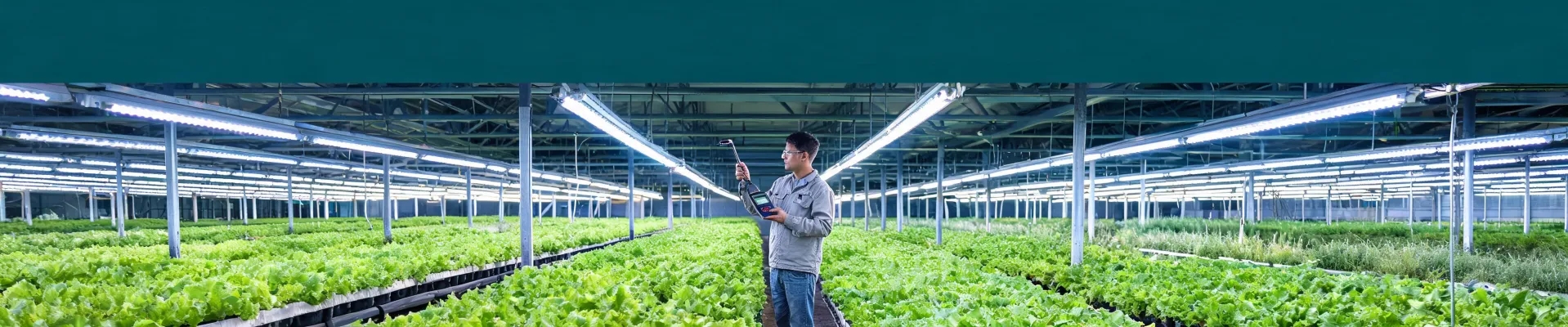
Bottom line: when a commercial or horticultural customer asks for Gavita grow lights 1000W, I do not start with a price. I start by asking what the 1000W means on the exact product page and how the fixture will be installed. Most costly lighting mistakes I see are not late deliveries or defective drivers. They are orders that were technically correct and still wrong for the ceiling, the electrical system, or the greenhouse layout.
I do not work for Gavita and I do not get paid by Gavita. I have handled wholesale lighting orders for six years, mixing horticultural LED systems, commercial downlights, retrofit kits, and service parts. I have personally made and documented 13 significant specification mistakes, totaling maybe $54,000 in wasted budget when I count my own labor and the electrician's time. That number is embarrassing. It is also why my team has a checklist and why this article is honest about the unglamorous side of wholesale buying.
I learned this by ordering from a spec sheet, not from the actual space
In my first grow light project, back in 2019, I got a request for 1000W Gavita replacement lighting. I did what many wholesale buyers do: I checked the wattage, IP rating, warranty, and price, and then placed the order for 44 fixtures. The fixtures were actually good. The layout was not. I had taken a coverage number from the brochure and spread it evenly across the room. Light does not spread evenly. The center was overly bright and the racks around the edges did not get what the grower needed. We bought six more fixtures, moved four others, and paid for extra cable and mounting steel. That correction cost roughly $5,300 and delayed the room by a week.
The brand was not the issue. My process was. A spec sheet tells you what a fixture can do under test conditions. It does not tell you how that fixture behaves at your mounting height, with your spacing, or next to your ductwork. That information comes from photometric data and a layout. The photometric data is still part of good grow light specifications; it is just the part people skip to save time.
Then I repeated the same mistake indoors. In September 2022, I approved a 600-piece recessed downlight order for a renovation project because the spec said the trim size was 6 inches. The existing ceilings had 5-inch housings. I checked lumens, color temperature, CRI, and driver type, but I did not check the cutout dimension that matched the trim ring. We returned about half of the order and expedited 300 retrofit trims. The restocking fee and extra shipping were close to $4,900, not counting three days of schedule delay.
Since March 2024, our team has used a pre-order checklist. It has caught 31 specification mismatches before they became purchase orders. Almost all of those were not price problems. They were small words on datasheets that people stopped reading after they saw a lumen number.
Gavita grow lights 1000w: the spec check I run now
Search results for Gavita grow lights 1000w include lamps, ballasts, controllers, LED systems, replacement fixtures, and reseller listings with different wording. If a keyword can mean five different product categories, do not describe it to a supplier. Send the exact model code you want. The most useful line on the datasheet is not the product name. It is the input wattage plus the tested light output.
This is the distinction I see ignored most often. People assume 1000W means the fixture draws 1000W from the wall and produces a predictable amount of light. The reality in horticultural lighting is that output is measured in photosynthetic photon flux, or PPF, usually in micromoles per second. Input watts tell you energy draw and heat load. PPF tells you how much usable light the fixture emits. A fixture marketed as a 1000W replacement may draw less than 1000W, and that can still be the right choice if the PPF, spectrum, and distribution are right for the space. If your customer genuinely needs a 1000W-input fixture, confirm the wall watts instead of assuming the product name is the operating wattage.
Here is the checklist I run before I quote, regardless of whether it is one fixture or a full skid:
- Exact model code, revision, and voltage. Product codes can differ by control type, mounting option, or input range. Do not order from a photo.
- Wall input watts and input current. An LED fixture may have an equivalent wattage that is different from the actual draw. The wall number drives the electrical load and heat load.
- PPF from a real test report. A marketing number is a starting point. A third-party report is proof. If the supplier cannot share the report, ask why.
- Dimming and control compatibility. Some projects use simple switches; some use 0-10V, PWM, or a central controller. The fixture and the controller need to speak the same language.
- Physical dimensions and mounting geometry. Hanging kits, yoke spacing, and clearance above the fixture matter more than the last lumen reading.
- Ambient temperature and location rating. A greenhouse environment is not the same as a conditioned warehouse. Ingress protection is part of the specification, not a bonus.
- Warranty, spare parts, and service path. If a driver fails after two years, can you buy a replacement? Does the warranty cover the whole fixture or only the LED board? Write it down.
- Compliance marks for the destination country. UL, ETL, CE, CSA, and similar marks are not interchangeable. Verify the exact model number on the listing, not just the brand family name.
A vendor who can answer those questions quickly is easier to work with than one who just sends a lower quote. A vendor who cannot answer them is a red flag, no matter how good the price looks.
Downlight wholesale is the same checklist, with a different ceiling
The phrase downlight wholesale sounds simple, but recessed lighting is not one object. A quote can mean housing only, trim only, retrofit kit, or complete new construction fixture. If you are asking how to choose recessed lighting for wholesale, do not start with a fixture picture. Start with the housing type and the service plan after the sale.
I use the same format for recessed lighting:
- New construction, remodel, or retrofit. For retrofit, record existing housing brand, size, and cutout. This is where my 6-inch and 5-inch mistake happened.
- Complete unit vs components. Does the price include driver, housing, trim, and lamp? If not, price the missing pieces before comparing.
- Voltage and control compatibility. A line-voltage dimmer might not work with a 0-10V driver. A 120V fixture cannot be used on a 277V circuit without a change.
- Location rating. Damp, wet, IC, airtight, and non-IC ratings change where the fixture can be installed.
- Color consistency and trim finish. Two 3000K trims can look different if the reflector or diffuser is different. Ask for samples when color consistency matters.
- Spare trim and driver availability. In wholesale, the fixture is not the final sale; the future service order is part of the value.
If I do not write the exact platform and mounting type into the purchase order, I am asking for trouble. The word recessed can hide the difference between a small retrofit component and a complete new construction housing. One is not better than the other. They are just not interchangeable.
The cheapest quote is not the cheapest order
I am not against negotiating. A healthy wholesale buyer should push on price. But the final cost is not the unit price. It includes freight, restocking fees, electrical labor, schedule delays, and the cost of a second visit when something does not fit. On a 200-unit order, saving $2 per fixture is $400. One wrong housing can cost more than that in labor and freight after the first install.
The surprise in my career was not that expensive items failed. The bigger surprise was that one mid-priced downlight supplier was the first to send me photometric reports and dimming compatibility sheets without a follow-up request. That saved me at least two weeks on a project. The value was not visible on the quote; it showed up inside the documentation.
There is also a legal reason for documentation. When a reseller repeats a manufacturer claim about lumens, lifetime, or energy savings, that claim can become the reseller's own advertising claim. The Federal Trade Commission's business guidance says advertising claims must be truthful and substantiated before they are made. If the manufacturer will not share the test report, do not repeat the claim as if you verified it.
Where this checklist has limits
This level of checking is overkill for some situations. A single fixture for a small grow tent does not need a full photometric plan. Confirm the voltage, physical size, dimming type, and warranty. That may be enough.
I also do not think 1000W high-pressure sodium lighting is useless. In a cold-climate greenhouse, the heat from an HPS fixture can be part of the heating strategy. The goal here is not to argue LED vs HPS. The goal is to make sure the fixture you choose matches the room, the electrical system, and the use case.
The other limit is that lower-cost products are not automatically bad. I have seen budget fixtures with better paperwork than some premium options. I have also paid premium prices and then struggled to get a response from the support team. Price alone is not a quality score. Test reports, samples, and supplier behavior matter.
So here is my simple rule for anyone buying Gavita grow lights 1000W or comparing downlight wholesale quotes: decide the system first, then the price. Confirm the exact model code, input voltage, tested light output, control compatibility, mounting requirements, compliance marks, and warranty service path. If the lowest quote passes that checklist, it can be the right quote. If it only passes the invoice stage, it is not cheap. It is just fast to sell.

Clara Whitmore
Clara Whitmore is a lighting photometry and LED source analyst specializing in bulbs, tubes, strips, panels, and integrated luminaires. She interprets IES LM-79 measurements and TM-30 color rendition data through luminous flux, efficacy, intensity distribution, CCT, chromaticity, fidelity, and gamut metrics. She writes evidence-led comparisons for specifiers selecting source formats and luminaires for commercial interiors, industrial spaces, or horticultural systems where measured optical and color performance matter.