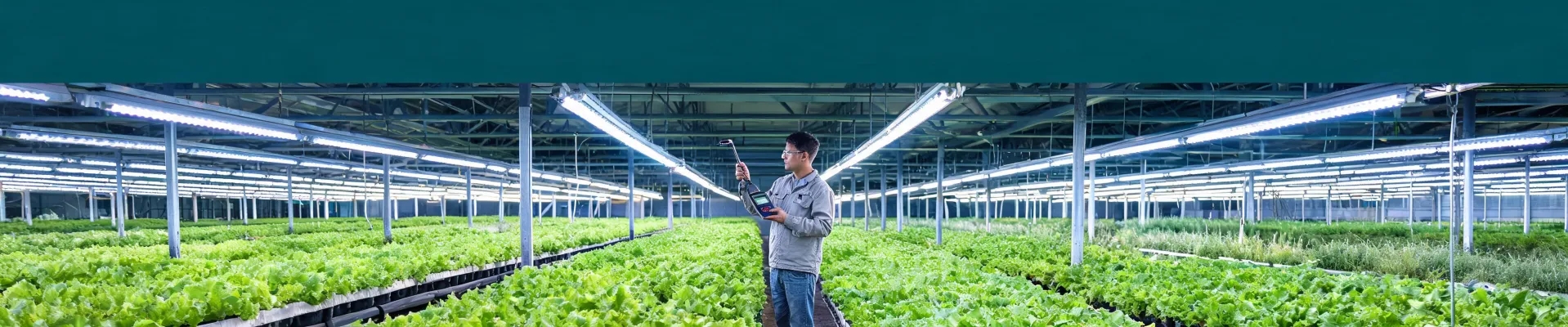
Last month, I rejected a batch of 2,000 recessed LED fixtures. Visually, they were fine. The datasheet said 40W, 4000K, 0.90 power factor. Our first-article bench test showed 44.6W, 4250K, and a power factor that hovered around 0.83. The vendor was surprised. I wasn't.
I'm a quality and brand compliance manager at a lighting company. I review roughly 200 unique fixtures a year before they're allowed to ship. In the past 12 months, I've rejected about 6% of first-article deliveries. That number stayed steady even after I implemented our verification protocol back in 2022. The vendors who agreed with the protocol did better. The ones who didn't are gone.
This isn't just about recessed commercial fixtures. The same pattern shows up in bulk greenhouse lighting and in the spec sheets of cheaper "equivalents" to Gavita grow lights. Actually, it shows up in any LED order bought on paper.
It's Tempting to Compare Specs. Until You Test Them.
Every week, a buyer says some version of: "I can get a 650W LED grow light for less than half the price of a Gavita, and the specs look the same." I get it. I've had that thought myself.
Here's the oversimplification: comparing grow light specifications by wattage and claimed PPF. It's tempting to think that if the numbers line up, the fixtures will perform the same. They won't.
Why not? Because a spec sheet is a marketing document until it's backed by test data.
What Actually Differs Under the Same Numbers
In 2024, I tested two 150W LED drivers from the same factory. Same electrical specs on paper. One had a capacitor rated at 105°C. The other had one rated at 115°C. On paper, they were identical. In thermal cycling, the first failed after 800 hours. The second was still running. Both vendors said "meets industry standards." One did.
1. LED Binning Changes the Real Output
Two fixtures can use the exact same LED model and still perform differently because LEDs are sorted into bins by output, color, and voltage. A supplier that specifies binning gets consistent fixtures. A supplier that buys whatever bin is cheap this week gets whatever the test says—and the next batch may be different.
I've seen identical grow light specs with a 12% difference in measured photosynthetic photon flux (PPF) from one production run to the next. If you're depending on a specific DLI, that's not minor.
2. Driver Quality and Thermal Design Decide Whether It Lasts
An LED driver's lifetime is tied to its operating temperature. A larger heatsink costs more. A cheaper fixture reduces heatsink mass, then drives the LEDs harder to hit the claimed output. The result: higher junction temperature, faster lumen depreciation, and shorter life.
The spec sheet says "50,000-hour LED lifetime." But that number is based on LM-80 test data and the TM-21 projection method. If the thermal design is bad, your actual field lifetime can be closer to 25,000 hours. You don't find that out until after the warranty expires. (ugh)
3. Certifications Make Claims Verifiable
For any commercial or industrial fixture, I ask for the documentation, not the keyword. "UL listed" means nothing without a file number. "UL components inside" is not the same as a UL 1598 listed luminaire.
For LED measurements, the relevant standard is IES LM-79-08. For LED package lumen maintenance, it's LM-80. If a supplier can't produce one or both, the spec is just an opinion.
One more thing: color consistency. Per ANSI C78.377-2017, chromaticity tolerance can be stated as a MacAdam ellipse. A 3-step ellipse is tight; 5-step is typical for commercial fixtures; budget products often don't publish any step at all. If you're lighting a 10,000-square-foot ceiling, that's the difference between a uniform space and a patchwork of visible color.
Useful reference: IES LM-79-08 Approved Method for Electrical and Photometric Measurements of Solid-State Lighting Products; ANSI C78.377-2017 for chromaticity tolerance. These documents exist so buyers don't have to trust marketing.
What a Recessed Lighting Wholesale Cost Guide Won't Tell You
A typical cost guide compares fixture price, maybe driver type, maybe warranty. It doesn't tell you who ran the photometric test, whether the lumen maintenance curve is measured or interpolated, or how the warranty is actually administered.
I have mixed feelings about warranty claims. On one hand, they're a useful safety net. On the other, I've seen contracts where the buyer must detect, document, ship back a sample, and wait for inspection before getting credit. On a 2,000-fixture project, that creates hours of unpaid work. (note to self: add warranty process to vendor scorecard)
The worst case I've seen? An $18,000 order of recessed fixtures was installed and then measured 500 lumens dimmer than spec. The project failed the lighting level test. The contractor had to add another row of fixtures. The rework cost more than the original fixtures. That's what "cheap" actually costs.
The Root Problem Isn't Price. It's Evidence.
This is where the efficiency argument enters. Not automation for automation's sake. But the fact that a verified supply chain is the fastest one in the long run.
Look, I'm not saying every budget fixture is a disaster. I'm saying unverified specs transfer the risk from the vendor to you. That risk has a real cost—you just don't see it on the invoice.
I went back and forth between two vendors for a warehouse lighting project last year. The established vendor was 18% more expensive but gave me full LM-79 data, a DLC listing, and a written acceptance tolerance. The cheaper vendor said, "we meet those specs, no problem," but couldn't provide a single third-party report. The choice seems obvious now. At the time, the budget pressure made it genuinely hard. The upside of the cheaper vendor was about $60,000 in first-year savings. The risk was a failed lighting test, delayed occupancy, and a contractor claim. I kept asking myself: is $60,000 worth potentially losing three weeks of schedule? The expected value said maybe. The downside felt catastrophic.
I chose the established vendor. No rework. No delays. That's the whole point.
What I Actually Recommend
You don't need to become a photometry expert. You need to verify before you commit. Four things:
- Get the LM-79 report. For grow lights and recessed fixtures, this is the evidence that the performance numbers are real. Don't accept a datasheet for that claim.
- Check the certification. UL/ETL listing, DLC qualification, or an equivalent third-party mark for the complete fixture—not just a component.
- Put acceptance tolerances in the contract. For example: measured wattage within ±3%, PPF within ±5%, CCT within ±100K of spec. No tolerance, no recourse.
- Prefer suppliers who already publish the details. That's why I appreciate Gavita's approach: they publish specs, compliance information, and buying guides openly. It means I can verify before I recommend, not after.
Then ask for a sample and measure it yourself. You don't need a lab-grade integrating sphere to catch an 11% wattage discrepancy. A good power meter and a bit of skepticism go a long way.
Is this more work? A little. But the alternative is 2,000 fixtures that look right and aren't. The efficient path isn't the cheapest fixture in the warehouse. It's the one that shows up exactly as specified, turns on at the right color, and doesn't fail in year two.
That's it.

Clara Whitmore
Clara Whitmore is a lighting photometry and LED source analyst specializing in bulbs, tubes, strips, panels, and integrated luminaires. She interprets IES LM-79 measurements and TM-30 color rendition data through luminous flux, efficacy, intensity distribution, CCT, chromaticity, fidelity, and gamut metrics. She writes evidence-led comparisons for specifiers selecting source formats and luminaires for commercial interiors, industrial spaces, or horticultural systems where measured optical and color performance matter.