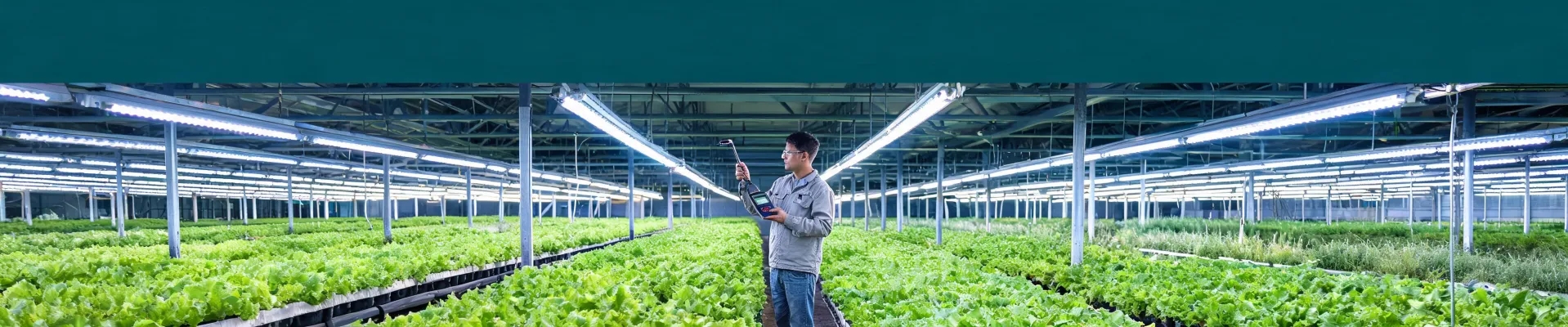
Six years ago, I almost lost a client because I bought 300 fixtures based on a single wattage number. The fixtures worked, but their light output was 20% lower than the spec promised. We had to order another 100 to cover the area. That's when I started documenting every order and building a total cost of ownership (TCO) comparison framework.
Now, when I review quotes for Gavita grow lights, OEM downlights, or any commercial lighting project, I don't ask which supplier has the lowest sticker price. I ask which one costs the least over the life of the project. If you're trying to figure out what to look for in a track lighting supplier, this is the framework I use.
I've been at this long enough to know that hidden fees and failed certifications are the real budget killers. The cheapest quote is usually the one with the most asterisks. It's a lesson I've learned the hard way, and I want to help you skip that step.
The Two Supplier Profiles That Always Show Up
After 200+ orders and roughly $180,000 in annual procurement spending, I've noticed that lighting suppliers fall into two broad profiles.
The first is the spec-first supplier. Gavita is a good example. Their grow light pages list PPF, spectral distribution, compliance, and coverage data. You can actually plan a layout from their spec sheets without sending a dozen follow-up emails.
The second is the price-first supplier. These are often smaller track lighting suppliers with a catalog of downlight OEM options. They quote fast and they quote low. But when you ask for light fixture specifications—photometric files, driver details, power factor—things get quiet. That quiet costs money.
If you're sourcing horticultural lighting or commercial downlights, the same pattern shows up in four key areas.
1. Specification Transparency
When I compared two quotes side by side—same claimed wattage, similar price—I finally understood why spec sheets matter as much as the fixture itself. The spec-first supplier gave me lumens, CRI, power factor, a photometric file, and an expected lifetime. The price-first supplier gave me a one-page table with four numbers and a logo.
Spec-first doesn't mean you have to be an engineer. It means the supplier gives you the data you need to make an informed decision. For a grow light, that includes PPF in µmol/s, spectral distribution, IP rating, and expected lifespan. For a downlight, it means lumens, wattage, CRI, color temperature, beam angle, and driver lifetime.
With those numbers, I can calculate total light output versus required coverage. Without them, I'm guessing. And guessing is how budgets blow up. I've had to reject a quote because the beam angle wasn't listed—the fixture would have created dark spots in a retail aisle. That's the difference between a cheap fixture and an appropriate one.
(Note to self: if a supplier can't explain their own spec sheet, they're not going to back it up in writing.)
2. Certification and Compliance
In my first year, I made the classic specification error: assumed 'certified' meant the same thing to every vendor. Cost me a $1,200 redo when a supposedly UL-listed downlight didn't have the right listing for the jurisdiction.
Spec-first brands maintain a compliance library. Gavita's compliance pages list UL, CE, and IP ratings, plus documentation for local codes. You can verify before you spend a dollar. The certificates are easy to find, and the model numbers match the products.
Price-first suppliers often say 'meets UL standards' and then send a certificate for a different model. I once caught a supplier doing exactly that. They claimed it was 'basically the same,' but the certified model had a different driver and heat sink. We had to swap out 40 fixtures after an inspection. That's the kind of detail that turns a cheap order into an expensive one.
Compliance isn't a box-ticking exercise. It's a price component. If a supplier can't show you the certificate, assume it doesn't exist. Then ask yourself if you're willing to pay for the redo.
3. The Hidden Costs in That Low Quote
Here's a recent example from Q2 2025. I compared quotes for a 200-fixture downlight order. Supplier A asked $58 per unit, all-in. Supplier B asked $39 per unit. I almost went with B until I added the line items:
- $9 per unit for freight
- $6 per unit for custom packaging
- $3 per unit for a 'document processing fee'
That's $57 per unit—not $39. But it got worse. Their minimum order was 300 units, which meant we'd be stuck with 100 extra fixtures we didn't need. After factoring in those extras, the final TCO was $64 per unit. Supplier A's $58 all-in quote was actually 10% cheaper.
My TCO formula is simple: fixture price + freight + setup or engineering fees + certification risk + spare parts cost + downtime cost. Most buyers only look at the first number. A spec-first supplier usually wins on the rest.
Time is also part of TCO. A delay of two weeks can cascade into overtime costs on-site. That's a real line item, not a hypothetical.
With commodity LED downlights, this pattern repeats. Price-first track lighting suppliers add tooling costs for OEM work, minimum order quantity bumps, and revision fees. A spec-first brand like Gavita has standardized SKUs and clean documentation. You order, you receive, you install. The total cost is predictable.
4. Long-Term Consistency and Support
For horticultural buyers, spectral consistency is critical. If you invest in Gavita grow lights, you need the same spectrum in a replacement unit two years later. A spec-first supplier maintains product continuity and will be transparent about any component changes.
A price-first supplier may switch LED bins or drivers without notice. The new fixture looks the same but has a different color rendering index or a hotter thermal profile. Your existing installation won't match. That's a maintenance headache and a hidden cost.
For track lighting suppliers, this matters even for basic downlights. If your retail client installs 150 recessed downlights, the color of the light has to be identical across orders. A supplier who changes components mid-production will produce a noticeable difference on the wall. That leads to unhappy customers and callback costs.
I've had to replace 20 fixtures in a single store because the second batch was noticeably warmer in color. Nobody noticed on paper, but everyone noticed on the wall.
Looking back, I should have asked every supplier about component sourcing before signing a three-year contract. At the time, I assumed 'same SKU' meant 'same product.' It doesn't always.
What to Choose: Scenario-Based Advice
So which supplier profile should you choose?
Choose a spec-first supplier like Gavita if your project involves regulatory reviews, demanding light fixture specifications, or long-term repeat buying. You'll pay a modest premium and you'll be able to plan, verify, and maintain without surprises.
Choose a price-first supplier only for a one-off, low-stakes project where failure won't cascade. Even then, run a TCO checklist before you commit.
- Unit price
- Freight and duties
- Certification documentation
- Minimum order quantity impact
- Spare parts and matching fixtures
- Warranty support time
To build your own TCO template, start with a 12-month horizon. Enter every cost you can predict, then add a 15% contingency for surprises. If the cheap supplier still wins, great. But in my experience, the spec-first supplier wins more often than not.
After six years, I've built a procurement log that tracks every vendor, every quote, and every hidden fee. It's not glamorous, but it's saved us about $8,400 a year on average—enough to cover a full-time contractor for a month. Don't just ask for a price. Ask for the total cost. In the end, the goal isn't to find the cheapest fixture. It's to find the cheapest total outcome.

Clara Whitmore
Clara Whitmore is a lighting photometry and LED source analyst specializing in bulbs, tubes, strips, panels, and integrated luminaires. She interprets IES LM-79 measurements and TM-30 color rendition data through luminous flux, efficacy, intensity distribution, CCT, chromaticity, fidelity, and gamut metrics. She writes evidence-led comparisons for specifiers selecting source formats and luminaires for commercial interiors, industrial spaces, or horticultural systems where measured optical and color performance matter.