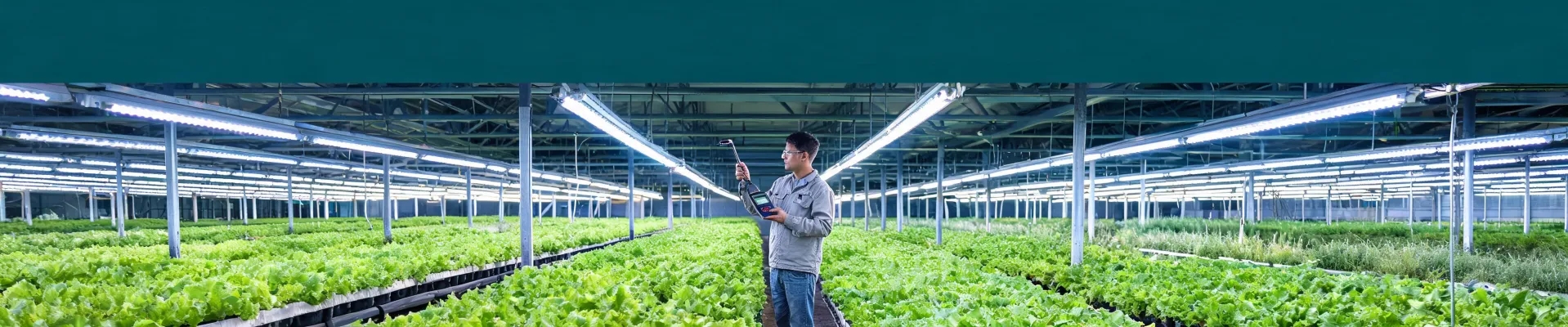
There's no single “right” way to source Gavita products in bulk. If somebody tells you otherwise, they're selling you a one-size-fits-all answer instead of asking about your situation.
I'm a quality and brand compliance manager at a lighting company. I review roughly 200 unique fixtures a year before they're allowed to reach customers. In our Q1 2024 audit, we rejected about 8% of first deliveries for spec mismatches—wrong color temperature, missing IES files, or packaging that didn't match the approved samples. These aren't exotic failures. They're normal risks when buying without a plan.
The right process depends on three things: what you're buying, the volume, and who's doing the quality checks. So let's sort your scenario before we talk about fixture specs.
Know Your Buying Scenario First
Three scenarios cover most B2B purchases I see:
- You're a distributor or OEM sourcing commercial fixtures—track lighting, downlights, recessed, or private-label products.
- You're a distributor buying Gavita grow lights to stock on your shelf.
- You're an operator buying a Gavita grow light—or a small batch of fixtures—for your own project.
Each scenario needs different documents, different questions, and a different comfort level with risk. Let's walk through them.
Scenario 1: A Track Lighting Distributor Buying Guide for Bulk Commercial Fixtures
Here's the thing: a pretty spec sheet tells you what the vendor wants you to see. The photometric files, regulatory listings, and test reports tell you what the fixture actually does.
According to IES LM-80 and TM-21 (ies.org), LED lumen depreciation and lifetime projections are measured under defined lab conditions. Ask for those files. If a vendor can't produce them, the fixture might still be fine, but you're paying for hope.
For track lighting, pay special attention to the mounting system. That's the part that gets ignored until the first pallet arrives and nothing fits the track sections already installed. I've lived this one. We once specified “standard track heads,” and the vendor interpreted “standard” as their proprietary mounting system. Same word, different meaning. The fix was an approved drawing, not more words in an email.
Check the DesignLights Consortium qualified products list if your customers are in utility-rebate markets. According to DesignLights Consortium (designlights.org), qualification requires test data and product information from the manufacturer. Searching the model number takes two minutes and can save your customer a rebate headache later.
Now the counterintuitive part: don't let a perfect sample do the quality work for you. Samples can be hand-picked. I implemented a rule in 2022 that any bulk fixture order has to include the last three batch production records or a statistical process control summary. First-delivery rejections dropped by roughly 30% after that. The sample proves the vendor can make a good one; batch data proves they can make good ones consistently.
Also, be suspicious of the one-stop-shop promise. I have mixed feelings about vendors who say they can do everything—grow lights, track lighting, custom drivers, certifications, packaging. On one hand, a single PO is convenient. On the other, broad promises often cover shallow capability. I'd rather work with a specialist who knows their limits than a generalist who overpromises.
“This isn't our strength—here's who does it better.”
That sentence earned more trust than any “we can do everything” pitch I've received.
Scenario 2: Buying Gavita Grow Lights for Resale
If you're buying Gavita grow lights for resale, the conversation shifts from general photometry to horticultural performance. The Gavita product family—Pro, RS, CT, UV, clone bars, and under-canopy fixtures—covers different formats. A distributor's job is to verify the spectral and coverage specs match the grower's setup, not just the price.
For horticultural buying, ANSI C78.377 helps define color consistency, and IES LM-80/TM-21 still apply to LED packages. Ask for the driver model and input voltage range, too. Voltage mismatch is one of the most common spec issues we see in new vendor intake.
Don't get me wrong: efficiency matters. But chasing the highest µmol/J figure while ignoring thermal management is usually a mistake. A reliable fixture with slightly lower efficacy will deliver more usable light over its lifetime than a hot-running box with an impressive marketing sheet.
Here's another counterintuitive tip: for large resale orders, don't rely on a single sample. Ask for batch-level test reports. A sample tells you what the vendor wants you to show; batch data tells you what they actually produce. When we made this a hard requirement, our incoming quality changed more than any inspection we did after delivery.
One more thing: I'm not 100% sure there's a perfect answer to the one-vs-multiple supplier question. Part of me wants to consolidate orders with one vendor for simplicity. Another part remembers how helpful redundancy was during the 2023 supply chain crunch. I compromise with a primary supplier plus one approved backup. It's less elegant, but it's carried us through.
Scenario 3: Buying a Gavita Grow Light for a Single Project
If you're buying a Gavita grow light—or a small run of fixtures—for your own facility, you don't need the same vendor audit process. You do need clear commercial terms.
The most common mistake I see in these purchases is leaving timing vague. I said “as soon as possible” on a PO once. The manufacturer heard “whenever convenient.” Delivery landed two weeks after I expected it. If the date matters, write the date, and define what happens if it slips.
For small-to-mid projects, I usually go through an authorized distributor rather than direct. That sounds like it would cost more, but it rarely does once you count returns support and inventory. A distributor can also tell you if a model is on backorder before you build a project schedule around it.
Check the regulatory status for your region as well. For commercial installations, look for UL or ETL listings appropriate to the application. For damp or high-humidity grow areas, the IP rating matters. Verify current requirements at the official listing agency—don't assume the spec sheet is current.
Which Buying Scenario Are You In?
How do you know which bucket you're in? Ask yourself three questions:
- Is this product going into someone else's catalog or project? That's Scenario 1.
- Are you stocking Gavita grow lights as a reseller? That's Scenario 2.
- Is this fixture going into your own building or grow room? That's Scenario 3.
Some buyers land in two scenarios at once. A distributor might carry commercial track lighting and Gavita grow lights. That's fine. The point isn't the label; the point is matching the verification depth to the risk.
When in doubt, work in this order: model number, photometric files, UL/DLC documentation, lead time. In that order.
And one final thought on boundaries: no supplier is good at everything. If a vendor can't produce the specific data for the exact fixture you're buying, that's not a character flaw—it's information. Specialization is a feature, not a bug. In bulk light fixture sourcing, the strongest partnerships are the ones where both sides know exactly what they're responsible for.

Clara Whitmore
Clara Whitmore is a lighting photometry and LED source analyst specializing in bulbs, tubes, strips, panels, and integrated luminaires. She interprets IES LM-79 measurements and TM-30 color rendition data through luminous flux, efficacy, intensity distribution, CCT, chromaticity, fidelity, and gamut metrics. She writes evidence-led comparisons for specifiers selecting source formats and luminaires for commercial interiors, industrial spaces, or horticultural systems where measured optical and color performance matter.