-
What's the realistic lead time on LEDVANCE LED armatur orders when you're under deadline pressure?
-
Do I need a separate Zigbee gateway for LEDVANCE Smart+ devices, or can I go DIY?
-
How is a grow light different from a regular LED bulb?
-
Are LEDVANCE Smart+ WiFi products actually DIY-friendly for facilities teams?
-
When does paying a rush fee on lighting actually make sense?
-
What should I verify before ordering emergency lighting for compliance?
I coordinate lighting procurement for commercial facilities. In seven years, I've handled roughly 200 rush orders—including same-day turnarounds for property managers facing failed inspections. These are the questions I actually get asked, and the answers I wish someone had given me earlier.
What's the realistic lead time on LEDVANCE LED armatur orders when you're under deadline pressure?
Standard lead time on most LEDVANCE LED armatur products runs 3–5 business days from authorized distributors. But "standard" is doing a lot of work in that sentence. If you need something specific—a particular CCT, lumen output, or IP rating—and it's not in local stock, you're looking at 2–3 weeks.
When I first started this job, I assumed the distributor's website inventory was accurate. It wasn't. In March 2024, I promised a client 40 LEDVANCE high bay fixtures in 48 hours based on an "in stock" label. They were on a container ship. We paid $1,200 extra to source equivalents from a regional supplier and avoid a $15,000 penalty clause. Now I call the distributor and ask them to physically check the shelf before I quote anything.
Bottom line: get a confirmed ship date, not an estimated one. That distinction has cost me real money.
Do I need a separate Zigbee gateway for LEDVANCE Smart+ devices, or can I go DIY?
Yes—LEDVANCE Smart+ Zigbee devices need a gateway. They don't connect directly to WiFi. But the "Zigbee DIY" route is messier than the forums make it sound. You can pair Smart+ Zigbee bulbs with third-party hubs like SmartThings or Home Assistant, but you lose native app features, including some scheduling and firmware update tools.
I learned this on a small office retrofit in early 2024. We tried to save $60 by skipping the LEDVANCE gateway and using a generic Zigbee hub. The lights worked, but scheduling didn't. The client's facilities team couldn't figure it out, and we burned three hours on site. The $60 we saved cost us $400 in labor.
My rule now: if the client wants the full Smart+ feature set, use the official gateway. If they just need on/off/dim and already run a Zigbee network, DIY is fine—but set expectations before installation, not after.
How is a grow light different from a regular LED bulb?
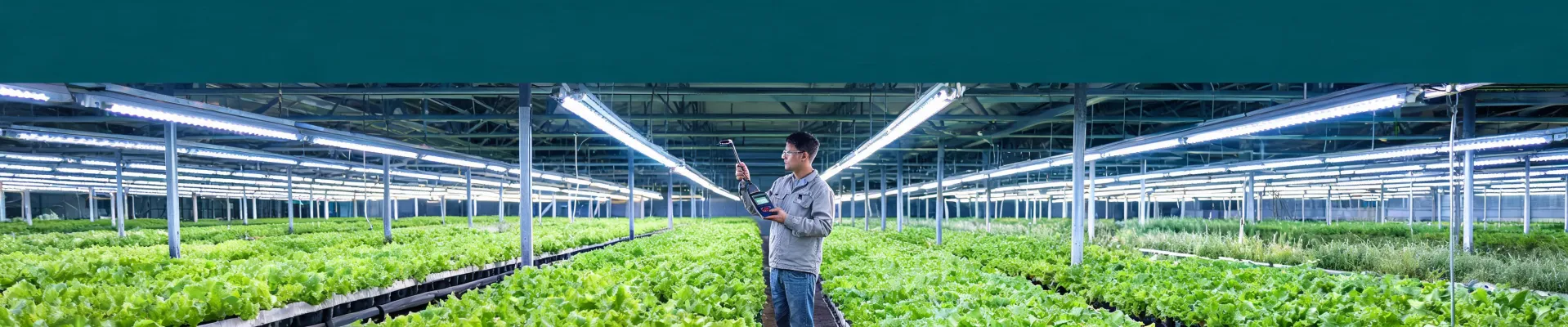
This one comes up more than you'd expect, usually from clients converting warehouse space. A grow light isn't just a brighter bulb. It has a different spectral output. Regular white LEDs target 4000K–5000K with high CRI for visual comfort. Grow lights emphasize red and blue wavelengths—around 660nm and 450nm—to drive photosynthesis, and they're rated on PPF (photosynthetic photon flux), not lumens.
Can you use a regular LED bulb to grow plants? Sort of. It'll keep a low-light houseplant alive. But for anything commercial, you're wasting electricity—the photon efficiency isn't there, and the fixture likely isn't rated for the humidity.
I mention this because I've watched clients try to repurpose old LEDVANCE high bay fixtures as grow lights to save money. Don't. The spectrum is wrong, the warranty is void, and you'll replace them within a year.
Are LEDVANCE Smart+ WiFi products actually DIY-friendly for facilities teams?
Mostly, yes—but setup depends on who's holding the phone. The Smart+ WiFi app is straightforward for basic pairing and scheduling. I've walked non-technical property managers through it in about 20 minutes.
The gotcha is documentation. If you're working with a Danish-speaking client, make sure you download the right manual before you're on site. I've had technicians waste half a day because they were following the English "ledvance smart wifi manual" while the app was set to Danish—menu labels didn't match, and nothing made sense. It sounds minor until you're on a ladder at 7 PM with a client watching.
Download the manual in the client's language in advance. Trust me on this one.
When does paying a rush fee on lighting actually make sense?
Here's my honest take: rush fees buy certainty, not just speed. A standard order with an "estimated" delivery date is a gamble. A rush order with a confirmed date is a decision you can plan around.
In March 2024, we paid $800 in rush fees to get 60 LEDVANCE downlights delivered in 36 hours for a hotel renovation. Base cost was around $4,200. The client's alternative was delaying their soft opening by a week—roughly $12,000 in lost bookings and overtime. The math wasn't close.
But I don't rush everything. If the deadline is soft—say, a warehouse upgrade that can slip a few days—I'll take standard lead time and save the money. The key question isn't "how fast can I get it?" It's "what happens if it's late?" If the answer involves penalties, inspections, or lost revenue, pay for certainty. If it involves mild inconvenience, don't.
What should I verify before ordering emergency lighting for compliance?
Three things, in this order: certification, battery duration, and installation type.
For certification, LEDVANCE emergency lighting sold in North America should carry UL 924 listing. In Europe, look for EN 60598-2-22 compliance. Ask for the certificate—don't assume. I've seen knockoff emergency drivers with labels that looked convincing until the inspector scanned them.
For battery duration, the industry baseline is 90 minutes for most commercial applications, but local codes vary. Check with your AHJ (authority having jurisdiction) before you order. I had a client in Chicago assume 90 minutes was fine—their inspector wanted 120. We ate the cost of swapping units.
For installation, verify whether the fixture is self-contained (battery inside the housing) or central-battery. Self-contained is easier for retrofits. Central-battery is cheaper at scale but requires more wiring. Get this wrong and you're re-ordering.
One more thing: model numbers change. Codes don't. Call the distributor and confirm the exact model matches what the inspector expects—not the spec sheet, not the catalog, the physical label.

Victor Mensah
Victor Mensah is an industrial lighting analyst specializing in high-bay, warehouse, hazardous-location, emergency, and exit-lighting systems. He separates IEC 60598-2-22 emergency-luminaire checks from IEC 60079-0 hazardous-equipment requirements while examining ambient temperature, ingress protection, mounting height, emergency duration, egress visibility, gas or dust classification, and maintenance access. He writes selection guides for plant teams comparing light output, environmental suitability, safety evidence, installation complexity, and lifecycle risk without treating wattage or one enclosure rating as complete proof.