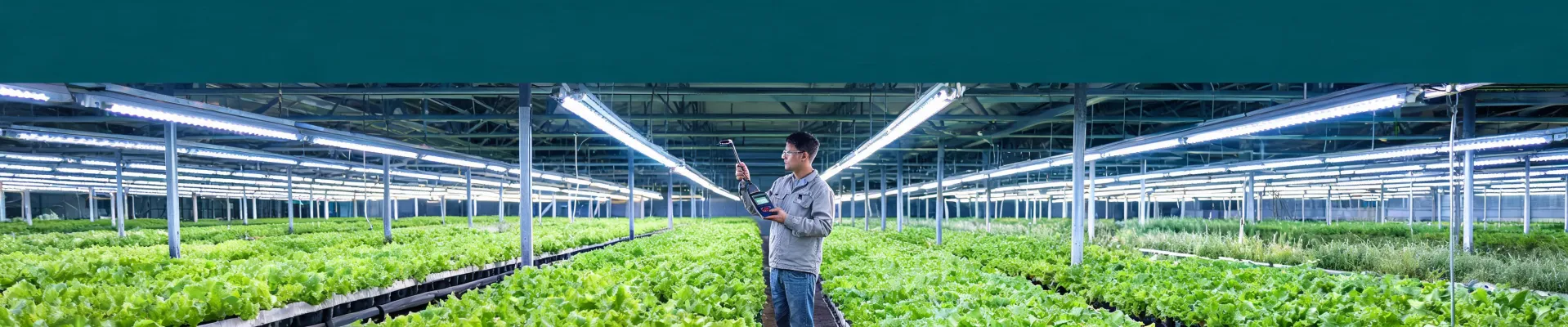
After four growing seasons, 600 commercial fixtures, and one $14,000 mistake, here's the honest answer to "what grow light is best for indoor plants": the cheapest light that runs reliably is almost never the cheapest light on the invoice. For commercial-scale operations, Fluence lights consistently sit near the top of my list — best driver reliability, fastest warranty replacements, predictable output. But if you're running a home setup or low-value fast-cycle crops, buying Fluence is overkill, and I'll tell you why below.
Let me start with the mistake, because the mistake is what made the rest of this make sense.
My $14,000 mistake (and why it took two batches to see it)
In March 2019 I purchased 180 LED grow lights from a cheaper supplier — a name you've never heard of, but which quoted me roughly 38% below every major brand. Total order: about $38,000. I checked the specs myself, approved it, and processed the PO. The PPFD numbers on the spec sheet looked competitive. The spectrum chart looked fine. The warranty said five years.
Six months later, 12% of the drivers were failing. By month 24, we were replacing drivers on 27% of the fixtures. And each failing driver took a full 8–10 weeks to arrive — my cost, not theirs. That's roughly $9,000 in replacement drivers and labor, plus $5,000 and change in crop loss on the affected rows. Total hit: a bit over $14,000 on a $38,000 order. The lights are still running, though I want to be honest — "running" is doing a lot of work in that sentence.
That number lives on the whiteboard in my office. Not because I want to relive it, but because the $38,000 quote was never the actual price. The actual price was $52,000 over four years.
In 2020 we switched that room to Fluence SPYDR 2i fixtures. Since then, we've run roughly 420 Fluence fixtures across four rooms. Four driver failures in four years. Every replacement was shipped free of charge and arrived in 10–14 days, not 8–10 weeks. That's the entire marketing pitch, honestly. Speed and coverage.
What I actually compared (not just the spec sheet)
It's tempting to think you can just compare PPF, photon efficiency, and price per fixture. But identical specs from different vendors can produce wildly different outcomes after 24 months in a humid 26°C room. So the second time around, I compared behavior over time.
PPF degradation: the number that no one advertises
I test output with an Apogee MQ-610 quantum sensor — it's not lab-grade, but it's consistent, and consistency is what matters when you're comparing your own fixtures against each other. I checked at 12, 24, 36, and 48 months:
- Fluence (SPYDR 2i): measured degradation of 3–7% from rated output after four years. Below what I expected given the hours.
- The budget fixtures (where they were still operating): 15–22% degradation by year three. Some of the fixtures were still "working" while putting out less light than the rating plate said.
That's the difference between a printed PPF number and a real PPF number. And if you're paying for 1,800 μmol/s per fixture and actually getting 1,500 after 30 months, nothing else in the spec sheet really matters — you paid 20% more per photon than you thought you did.
Which is why I'm skeptical of anyone who uses a Fluence spotlight video or a manufacturer's PPF chart as the sole comparison point. Those numbers show the fixture's best day. The metrics that matter are on the worst day, three years in.
Warranty, but specifically what it actually means
This is where the price difference gets real. The cheap supplier had a five-year warranty on paper. But the fine print required me to pay return freight, and each replacement driver took 8–10 weeks. On a 180-fixture room, that's a 30% crop-loss window no matter how you schedule it.
Fluence's warranty response time is the fastest I've seen in this segment. 10–14 days from ticket to replacement. Free freight. The failure rate is also low enough that we've stopped budgeting for it as a line item — we just have a spare driver on the shelf in each room, and it's rarely touched.
When I ran the numbers on the difference — the time cost, the labor cost, and the fact that a 3-day outage during flower is essentially a 3% loss on the room's total output — the Fluence premium disappeared inside 18 months. After that, it's savings.
The safety spotlight nobody puts in the review
One thing worth flagging for anyone upgrading from HID or HPS to LED: electrical load calculations need to be done from scratch. I've watched a grower (not naming names, mostly because he was me in this story) plug Fluence-class fixtures into a circuit originally sized for HPS ballast loads and trip the main breaker three times in one afternoon. Whatever you buy, put a spotlight on the electrical side of the installation, not just the spectrum side. We now mount an external safety spotlight on each room's main disconnect panel — not for aesthetics, but because a real one saved us a scramble during a midnight fault trip last October.
So when is Fluence the wrong choice?
It's tempting to think the answer is always "buy the best." That's too simple.
- If you're growing up to 10 plants for yourself: the math doesn't work. A hobby-grade LED at a fifth of the price will be perfectly serviceable, and the failure rate at that volume doesn't justify the premium.
- If your crop is low-value and fast-cycle: lettuce and microgreens run on 21–30 day cycles. A 5% degradation hit is a rounding error on a rotation you can pull in three weeks. Cheaper fixtures can make sense here.
- If you have no maintenance budget or no one on staff for replacement logistics: any premium fixture only pays off when failures get fixed fast. If your team can't manage a ticket in a week, half the warranty value evaporates.
- If you're still growing under HPS: fix your room first — sanitation, irrigation, humidity control. A grow light upgrade on top of a broken room just costs more.
To be fair, one caveat: if you're trialing a new crop on a small scale and don't know what spectrum fits yet, spending the Fluence premium before you've validated the crop is expensive guesswork. Rent or buy one row first. That's the mistake I made the second time — I bought in the wrong order.
What I'd actually ask before buying any commercial LED
Three things, in this order. I keep them on a card taped inside my desk drawer:
- What is this fixture's measured degradation at 24 months, from a grower I can actually talk to? Not the spec sheet. Not the spotlight video. An actual grower with a sensor.
- What does a warranty replacement actually look like — who ships, how fast, and who eats the freight? Get this in writing. Ask for a sample RMA timeline.
- What is the failure rate on drivers specifically? Drivers fail first, always. Board failures are rare. Ask the question and watch the rep's face.
If a vendor flinches on any of those three, whatever the price, run. It's not worth it. I learned that with $14,000 and one very quiet drive home.
— Written by a grower who wasted $14,000 so you don't have to. Checklist last updated September 2024 after we priced our next room.

Clara Whitmore
Clara Whitmore is a lighting photometry and LED source analyst specializing in bulbs, tubes, strips, panels, and integrated luminaires. She interprets IES LM-79 measurements and TM-30 color rendition data through luminous flux, efficacy, intensity distribution, CCT, chromaticity, fidelity, and gamut metrics. She writes evidence-led comparisons for specifiers selecting source formats and luminaires for commercial interiors, industrial spaces, or horticultural systems where measured optical and color performance matter.