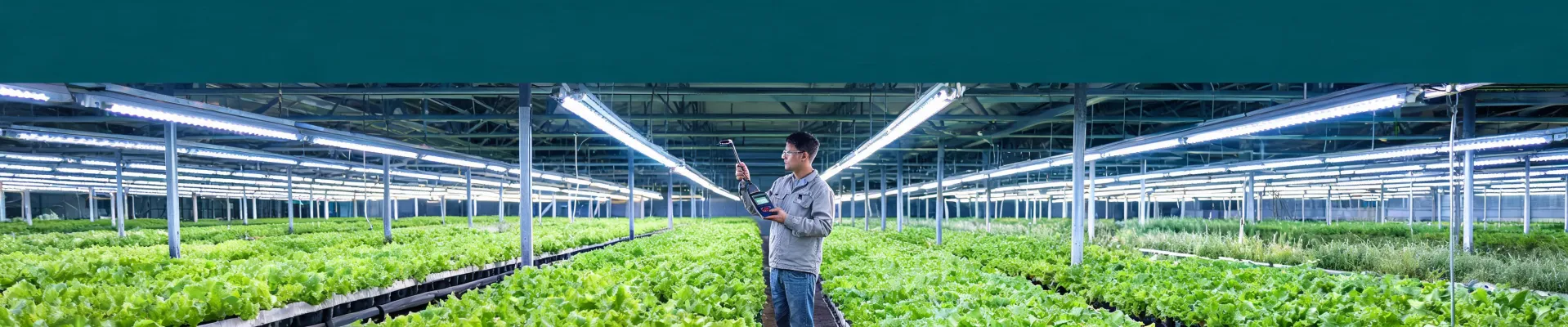
In February 2024, I found myself standing in our Shenzhen warehouse at 9 p.m., staring at a pallet of 48 grow lights that were supposed to ship to a commercial tomato operation in Oregon by the end of the week.
The client had ordered 48 units of the Spider Farmer SF1000 100W LED grow light—the compact model—plus a GGS controller for their new 2,400-square-foot greenhouse expansion. Their planting season started March 1. Miss that window, and they'd lose roughly $180,000 in projected yield. No pressure, right?
I'm the quality and brand compliance manager at Spider Farmer. I've been reviewing grow light batches for over four years now—roughly 200 unique SKUs annually across our full spectrum LED line. My job is simple on paper: make sure what leaves our facility matches what we promised.
The reality, as I've learned, is rarely that simple.
The batch that didn't pass
The first batch arrived from our contract manufacturer on a Tuesday. Standard protocol: pull 10% of units, run them through our PPFD testing rig, check spectrum consistency, verify the driver output, and inspect the Zigbee module handshake with our controller.
The PPFD numbers came back first. At 18 inches, our SF1000 spec calls for 650 μmol/m²/s at the center point. The batch averaged 598. That's an 8% shortfall.
I flagged it. The manufacturer's response? "That's within industry standard tolerance. Most brands allow ±10%."
They weren't wrong about the industry part. A lot of grow light companies do work with ±10% tolerances on PPFD output. But our published spec says ±5%. And here's the thing—when a commercial grower builds a lighting plan around your numbers, that 3% difference isn't abstract. It's the difference between hitting their DLI target and falling short.
I've seen this movie before. In 2022, we shipped a batch of lights that were "close enough" to spec. A greenhouse client in Colorado ended up with uneven canopy coverage. They didn't complain loudly—they just didn't reorder. We lost about $22,000 in annual business because we didn't want to delay a shipment by two weeks.
That lesson stuck.
The $2,400 decision
So Tuesday night, I had a decision to make. Accept the batch, ship it Friday, and hope the grower wouldn't notice an 8% PPFD dip. Or reject it, pay for expedited rework, and eat the cost of a rush production run.
The math on the rework wasn't pretty. Our contract manufacturer quoted $2,400 for a rush rebuild—24/7 production, dedicated QA, air freight from the factory to our warehouse. Standard lead time was three weeks. Rush was eight days.
Eight days meant the lights would arrive February 28. The grower needed them installed by March 5. Tight, but doable.
I approved the rush fee.
What I didn't expect was the second problem.
The Zigbee surprise
While the rework was in progress, our support team got a call from the same client. They'd been testing the GGS controller with their existing light switches—some older HID fixtures they were phasing out—and the Zigbee lighting pairing kept dropping.
Now, I should mention: our Zigbee ecosystem is designed to work with our controllers and our fixtures. The GGS controller handles up to 60 lights per gateway, and you can use it to schedule sunrise/sunset ramps, adjust spectrum, and monitor power draw. What it's not designed to do is babysit third-party HID ballasts installed in 2016.
But the client didn't know that. They assumed "Zigbee compatible" meant "works with everything."
People assume that if your light switch can control a fixture, it should control all fixtures. What they don't see is the protocol-level handshake that makes or breaks compatibility across different generations of hardware.
This is where the FTC's advertising guidelines become relevant. Per FTC business guidance (ftc.gov), product claims need to be truthful, not misleading, and substantiated with evidence. Saying "Zigbee compatible" without specifying "compatible with our GGS controller and SF-series fixtures" could reasonably be read as "compatible with all Zigbee devices." That's a compliance risk I wasn't willing to take.
We updated the product page that week. Added a compatibility matrix. Not glamorous, but necessary.
What actually shipped
The reworked batch passed on February 27. PPFD came in at 642–658 across the sample—within spec. The Zigbee modules paired cleanly with the GGS controller. We shipped same-day air freight.
The grower installed the lights on March 3. Two days ahead of their deadline.
They never knew about the rejected batch. They just knew their new greenhouse was ready for planting season.
Three things I'd do differently
Looking back, three things stand out.
First, the $2,400 rush fee was the cheapest part of that entire order. The alternative—shipping a batch that was 8% under spec—could have cost us a client relationship worth $180,000 in first-year revenue and far more in renewals. It took me about three years and a handful of near-misses to understand that in urgent situations, paying for certainty isn't a premium. It's insurance. The uncertain cheap option is almost always more expensive than the certain expensive one.
Second, "within industry standard" is a phrase I've learned to treat with suspicion. It's technically true and practically useless. If you're specifying grow lights for a commercial operation—whether it's a primary panel or a light spotlight for targeted supplementation—write your tolerances into the contract. Don't assume "standard" means what you think it means. Get it in writing, with test data attached.
Third, the Zigbee issue taught me how customers actually read product pages. They don't parse compatibility matrices. They see "Zigbee lighting" and assume it works with their existing setup. We've since added a "What can you use your light switch for?" FAQ to our controller pages—covering everything from scheduling to spectrum control to power monitoring, and explicitly calling out what's supported versus what isn't.
That FAQ cut our compatibility support tickets by roughly 30% since Q2 2024. Small change, measurable result.
The takeaway for growers
I still walk the warehouse floor before big shipments. Not because I don't trust the process—but because I've learned that "the process" is only as good as the specs you write into it.
And if you're a grower planning a season around a lighting spec? Ask for the actual test data. Not the marketing range. The data. If a vendor can't produce it, that tells you something.

Henrik Sorensen
Henrik Sorensen is an outdoor and infrastructure lighting analyst specializing in street lights, area lights, floodlights, canopy fixtures, and weather-exposed systems. He combines IEC 60529 ingress-protection classification with photometric distributions, BUG ratings, surge withstand, corrosion exposure, thermal derating, mounting height, and light-trespass limits. He writes application guides for municipalities, contractors, and site owners comparing coverage, durability, installation demands, maintenance access, energy use, and long-term operating risk.