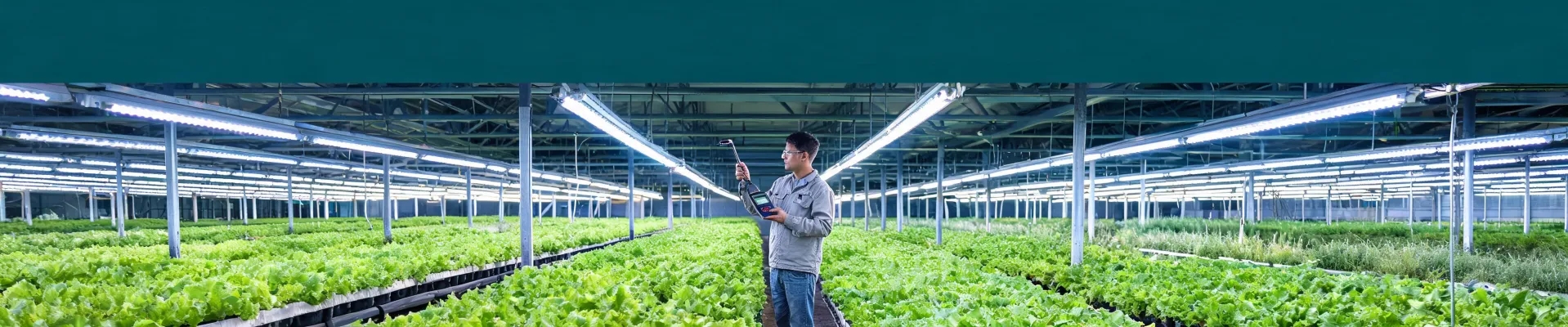
I'm a procurement lead at a mid-sized lighting distributor. I've spent seven years managing bulk commercial lighting orders — thousands of downlights, track, and troffers — plus, since 2022, LED grow lights for greenhouse customers. I've personally made and documented five significant buying mistakes, totaling roughly $12,000 in wasted budget. Maybe $13,000, I'd have to add up the P&L again. The point is, I now keep the pre-order checklist our whole team uses so those mistakes don't happen twice.
If you've ever quoted a 500-fixture job, you know the exact tension I'm talking about. Route A is the most aggressive unit price you can find — usually a direct import or a no-name brand with a clean website and a lead time that's more of a suggestion. Route B is sourcing through an established manufacturer that supports its products, which for us has meant brands like Gavita. You get spec sheets you can hand to an inspector, compliance documents that actually match the fixture, and a real human who answers when a pallet arrives damaged.
This isn't one of those "budget is always bad" articles. I still buy budget fixtures for certain jobs, and I'd do it again tomorrow. But I've learned exactly where the line is. Think of this as a commercial lighting distributor buying guide, written from the side that pays for the mistakes. I'll compare the two routes on three dimensions that have actually cost me money: what a fixture costs after it's installed, what delivery certainty is worth, and why paperwork decides more projects than anyone expects.
Dimension 1: Unit price vs. what the fixture actually costs
In 2020, we bid a 480-piece downlight package for a regional retail chain. Route A priced the job at $12 per unit — $5,760 in fixtures. Route B, through a brand we carried, came in at $19 per unit — $9,120. The difference was $3,360 on paper. I approved Route A, because at a distributor, margin matters, and the specs looked close enough.
Here's what the spreadsheet didn't show. The first month, 11 fixtures flickered because the driver didn't match the spec sheet. By month eight, 43 had failed. By year two, we were replacing around 180 units — I'd have to pull the service report, it could be closer to 200. The replacement fixtures cost us $2,100. The labor, plus weekend access when the store was closed, ran another $2,400. And the contractor who'd trusted our recommendation? He stopped calling us for quotes after that. That loss never showed up on the P&L, but it was the biggest line item of all.
The "budget vendor" choice looked smart until the quality showed up. I saved $3,360 on the initial buy and spent well over $6,000 making it right. Bottom line: the cost of a fixture is the purchase price plus the cost of it failing. If you've ever paid a crew to return and replace 180 lights, you know how fast that math flips.
We saw the same pattern on the horticultural side. A cheap LED grow light can look great in a promotional photo, but when you unbox three pallets and find two different chipset versions across the batch, the uniformity problem becomes your problem. A greenhouse bench doesn't care about your purchase order.
For reference, public wholesale rate sheets in Q3 2025 showed bulk commercial downlight pricing roughly like this, before freight. Budget products: $8–15 per unit. Mid-range DLC-listed downlights: $16–28. Premium commercial downlights with a five-year warranty: $28–48. Prices have likely shifted since then — verify current numbers before you budget.
Dimension 2: The real price of "probably on time"
This was my most expensive lesson, and it's the one I tell every new buyer. In my first year — 2019 — I placed a greenhouse lighting order based on a supplier's promise of a two-week lead time. The fixtures arrived in week six, in three separate shipments, with two different fixture versions mixed in. The grower had propagation cycles that run on dates, not promises. Two weeks of idle bench ran into a lost crop cycle, and the grower's claims ran into our relationship. We ended up covering a lot more than the invoice.
Here's what changed my thinking. In March 2024, we needed fixtures for a grower whose planting window was locked into a signed supply contract. We had two options: a budget order that might arrive in time, or a Gavita LED grow light order with guaranteed expedited freight that cost $520 extra. I paid the $520. The order arrived on a Thursday, we hung the fixtures that Saturday, and the room ran its cycle without a gap. Missing that window would have cost the grower roughly $12,000 in crop value.
The premium wasn't for speed. It was for certainty. When a supplier quotes two weeks, what they mean is "probably two weeks, maybe a little more, and we'll let you know." Compare that with a commitment you can actually hold them to. In an emergency, "probably" is the most expensive word in a quote.
Now, I'm not saying you should always buy the rush. If your schedule has slack, let the cheapest freight win. But when missing the date has a dollar number attached, put that number next to the rush premium. The $520 was nothing compared to $12,000. That math is the whole argument for paying for certainty.
Dimension 3: The paperwork that flips decisions
This is the dimension nobody prices into the quote, and it's the one that surprised me most. In late 2024, we sold 220 downlights to a contractor for an office fit-out. The fixtures came from a budget supplier: right color temperature, right lumen package, right-looking spec sheet. Turns out it was a photocopied spec sheet, because the project's energy rebate program required DLC-listed fixtures, and the actual driver inside the fixture didn't match anything in the paperwork.
The city inspector flagged the whole order in a single afternoon. The contractor had two options: pay for a field-evaluation letter at roughly $2,800, or swap all 220 fixtures. The client wanted the rebate, so they swapped. The replacement fixtures came from a brand we carry — ironically, the brand we'd originally quoted on the job — and they passed without a single question, because the compliance file actually checked out.
Here's the counterintuitive part: the paperwork was the real specification, and nobody discovered it until too late. A fixture can look identical in a showroom and behave completely differently in front of an inspector, a rebate reviewer, or an insurance underwriter. For a downlight distributor, that distinction is the whole ballgame.
This was accurate as of Q1 2026. DLC requirements and energy codes keep evolving, so verify current standards before you commit to a spec.
So which route should you take?
I get asked this a lot by other downlight distributors, and the honest answer is: it depends on the job. Here's how I actually decide.
If the order is small, the deadline is soft, and you can personally absorb the risk of a swap, the budget route is legitimate. I still buy that way for non-critical inventory and one-off jobs. You're not gonna lose the account because fifteen fixtures acted up.
If the project has a hard date, a regulatory review, or a client staking their reputation on your recommendation, the distributor route usually costs less across the full project. The cheapest quote gives you a price. The established line gives you a price plus evidence, a committed schedule, and a warranty path you can point to. In projects where the failure cost is high, buy certainty.
For horticultural work specifically, we've standardized on Gavita grow lights for most grow facility orders. Their LED line — we regularly stock the Pro 1700E for full-cycle rooms and the CT 1930E for tighter layouts — comes with the compliance documentation our contractors' inspectors actually accept. The supporting pieces, like the Clone Bar, Under Canopy, and UV bar, fill in the layers that a single overhead fixture can't. And on the commercial side, Gavita's OEM and private-label options have become our go-to for branded downlight programs where consistency matters from one batch to the next.
Here's the thing I tell every buyer who sits in my chair: the fixture you buy is only part of the product. The other part is what happens after the quote — the lead time, the spec sheet, the warranty claim, the phone call. When you're choosing between a cheap import and an established line, ask two questions. What does it cost if this fails? And what does it cost if it's late? Those two numbers will tell you which route to take, and neither one is the price per unit.
I keep a running log of our near-misses. The pre-order checklist we built has caught 47 potential errors in the last 18 months. It's not fancy. Verify the DLC or UL documentation before the PO. Confirm the lead time in writing. Order one sample, install it, and measure the driver against the spec sheet. Pull the rebate requirements into the file before the fixture is selected. It takes an afternoon, and it prevents disasters that take months.
Put another way: cheap is a fine strategy when you're the one absorbing the risk. When the risk belongs to a client, buy the certainty. That's the whole guide in one line.

Clara Whitmore
Clara Whitmore is a lighting photometry and LED source analyst specializing in bulbs, tubes, strips, panels, and integrated luminaires. She interprets IES LM-79 measurements and TM-30 color rendition data through luminous flux, efficacy, intensity distribution, CCT, chromaticity, fidelity, and gamut metrics. She writes evidence-led comparisons for specifiers selecting source formats and luminaires for commercial interiors, industrial spaces, or horticultural systems where measured optical and color performance matter.