-
Why This Comparison Matters Right Now
-
Dimension 1: Spectrum—The Fundamental Difference
-
Dimension 2: Thermal Design—Where the Savings Disappear
-
Dimension 3: Upfront Cost vs. Total Cost of Ownership
-
Dimension 4: Compliance—The Part Nobody Puts in a Cost Guide
-
When Repurposed Commercial Lighting Actually Makes Sense
-
The Checklist I Give Every Wholesale Buyer
-
The Bottom Line
I've spent the last four years reviewing lighting deliverables before they reach customers—roughly 200 unique fixtures a year, from commercial downlights to purpose-built horticultural LEDs. One question keeps coming back from B2B buyers: "Can't I just use commercial lighting for growing? It's a fraction of the cost."
It's a fair question. The honest answer is more nuanced than either side of the industry tends to admit. So I'm going to compare them the way I'd audit them: spectrum, thermal design, total cost, and compliance.
Why This Comparison Matters Right Now
In Q3 2025, wholesale buyers started asking—at noticeably higher rates than before—whether recessed lighting or commercial downlights could work as grow lights. I get the appeal. Commercial fixtures sourced through private label and wholesale distribution have gotten incredibly cheap. But "cheaper upfront" and "right for the application" are different things. Let me show you what I mean.
Dimension 1: Spectrum—The Fundamental Difference
This is the dimension that matters most, and the one that gets buried in marketing materials.
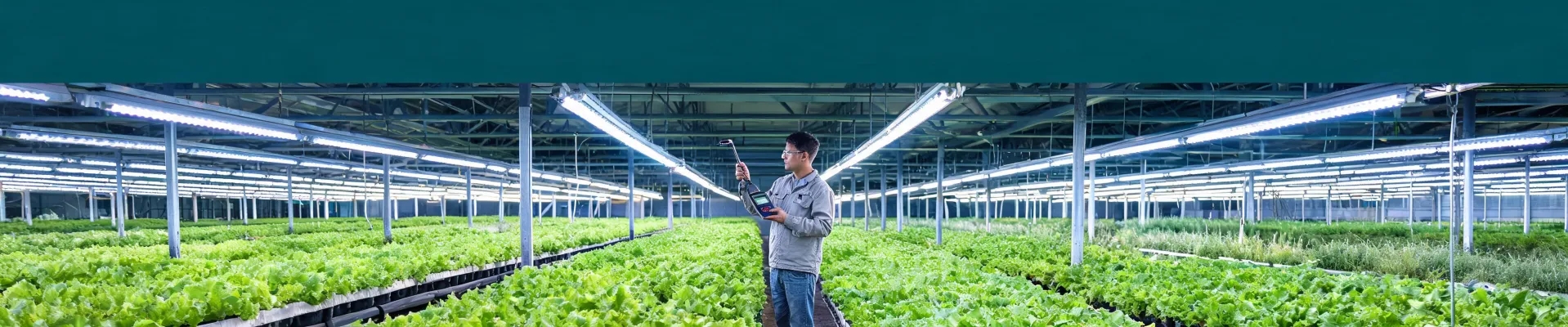
Purpose-built grow lights—like Gavita's Pro 1700E, 1900E, and CT 1930E—are engineered around photosynthetic photon flux (PPF). The spectral distribution includes UV-A and far-red channels that influence plant morphology and photoperiodic response. The spec sheet lists µmol/s, not just lumens.
Commercial recessed lighting and downlights are tuned for the human eye. They're optimized for CRI and lumens. A 5000K commercial fixture will grow something, but the spectrum isn't designed for photosynthesis. You'll see stretching, reduced internode spacing, and weaker flowering—none of which show up in a lumens-per-watt comparison.
My shorthand from four years of audits: if the spec sheet emphasizes CRI and lumens without listing PPF, it was not designed for plants.
Per IES LM-79-19 standards, photometric measurements for LED fixtures distinguish between luminous flux (lumens, for human vision) and photon flux (µmol/s, for plant response). Evaluating a grow light by lumens alone is like judging a tractor by its top speed.
Verdict: Purpose-built grow lights win. Significantly.
Dimension 2: Thermal Design—Where the Savings Disappear
Here's where I have a personal story. Two years ago, a prospective client brought us 800 commercial LED panels, hoping to rebrand them as grow lights for an indoor farm. Upfront savings: roughly 40% versus purpose-built horticultural fixtures.
I knew I should've flagged the thermal design before approving the evaluation batch. But I thought—what are the odds the drivers fail in storage? The odds caught up with me.
Commercial LED drivers are rated for ambient temperatures around 25–40°C. Greenhouses and grow rooms? They regularly hit 30–45°C with 60–90% relative humidity. Harsh. Humid. Dusty. The driver capacitors degraded, and we rejected the batch after 8,000 units developed failures in testing. The vendor claimed the fixtures were "within industry standard"—which was technically true. For commercial applications. That doesn't help a grower.
Purpose-built horticultural fixtures are designed for these conditions: higher IP ratings (IP65/IP66), wider operating temperature ranges, corrosion-resistant housings, and thermal management sized for the driver's real-world load in a grow environment.
That quality issue cost us a $22,000 redo and delayed the client's launch by two months. It also taught me a rule I now apply to every cost guide: environmental specs matter more than the fixture's sticker price.
Verdict: Purpose-built wins. This one isn't close.
Dimension 3: Upfront Cost vs. Total Cost of Ownership
I went back and forth on this section for a while, honestly. I don't want to be the quality guy who just says "spend more."
As of January 2026, a commercial LED downlight from a private label supplier might run $30–$80 per unit. A purpose-built horticultural fixture like the Gavita Pro 1700E typically sits in the $300–$700 wholesale range. That's a 4x to 10x gap. I do not want to minimize that—it's real, and it's a barrier for many buyers.
But here's where the comparison gets interesting. Repurposed commercial fixtures typically deliver 1.8–2.3 µmol/J, while purpose-built horticultural fixtures land at 2.7–3.2 µmol/J. Actually, let me correct myself—those numbers assume new fixtures in ideal conditions. In a hot, humid grow room, the gap widens further.
Then there's coverage. A downlight's photon distribution is narrow. In one 2024 project, a customer needed 300 commercial fixtures to achieve the same average PPFD that 200 purpose-built fixtures delivered across identical bench space. The cost difference? Commercial: $15,000 upfront. Purpose-built: $90,000 upfront. But the commercial route consumed 45% more electricity, and the customer replaced 40 drivers in the first year alone.
Is the premium option worth it? Sometimes. Depends on context. But when I run the numbers over a five-year horizon, purpose-built fixtures come out ahead in nearly every photosynthetic application I've audited.
Verdict: Purpose-built wins on total cost of ownership—but the upfront gap is substantial and worth taking seriously.
Dimension 4: Compliance—The Part Nobody Puts in a Cost Guide
Here's the dimension that quietly kills deals.
A commercial recessed lighting fixture with UL listing is not the same as a horticultural fixture with UL listing. UL 1598 covers luminaires for general use. UL 8800 specifically covers horticultural lighting equipment. They are not interchangeable. A fixture certified under UL 1598 is not automatically eligible for agricultural or horticultural installations.
In 2023, a downlight distributor ordered 5,000 commercial fixtures and rebranded them under their own private label, with plans to sell them into the hydroponics market. The fixtures passed internal inspection. But when a large commercial grower requested UL 8800 documentation, it didn't exist. The sale collapsed, and the distributor absorbed the full inventory.
When you buy purpose-built horticultural fixtures from a qualified supplier, you typically get:
- UL 8800 or equivalent certifications for horticultural use
- DLC listing where applicable, which affects utility rebate eligibility
- PPF data measured per LM-79-19 and LM-80-08 testing procedures
- A warranty that actually covers the environment you're operating in
The upside of the cheaper route: 40–80% lower upfront cost. The risk: compliance failure, voided warranties, and liability in an agricultural setting. I keep asking myself—is that savings worth potentially losing your largest customer over a certification gap?
Verdict: Purpose-built wins. Commercial fixtures in grow applications are a compliance risk, not a value play.
When Repurposed Commercial Lighting Actually Makes Sense
I promised I wouldn't write a one-sided comparison. So here's the part that might surprise you.
There are legitimate cases where commercial lighting is the right call in a grow facility:
1. Non-photosynthetic lighting. Walkways, storage areas, inspection benches, office spaces—these don't need horticultural spectrum. Standard commercial downlights or recessed lighting are perfectly appropriate. Don't pay grow-light prices for ambient lighting.
2. Propagation experiments or very low-light crops. If you're running short-term trials with microgreens or low-light species, the efficiency gap matters less. Just be honest about what you're testing.
But for anything where photosynthesis is the goal, purpose-built LEDs are the safer investment.
The Checklist I Give Every Wholesale Buyer
If you're sourcing grow lights for your own brand or your customers' facilities, here's what I'd verify before signing anything:
- Ask for PPF, not just wattage. A 600W fixture at 3.0 µmol/J outperforms an 800W fixture at 2.0 µmol/J on every meaningful metric.
- Check the IP rating and ambient temperature range. "Indoor dry locations only" will not survive a greenhouse.
- Request UL 8800 or equivalent documentation. "UL listed" is not enough—make them show the horticultural certification.
- Ask for photometric files (IES or .ldt). This lets you run your own coverage simulations instead of trusting claims.
- Read the warranty's environmental exclusions. A five-year warranty that excludes high humidity is worth less than a two-year warranty that covers it.
- For private label or OEM orders, verify the certification covers your brand, not just the factory's. Listings are not automatically transferable.
The Bottom Line
Purpose-built horticultural LED fixtures and repurposed commercial lighting are not the same product with different price tags. They're engineered for different environments, different objectives, and different compliance frameworks.
The question isn't "can commercial lighting grow plants?" It's "can you afford the efficiency losses, compliance gaps, and failure risks that come with using the wrong tool?"
An informed customer asks better questions and makes faster decisions. That's why I'd rather spend ten minutes explaining the difference than deal with mismatched expectations later.
That's my take from four years in quality review. Hope it saves you a $22,000 lesson.
Clara Whitmore
Clara Whitmore is a lighting photometry and LED source analyst specializing in bulbs, tubes, strips, panels, and integrated luminaires. She interprets IES LM-79 measurements and TM-30 color rendition data through luminous flux, efficacy, intensity distribution, CCT, chromaticity, fidelity, and gamut metrics. She writes evidence-led comparisons for specifiers selecting source formats and luminaires for commercial interiors, industrial spaces, or horticultural systems where measured optical and color performance matter.