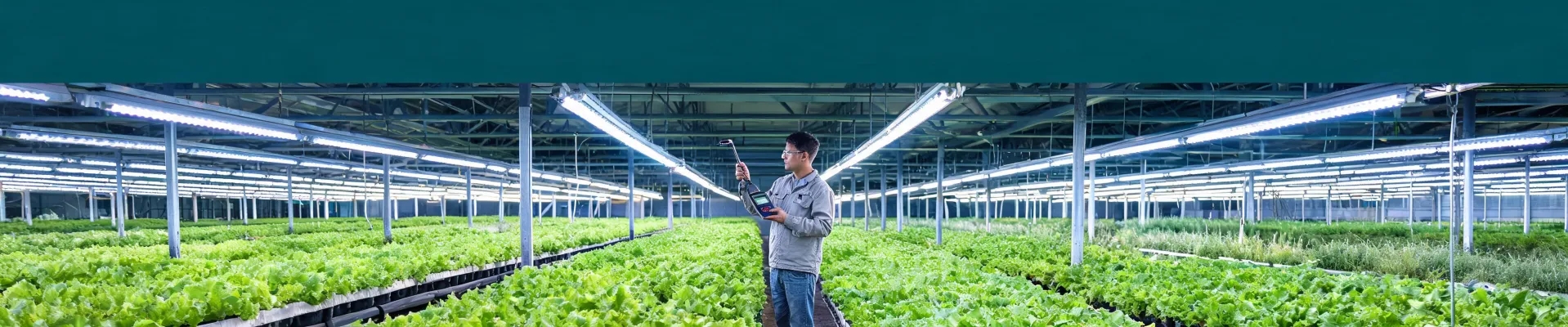
Last November, a long-term client called me at 9:40 on a Tuesday morning. Their greenhouse expansion was four days from handoff, and the lighting vendor they'd lined up had just gone silent. No shipping confirmation, no tracking number, nothing. They needed 140 commercial LED fixtures—a mix of Gavita Pro RS 2400E units for the propagation zones and standard ceiling lights for the facility's office and packing area—installed by Friday. Normal sourcing for that volume runs 3 to 5 weeks.
I'd been coordinating rush orders for a specialty horticultural supplier for about seven years at that point. I'd handled same-day turnarounds for commercial clients. But this one had a nasty wrinkle: half the order was grow-specific (spectrum matters, spectrum is not interchangeable), and the other half was generic commercial ceiling lighting. Two totally different supply chains, one deadline.
The First Mistake: Treating This Like a Price Problem
My initial instinct was the same one I'd used a hundred times before—pull up a supplier list, sort by quote, pick the fastest combination of cheap and available. That instinct was wrong, and it took me about six hours to figure it out.
I fired off RFQs to eleven light fixture suppliers that morning. By noon I had five responses. The lowest quote came back fast and confident: a warehouse distributor who claimed they could ship "Gavita-compatible" fixtures by Wednesday. Roughly 30% below what I expected to pay for genuine Gavita grow lights.
"Compatible" is a red flag word. I know that. But when you're staring down a Friday install and the clock's already at 26 hours consumed, "compatible" starts to sound reasonable.
Had maybe 90 minutes to decide before I'd lose my Wednesday shipping window. Normally I'd request photometric data, verify driver specs, check warranty terms, get a reference customer. There was no time for any of that. So I did something I shouldn't have: I went with the low quote based on the rep's verbal assurance and a spec sheet that, in hindsight, had two numbers that didn't match the official Gavita Pro RS 2400E datasheet.
The Turn: What Arrived Wasn't What Was Promised
The fixtures landed Thursday afternoon. I opened one carton myself because the client's installer was already on-site waiting.
The "Gavita-compatible" unit had a different diode arrangement than what the datasheet showed. Different spectrum output in the 660nm range—which for a propagation zone isn't a minor detail, it's the whole point. The driver was a no-name part with a CE label that looked, honestly, photocopied. And the ceiling lights—the supposedly simple part of the order—had a color temperature that was visibly warmer than the 4000K spec we'd ordered. Walk into the facility and you could see it: half the space looked like a showroom, the other half looked like a basement.
We were now about 20 hours from install. The client's project manager was standing in my parking lot asking a very simple question I couldn't answer.
"Can we install these or not?"
Answer: not.
What saved us wasn't clever sourcing. It was a relationship. A distributor I'd worked with on three smaller orders—orders that at the time probably looked trivial to them, maybe $800 here, $1,200 there—picked up the phone at 6 PM on a Thursday. That matters. I've been on the other side of that call, and most suppliers won't pick up at 6 PM for a five-figure rush order from someone they don't know.
He didn't have 140 units either. But he had 60 units of actual Gavita Pro RS 2400E stock in his regional warehouse, and he knew which of his commercial ceiling light lines could ship same-night from a partner facility. He also did something no low-bid vendor had done all week: he asked what the fixtures were for before quoting. That one question—"what are you lighting?"—changed the whole recommendation. The propagation zone didn't need uniform coverage across the whole footprint; it needed targeted intensity. Sixty 2400E units, correctly placed, covered more usable area than a hundred cheaper fixtures would have.
The Recovery (and the Cost)
We paid a 40% rush premium on the Gavita units and a flat $1,800 in expedited freight to get the commercial ceiling lights there by Friday morning. Total overrun against the original budget: about $6,400. The client absorbed some of it; we ate the rest.
Friday, 11:20 AM. Installer started mounting. The spectrum readings on-site matched the datasheet within 3% on every unit we spot-checked. The ceiling lights were consistent. Nobody had to explain anything to anyone.
There's something satisfying about that specific moment—after the panic, after the wrong shipment sitting in your warehouse, after the uncomfortable phone call, watching a crew mount fixtures that actually work. It doesn't erase the overrun. But it does mean the client called us again in February.
What I Actually Learned About Evaluating Light Fixture Manufacturers
After that week, I rewrote how we vet suppliers. Not dramatically—but specifically. Here's the checklist I use now, and I'll be honest, most of it comes from what went wrong in those 72 hours:
1. Ask what they ask you
A supplier who quotes without asking about application, mounting height, or intended use is a catalog, not a partner. The vendor who saved us asked one question and changed the recommendation. The vendor who nearly sank us asked nothing.
2. Verify the datasheet against the source
For Gavita grow lights specifically, cross-check every spec against the official product page. Diode count, spectrum range, wattage draw, driver brand. If a "compatible" product's numbers are within 5% of the real thing, that's suspicious. Real specs don't shadow each other by coincidence.
3. Test the responsiveness before you need it
I now make a point of sending small, non-urgent questions to new suppliers—a spec clarification, a lead-time question—and timing the response. How a supplier handles a $0 question tells you how they'll handle a $20,000 problem.
4. Don't treat small orders as throwaway
That Thursday-night save came from a relationship built on three orders that were, frankly, small. Under $2,000 total. When I was starting out buying fixtures, the suppliers who took my $600 orders seriously are the ones I still call for $60,000 orders. The ones who told me "come back when you hit container volume" aren't on my list anymore.
Small doesn't mean unimportant—it means potential. I've watched this play out on both sides now: as the buyer who got dismissed early on, and as the supplier who answers the small calls because I remember how it felt.
5. Separate "fast" from "right"
Every supplier in that first round of RFQs was fast. Only one was right. Speed without spec accuracy is just a faster way to miss your deadline. When I'm triaging a rush order now, the first filter isn't lead time—it's whether the product actually matches the application. Lead time matters second.
The Bottom Line
We made the Friday install. The project stayed within the client's contingency budget, barely. And I spent the following weekend writing a supplier evaluation process that I should've written three years earlier.
If you're sourcing ceiling lights or grow lighting and you're not under deadline pressure, use that luxury. Ask the annoying questions. Request the photometric files. Get a reference. Test the small order before the big one.
If you are under deadline pressure—and eventually you will be—the only thing that saves you is having already done that work. Not a cheaper quote. Not a faster promise. Just the list of suppliers who proved, on small orders, that they'd show up on the big ones.

Adrian Flores
Adrian Flores is an architectural and decorative lighting analyst specializing in pendant lights, chandeliers, wall lights, floor lamps, table lamps, and track lighting. He applies IEC 60598-1 luminaire requirements and photometric data to examine beam angle, shielding, surface temperature, mounting geometry, dimming compatibility, and glare. He writes practical guides for designers and buyers balancing visual character with usable illumination, safe installation, maintenance access, and total project cost.