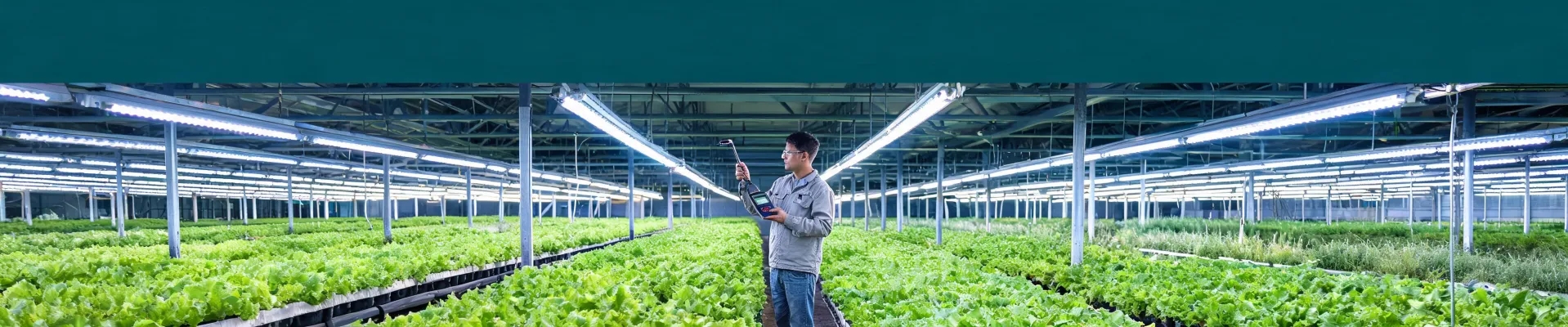
If you're sourcing lighting for a grow facility or a commercial project, you're often comparing two very different supplier types: specialized horticultural lighting brands like Gavita, and general commercial lighting OEMs that make downlights and spotlights. I've handled 200+ rush orders at a lighting distributor over the last 8 years, including same-day turnarounds for contractors and growers. That's taught me one thing: the comparison isn't about which supplier is better overall. It's about which supplier fits the job.
Here's the framework I use when I'm triaging a rush order. I compare five dimensions: spec clarity, compliance docs, OEM flexibility, lead-time reliability, and brand perception. Below, I'll put specialized horticultural lighting (A) next to general commercial lighting sourcing (B) on each one.
1. Spec Clarity: PPF/PPE vs. Lumens/CCT/CRI
Specialized horticultural lighting (A): A fixture like the Gavita Pro RS 2400E LED grow light is judged by plant-focused metrics. You'll see PPF, PPE, spectrum, coverage area, dimming range, and thermal management. These specs tell you how much usable light the plants get.
General commercial lighting (B): A downlight or spotlight supplier talks in lumens, CCT, CRI, beam angle, IP rating, cutout size, and driver type. Those numbers matter for offices, retail, and hospitality. They don't tell you much about photosynthesis.
Bottom line: Don't compare PPF to lumens. It's a red flag when a supplier mixes them. If your project is horticultural, demand plant metrics. If it's commercial, demand photometric files (IES or LDT). A higher wattage fixture isn't automatically better. Efficacy and spectrum matter more.
2. Compliance & Documentation: DLC, UL/ETL, LM-79/LM-80
Specialized horticultural lighting (A): Look for DLC Horticultural Qualified Products List (QPL) status, UL or ETL listing, IP65 or IP66 for wet areas, and LM-79, LM-80, and TM-21 reports. For Gavita grow lights, the brand usually has this documentation ready.
General commercial lighting (B): Commercial downlights and spotlights need UL or ETL, RoHS, FCC, and often ENERGY STAR or DLC standard listing for rebates. The paperwork looks similar, but the qualifying metrics are different.
Bottom line: The surprising part is that a fixture can be UL listed but not rebate-eligible. UL safety listing and DLC efficiency listing are not the same thing. As of January 2025, always check the exact model number on the current DLC QPL. I'm not a photometric engineer, so I can't speak to LM-79 lab procedures. What I can tell you from a sourcing perspective is: require the test report for the exact model you're buying, not the family series.
3. OEM/Private Label Flexibility: MOQ, Tooling, Branding
Specialized horticultural lighting (A): Gavita is a branded product. If you're looking for private label, the flexibility may be limited. You get proven performance and brand recognition, but you may pay more and wait longer for custom changes.
General commercial lighting (B): This is where commercial lighting sourcing shines. Many spotlight OEM and downlight suppliers offer custom CCT, beam angles, finishes, and branding. MOQs vary, but you can often start smaller than with a specialized brand.
Bottom line: If you need a fast private-label launch, a commercial OEM is usually the no-brainer. If you need plant-specific performance that your client already trusts, a specialized brand like Gavita is worth the premium. Ask about tooling costs, sample lead time, and revision limits before you commit.
4. Lead Times & Rush Orders: The Emergency Specialist's View
In March 2024, a client called at 4 p.m. on a Thursday needing 12 Gavita Pro RS 2400E LED grow light fixtures for a grow room flip that was happening Saturday morning. Normal lead time was three weeks. We found a distributor with stock in another state, paid $1,200 extra in freight on top of the base order, and delivered Friday night. The client's alternative was delaying the crop cycle by two weeks.
Specialized horticultural lighting (A): Rush orders are possible, but stock is often limited. You're dependent on distributor inventory. When it works, it's a game-changer. When it doesn't, you can't just swap in a generic fixture without risking the grow.
General commercial lighting (B): Commercial OEMs often have faster general components and more flexible production. But if you need a specific DLC-listed horticultural spectrum, they may not have it. Speed without the right spec is just a faster way to fail.
Bottom line: The upside of a rush order is saving a deadline. The risk is paying extra for the wrong fixture. I keep asking myself: is the time saved worth the spec risk? In that March 2024 case, yes. But we verified the exact model number before we paid the freight.
5. Quality Perception: What Your Client Sees
When you install a fixture, the client doesn't see the driver or the diode. They see the light quality, the finish, and the documentation. If you're a contractor, a cheap downlight that flickers makes the whole job look cheap. If you're a grower, a weak spectrum shows up in leaf color and yield consistency.
From the outside, the lowest quote looks like the most efficient supplier. The reality is hidden costs (setup fees, revision charges, shipping, compliance gaps). People think expensive vendors deliver better quality. Actually, vendors who deliver quality can charge more. The causation runs the other way.
That's why I treat quality as a brand issue, not just a spec issue. The first fixture a client touches tells them how your company operates. It's not about buying the most expensive option. It's about matching the spec to the application. The $50 difference per fixture can translate to fewer callbacks and better client retention.
Which Path Should You Choose?
Choose a specialized horticultural supplier (like Gavita) if:
- You need plant-specific metrics (PPF, PPE, spectrum).
- You want DLC Horticultural QPL status and proven grow performance.
- Your client already recognizes Gavita grow lights or the Pro RS 2400E.
- You can plan ahead and don't need private-label branding.
Choose a general commercial lighting OEM if:
- You're sourcing downlights, spotlights, or track lighting for commercial spaces.
- You need custom CCT, beam angles, finishes, or private label.
- You want lower MOQs and faster sample turnaround.
- You have the in-house team to verify photometric files and compliance.
Go hybrid if: you source horticultural lighting from a specialist and commercial lighting from an OEM. Just don't assume the compliance paperwork transfers between categories. It doesn't.
One last note: I'm not a lighting designer, so I can't tell you the perfect layout for your space. What I can tell you is that the supplier who answers your spec questions clearly before the rush is usually the one who delivers on time. Ask for the exact model number, the test report, and the lead time in writing. If they hesitate, that's your sign.

Linh Tran
Linh Tran is an LED driver and smart-lighting controls analyst specializing in dimming, sensors, switches, wireless control, and connected lighting systems. She checks IEC 61347 controlgear safety boundaries and IEC 62386 protocol functions, then measures power factor, THD, inrush current, standby load, dimming range, addressability, and diagnostic behavior. She writes engineering guides for teams comparing drivers, motion sensors, smart bulbs, and control strategies across new installations and interoperability-sensitive retrofits.