- The Documentation Gap: What Arrives Before You Ask
-
The Price That Grew vs. The Price That Stuck
-
OEM Flexibility: When "We'll Put Your Name On It" Is a Trap
-
Performance Data: Published Photons vs. Confident Marketing
-
The Pre-Check List I Built After the Third Rejection
-
So Which Route Should You Take?
I've handled lighting procurement for six years. In that time, I've personally made and documented nine significant purchasing mistakes, totaling roughly $63,000 in wasted budget. I keep that number on a sticky note above my monitor, because it's the most honest argument I have for the checklist my team now uses on every order.
This article is a direct comparison between two ways of sourcing lighting at scale. I've used both, and I have the receipts to prove it.
- Route A: The commodity quote. A broker, importer, or trading company offers a low per-unit price, a one-page spec sheet, and a casual promise that everything meets "international standards."
- Route B: The documented manufacturer. A specialist like Gavita—or any manufacturer with in-house engineering and published photometric data—quotes higher, but attaches the verification material before you think to ask for it.
Below, I compare these two routes on the four dimensions that have cost me real money: documentation, true pricing, OEM flexibility, and performance data. One of the conclusions surprised me enough that I re-checked my own spreadsheets.
The Documentation Gap: What Arrives Before You Ask
In March 2022, I approved a $14,800 order for 300 bulk ceiling light fixtures from a supplier who described their products as "UL equivalent." I asked for the actual UL certificate three times over two weeks. Each time, I got the same photo of a certificate with a different company's name visible in the margin.
When the order landed, the fixtures carried no UL mark at all. The driver was unbranded. The wiring labels didn't match the spec sheet. The local inspector flagged them before the first installation session. That project ended up paying $4,200 for replacement drivers and a 10-day schedule delay.
The most frustrating part: this was entirely preventable. You'd think a written requirement in the purchase order would fix things, but compliance requirements only work when the supplier actually controls the manufacturing.
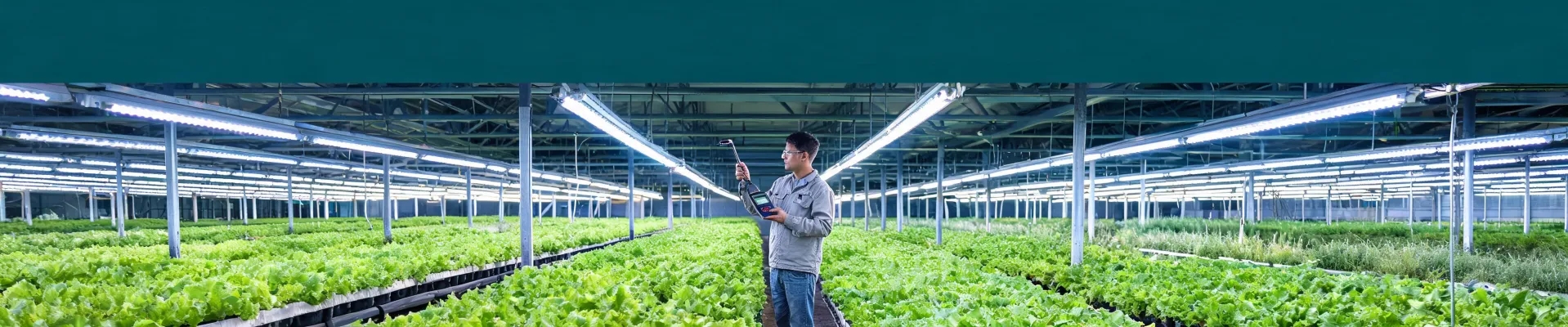
Now compare that with what happened when I evaluated the Gavita Pro 1700E LED grow light for a cultivation facility. The quotation package arrived with the DLC listing, the IES photometric file, and the LM-80 lumen maintenance report attached. I didn't have to ask. Nobody had to "check with the factory." The documents were simply part of how this manufacturer sells.
The direct contrast:
- Route A: "Send me your requirements and we'll see." Every document request takes days, and the files come as photos of printouts.
- Route B: Documents arrive with the quote, in the same file folder, ready to forward to an inspector.
Conclusion here: Documentation isn't a favor a supplier does you. It's the first filter. If the paperwork doesn't arrive before the invoice, the product probably won't match the spec either.
The Price That Grew vs. The Price That Stuck
I'm going to be direct: the most expensive lighting order I ever placed started with the lowest quote I ever received.
In early 2023, a broker offered bulk ceiling lights at $11.20 per unit—$0.80 less than the documented alternative. Felt like a win. Then the extras arrived, one invoice at a time:
- Pallet crating and export packaging: $420
- Documentation handling ("certification support"): $650
- Custom voltage line adjustment: $900
- Third-party inspection (inspector never appeared): $380
Final landed cost: roughly $13.40 per unit. The "expensive" manufacturer had quoted $12.90, all-in, with freight itemized on page one and nothing added later.
That's when I adopted the question I now ask before comparing any two quotes: What's NOT included? A supplier who lists every fee upfront—even when the total looks higher—has consistently cost me less in the end. A supplier who says "don't worry about the details, we'll handle everything" is asking me to trust them with a budget they've already planned to exceed.
I've learned to ask "what's not included" before "what's the price." Because the hidden fees aren't the real cost. The real cost is the time you lose re-approving budgets and explaining overages to your own management.
OEM Flexibility: When "We'll Put Your Name On It" Is a Trap
If you're sourcing recessed lighting OEM or private-label work, nearly every trading company will tell you they can "brand it for you." What they usually mean is that they'll stick your logo on a stock fixture and hand you a warranty you'll never be able to enforce.
My regret: in 2021, I signed an OEM deal with a broker who promised a custom configuration of a commercial spotlight. I still kick myself for not ordering a pre-production sample. If I'd spent $180 on one unit, I'd have caught the problem before 110 units went into production.
What happened instead: the "custom configuration" was a stock fixture with my client's logo on the backplate. The client's electrical engineer noticed during the inspection, and the entire order had to be reworked by a different manufacturer. That mistake cost $5,800 and a client relationship I'd spent two years building.
Here's what real OEM capability looks like, in my experience:
- Driver selection matters. They name the driver brand and explain how it supports your dimming and warranty requirements.
- Certifications aren't borrowed. The manufacturer's own name is on the UL or CE file—not "available upon request."
- They make structural changes. Housing depth, mounting, optics, thermal management—these are engineering decisions, not sticker choices.
- They push back. The first time a Gavita engineer told me "that configuration won't pass our thermal testing," I nearly switched to a cheaper supplier. Now I see that pushback as valuable information. It's someone telling me the truth before a failure costs me a season.
The counterintuitive part: a supplier who says "yes" to every request is the dangerous one. The manufacturer who questions your specs is the one actually protecting your project.
Performance Data: Published Photons vs. Confident Marketing
Let's talk about grow lights specifically, because the stakes are higher there. A mediocre ceiling light is an inconvenience. A mediocre grow light directly costs you yield, and the numbers on the spec sheet determine that calculation.
When I was sourcing fixtures for a cultivation expansion, I compared two LED grow lights side by side. One was a no-name "550W equivalent" with a marketing page full of dramatic claims. The other was a Gavita Pro 1700E LED grow light.
The no-name fixture didn't list a PPF figure—just phrases like "maximum yield" and "best for flowering." For a commercial purchase, that's a red flag. The Gavita datasheet included photosynthetic photon flux (that's the PPF number), efficacy in micromoles per joule, and the thermal derating curve. Everything I needed to predict performance before powering it on.
We ran both fixtures in a grow tent for two weeks with a quantum sensor. The no-name fixture delivered roughly 38% less usable light than its marketing implied, and the heat it dumped into the room changed the air conditioning load. The Gavita unit stayed within a reasonable margin of the published values.
Honestly, I'm not 100% sure how brands still sell unverified grow lights in this market. My best guess is that most buyers never measure—and the numbers never get challenged as a result.
For bulk grow light buyers, the rule I now use: if the output data isn't published, the output probably isn't real.
The Pre-Check List I Built After the Third Rejection
In Q1 2024, a third compliance rejection on a 180-fixture order pushed me over the edge. I sat down and wrote the checklist I now use for every lighting purchase. Steal it.
- Request certification documents before requesting pricing. If they can't send them within 48 hours, that's your answer.
- Ask for the photometric file (IES or LDT) and the LM-80 test report. Not a summary handout—the actual report.
- Ask what's not included in the quote: freight, customs, banking fees, pallet charges. Get each one itemized or confirmed as included.
- For OEM orders: ask who holds the certification file. It needs to be your supplier, not a defunct brand they borrowed.
- Buy one sample and measure it yourself. A $150 sample on a $15,000 order is cheap insurance.
Even after I'd committed to documented manufacturers, I kept second-guessing. The first Gavita purchase order I signed was higher than the broker's price, and I sat there thinking: "What if this is just a brand premium? What if I'm overcorrecting?" The two weeks until delivery were stressful.
The fixtures arrived, the paperwork matched the hardware, and the installation passed inspection on the first visit. That's when I relaxed. I remember clearly: "I'm paying for certainty. That's not an expense; it's an asset."
So Which Route Should You Take?
After six years and a very educational amount of wasted money, here's my scenario-based rule.
- Bulk ceiling light order for a client's building? Use the documented manufacturer. The inspection risk alone makes the cheaper route too expensive.
- Recessed lighting OEM or private label? You need a manufacturer that actually engineers—not a broker with a logo printer. Your brand name is riding on their driver, housing, and thermal design.
- Buying grow lights like the Gavita Pro 1700E for a commercial grow? Choose the supplier with published PPF data and verify it with a measurement before committing to the full order quantity.
- Prototyping or testing an idea with low stakes? You can take a chance on a lower-cost source once—but test before you trust, and don't skip the check list.
The bottom line: the supplier who shows you everything—documents, numbers, fees, and even their own limitations—is the one you can build a dependable purchasing relationship on. The supplier who hides the details is hiding them for a reason.
I learned that the expensive way, so you don't have to.

Clara Whitmore
Clara Whitmore is a lighting photometry and LED source analyst specializing in bulbs, tubes, strips, panels, and integrated luminaires. She interprets IES LM-79 measurements and TM-30 color rendition data through luminous flux, efficacy, intensity distribution, CCT, chromaticity, fidelity, and gamut metrics. She writes evidence-led comparisons for specifiers selecting source formats and luminaires for commercial interiors, industrial spaces, or horticultural systems where measured optical and color performance matter.