-
What makes Gavita grow lights different enough to justify the premium?
-
How do I calculate the total cost of ownership for Gavita LED grow lights?
-
What should a downlight supplier provide before I send a PO?
-
How do I choose a greenhouse lighting distributor?
-
OEM vs. private label for spotlights—which should I choose?
-
What hidden costs do first-time buyers forget about?
-
Why should you ask for photometric files before you approve a sample?
I'm a procurement manager at a 40-person lighting distribution company. I manage a $1.8M annual lighting budget, negotiate with 60+ vendors a year, and log every order in our cost tracking system. These are the questions I ask before buying Gavita grow lights, picking a downlight supplier, vetting a greenhouse lighting distributor, or deciding between OEM and private-label spotlights. If that's where you are, this FAQ is the shortcut I wish I'd had.
Here's what we're covering:
- What makes Gavita grow lights different enough to justify the premium?
- How do I calculate total cost of ownership for Gavita LED grow lights?
- What should a downlight supplier provide before I send a PO?
- How do I choose a greenhouse lighting distributor?
- OEM vs. private label for spotlights: which should I choose?
- What hidden costs do first-time buyers forget about?
- Why should you ask for photometric files before you approve a sample?
What makes Gavita grow lights different enough to justify the premium?
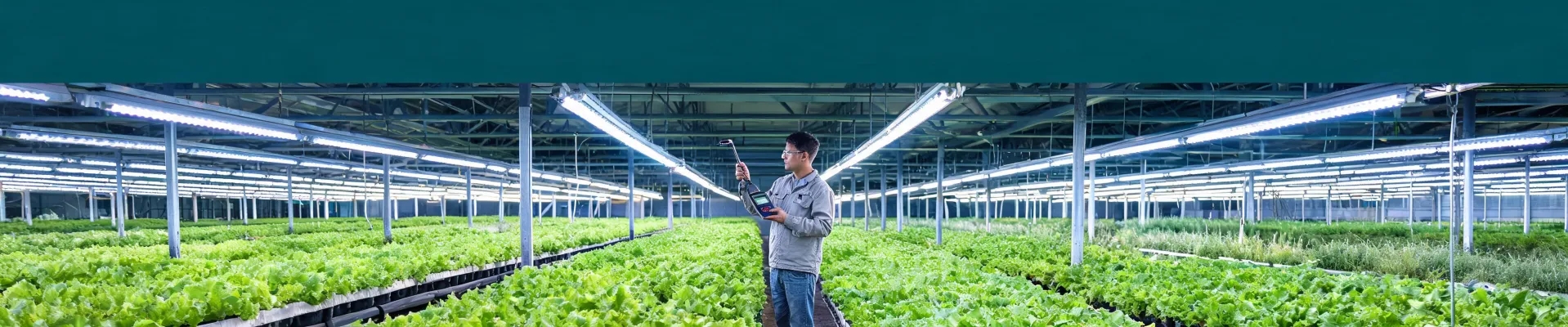
With any horticultural fixture, the difference isn't just LED count—it's the whole package. Gavita's Pro, RS, and CT lines are engineered for real grow environments: stable spectrum, consistent thermal management, dimming controls, and form factors that work from clone shelves to undercanopy lighting. When I compared two fixtures side by side in a photometric layout, one delivered noticeably tighter PPFD uniformity across a 5×5 canopy. Same wattage, same approximate price, different usable light. I've learned to always ask for the photometric report before comparing prices.
How do I calculate the total cost of ownership for Gavita LED grow lights?
Start with the fixture price, then add electricity, HVAC load, maintenance labor, replacement parts, shipping, and warranty risk. A fixture that pulls more watts but produces less usable PPF will cost you twice—once on the power bill, and again on temperature control.
Here's the kind of calc I put in our spreadsheet: take two 800W-class fixtures, one at 3.0 µmol/J and one at 2.6 µmol/J. To match PPF, the less efficient unit runs roughly 15% longer or needs about 15% more power. In a 20-fixture room, that adds up to hundreds in electricity before you even touch the AC load. Your local rates change the math, but the principle doesn't.
What should a downlight supplier provide before I send a PO?
Four things, minimum: an LM-79 test report, an LM-80 report for the LED package, DLC or UL listing evidence, and .ies photometric files. Without those, comparing quotes is guesswork.
Color consistency is just as important. Pantone's matching guidelines recommend Delta E < 2 for brand-critical colors in print; in LED lighting, the equivalent is MacAdam ellipses, usually specified as SDCM steps. I specify ≤3 SDCM so fixtures from different production runs don't create a checkerboard ceiling. Ask suppliers for their SDCM spec. If they can't answer, escalate to a sample before committing to a volume order.
How do I choose a greenhouse lighting distributor?
Greenhouse lighting isn't just about fixtures. The distributor needs to understand crop DLI, daily light integrals, controls, and mounting infrastructure. My go-to distributor sends a photometric layout with every quote—it shows where each Gavita fixture should go in a given bay, which fixture is right for a clone shelf, and what dimming curve matches the control system. The distributor I stopped using couldn't answer any of that.
I also ask about parts inventory. If a fixture fails in week 46, a distributor with local stock can overnight a replacement. If they're just a middleman, you wait six weeks. That wait is a cost, even if it's not on the invoice.
OEM vs. private label for spotlights—which should I choose?
Both are valid; it's a timing and exclusivity tradeoff. Private label means taking an existing spotlight design and putting your brand on it. OEM means the supplier builds to your specifications—different housing, driver, optics, certifications. Private label is faster and cheaper upfront. OEM gives you exclusive design control but costs more in tooling and testing.
I went back and forth on this for a spotlight line. Private label got us to market in three months with a much lower MOQ. That mattered more than a unique appearance. If your product strategy depends on proprietary performance, OEM is the route—just budget for six to twelve months of development, compliance, and qualification.
What hidden costs do first-time buyers forget about?
Landed cost. That includes freight, duties, customs clearance, insurance, pallet fees, and repackaging. One supplier quoted a price that looked 18% lower than the competition. After adding $1,240 in freight and $800 in unexpected customs fees, the savings evaporated. That's when I built a landed-cost calculator for every lighting order.
The other hidden cost is quality failure. A fixture that fails after fourteen months might require a site visit, a replacement unit, and a second crew day. I only started asking about warranty fulfillment processes after a batch of downlights needed replacements and the supplier didn't stock parts locally. It took eight weeks. Nobody budgets for that.
Why should you ask for photometric files before you approve a sample?
Because a sample on the bench tells you a fixture works—not how it performs in your space. Photometric files let you load the fixture into AGi32 or Dialux and test reflectivity, mounting height, and spacing. That's how you catch dead zones, glare, or edge-to-center uniformity problems before installation.
I once approved a sample based on a visual inspection alone. The fixture looked fine. It wasn't until the photometric file showed the beam angles were off by six degrees from spec that we realized the site layout would leave dark aisles. We caught it in time. Now the rule is simple: no .ies file, no sample approval. And if you ask me, do not approve a sample without it.
Clara Whitmore
Clara Whitmore is a lighting photometry and LED source analyst specializing in bulbs, tubes, strips, panels, and integrated luminaires. She interprets IES LM-79 measurements and TM-30 color rendition data through luminous flux, efficacy, intensity distribution, CCT, chromaticity, fidelity, and gamut metrics. She writes evidence-led comparisons for specifiers selecting source formats and luminaires for commercial interiors, industrial spaces, or horticultural systems where measured optical and color performance matter.