-
Specialists Are Cheaper Even When Their Unit Price Is Higher
-
The Procurement Mistake I’m Embarrassed to Admit
-
How to Choose Downlight for Wholesale Without Sabotaging Your Margin
-
What “Gavita Plasma Grow Light” Searches Teach Us About Boundaries
-
But What About Consolidation?
-
The Invoice Is Not the Whole Cost
Here’s an opinion I’ve reached after eight years of buying lighting, not selling it: the most expensive request a buyer can make is “send me your best price for all of it.” I understand the appeal. Fewer purchase orders, one logistics relationship, cleaner month-end. But a quote that covers every category is not the same as a quote that understands each category.
I manage procurement for a mid-size electrical distributorship, with about $1.35M in annual lighting spend under my review. I have built vendor scorecards for 50-plus suppliers, tracked RMA rates in our ERP, and signed more framework agreements than I can count. So when I tell you to stop asking one supplier to do everything, I am not making conversation. I am describing the difference between an invoice and a total cost.
We don’t do ceiling grids. We do Gavita grow lights. If you need that many recessed downlights, call a recessed lighting distributor.
That is what one vendor said to me in 2023. The immediate reaction could have been frustration. Instead it earned my trust. Why? Because the vendor understood its expertise boundary before I did.
Specialists Are Cheaper Even When Their Unit Price Is Higher
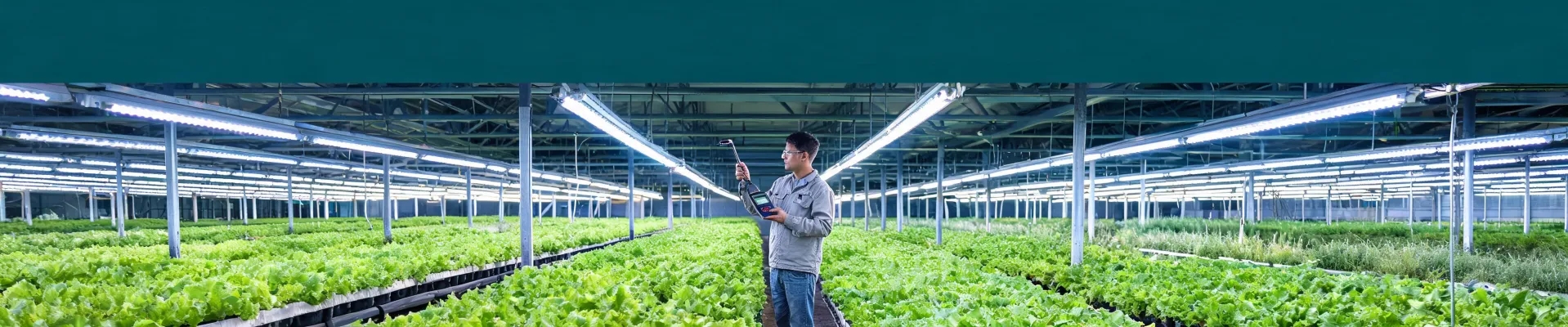
Take horticultural lighting. A greenhouse or indoor grow facility is not a clean ceiling cavity. It is humid, dusty, and full of condensation, fertilizer residue, and air movement issues. When I evaluate Gavita grow lights for a grower, I do not stop at wattage or coverage area. I need answers on spectral distribution, driver compatibility, IP ratings, mounting distance, dimming behavior, and warranty terms that actually cover horticultural use. A broadline distributor can quote a SKU. A horticultural specialist can explain why one fixture works in a multi-layer rack and another works in a high-ceiling greenhouse. That distinction is a cost issue, not a theoretical one.
As of April 2026, I still start with the manufacturer’s published spec and compliance documentation before I approve a horticultural fixture. That documentation is often the first thing an electrical inspector or a grower’s insurance underwriter asks to see. If the supplier cannot produce it before the order, the cheap price is not a saving. It is a delay hiding behind an invoice.
The Procurement Mistake I’m Embarrassed to Admit
In my first year as a procurement manager, I made the classic sourcing error. I let a general lighting vendor substitute a lower-priced fixture on a Gavita grow light order because the spreadsheet said equivalent. It was not equivalent. We discovered that after installation, when the grower asked for test data the vendor could not produce. The fixture had to be replaced, and the real cost was not the replacement fixture. It was the lost production time, the extra freight, and the phone calls that followed.
Looking back, I should have asked for spectral documentation and a written explanation of the substitute before signing. At the time, I was focused on hitting a quarterly savings target. If I could redo that decision, I would rather explain why I missed the target than explain why a crop cycle was compromised.
How to Choose Downlight for Wholesale Without Sabotaging Your Margin
The same logic applies on the commercial side. When a customer asks me how to choose downlight for wholesale, the first thing I say is that “downlight” is not one product category. It is a family of decisions about ceiling types, driver access, plenum ratings, trim compatibility, dimming systems, emergency circuits, and warranty logistics.
A good recessed lighting distributor will ask about those things before sending a quote. If they do not ask, they are not buying you a lighting system. They are sending you boxes. The unit price on those boxes does not include the risk of the wrong driver, the missing plenum rating, or the installation day surprise when the trim does not fit.
When I look at a downlight wholesale quote, I want to know three things: whether the fixture is tested to the standard we actually need, whether the distributor can support the driver and trim families we sell, and how warranty claims are handled after the fixture leaves the warehouse. If those answers are not clear, I subtract points from the quote regardless of how attractive the price looks.
What “Gavita Plasma Grow Light” Searches Teach Us About Boundaries
One more thing I notice: search queries like gavita plasma grow light still show up. Some buyers are comparing plasma with LED. Others remember a product name and want to see what the current manufacturer offers. I am not going to pretend every search matches one clean answer. What I do watch is how the vendor handles that ambiguity.
A supplier with a real understanding of specialization says something like, “We can compare plasma and LED options, but if your goal is a high-performing LED grow light, here is the data that matters.” A vendor without boundaries says, “Sure, we can do that too,” then writes an order without a single clarifying question. Which conversation do you think produces fewer returns?
But What About Consolidation?
I expect someone to argue that consolidation exists for a reason. It does. Our own scorecard rewards long-term suppliers with higher volume. I am not anti-consolidation. I am anti-false consolidation—the kind where you put unrelated categories under one roof, hit a rebate tier, and then lose the savings in engineering questions and field failures.
Let me make the point sharper. If a vendor sells Gavita grow lights and also wants to be your recessed lighting distributor for a large downlight order, let them prove both. Ask for photometric files. Ask for the person who answers support calls. Ask what happens when a warranty claim arrives 18 months after installation. If the answers are strong in both categories, great. If not, do not force one vendor into two lanes just to simplify your vendor list.
(Note to self: I still need to update the 2026 failure-rate tab in our tracker before the Q3 supplier review. Without that data, the next consolidation conversation is just guesswork.)
The Invoice Is Not the Whole Cost
Here is where my role gets a little obsessive. I keep a total cost workbook for every major product line. Unit price is line one, not the bottom line. After that I add freight, split-order fees, restocking policies, warranty failure rates, engineering response time, and the cost of a missed delivery window. I also include the soft cost of managing ambiguity. If a quote says “standard fixture” and nobody defines standard, I know that cost will show up later.
That’s why I would rather buy Gavita grow lights from a horticultural lighting specialist and wholesale downlights from a commercial lighting distributor who actually knows ceiling systems. And if one company does both convincingly, I am happy to consider it. But I will not assume it. The invoice may look simpler that way. The project deserves more.
So here is the view I will defend in any budget meeting: specialization is not a limitation. It is a risk control. A supplier that tells you what it does not do is saving you from the most expensive outcome in procurement—the discovery that you bought from someone who never understood your application in the first place.

Clara Whitmore
Clara Whitmore is a lighting photometry and LED source analyst specializing in bulbs, tubes, strips, panels, and integrated luminaires. She interprets IES LM-79 measurements and TM-30 color rendition data through luminous flux, efficacy, intensity distribution, CCT, chromaticity, fidelity, and gamut metrics. She writes evidence-led comparisons for specifiers selecting source formats and luminaires for commercial interiors, industrial spaces, or horticultural systems where measured optical and color performance matter.