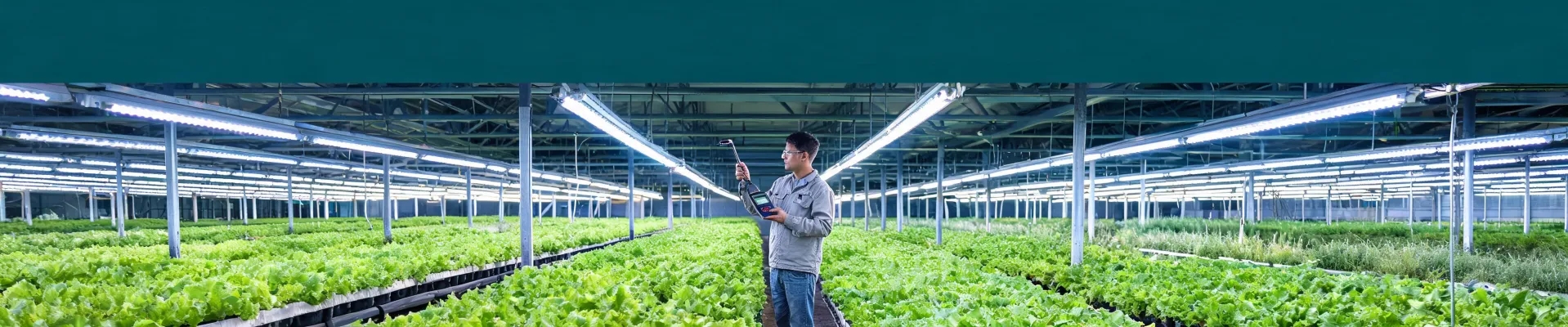
If you’re evaluating Gavita grow lights—or trying to figure out how to evaluate grow light manufacturers in general—start with the paperwork, not the price sheet. The manufacturer that can’t document its claims is the most expensive supplier you’ll ever hire. In 2024, during our vendor consolidation project, I cut the lighting vendor list from six down to three. The two I dropped were not the highest-priced. They were the least organized: missing test reports, vague warranty language, and no replacement-part plan.
I’m the office administrator for a 60-person lighting distributor. I manage purchasing across about 15 vendors and roughly $1.2M in annual spend, and I report to both operations and finance. I’m not an electrical engineer, and I don’t design grow rooms. My job is making sure the fixtures in our catalog don’t become a problem for our customers or our accounting department.
Why I Check Compliance Before I Check Brightness
When I took over purchasing in 2020, I made the classic new-buyer mistake: I compared prices, looked at the photos, and assumed “standard” meant the same thing to every vendor. It didn’t. We ordered a pallet of what we thought were wet-rated fixtures. They weren’t. The redo cost about $600 on paper, plus a conversation with a customer I’d rather forget.
Since then, I look for four things before I talk price:
- Safety listing. UL 8800 is the UL standard for LED lighting equipment intended for plant growth. An ETL or UL listing tells me someone actually tested the fixture.
- DLC qualified products list. The DesignLights Consortium keeps a public qualified products list for horticultural lighting. According to DLC’s website, only fixtures that meet its published performance requirements make the list. If a utility rebate is involved, the fixture usually needs to be on it.
- LM-80 and TM-21 data. These reports show how the LEDs perform over time. I don’t read every graph—okay, I read the summary—but I ask for the reports. A manufacturer that sends them without arguing usually has the rest of the paperwork organized too.
- IP rating and warranty language. An IP rating tells me where the fixture can go. The warranty document tells me what happens when it fails. If both aren’t clear, I move on.
This is also where the light fixture catalog comes in. “Gavita horticultural lighting” covers the Pro, RS, CT, UV, Clone Bar, and Under Canopy lines in the Gavita catalog. A good catalog is helpful, but an evaluation isn’t “which fixtures are in it.” It’s “can the manufacturer source replacements and show me the documentation for each one?” The DLC’s qualified products list is public, and I use it more often than I enjoy admitting.
The Four Questions I Ask Every Grow Light Manufacturer
After the paperwork, I ask four questions. They sound simple, but they separate serious manufacturers from brochure brands.
1. What happens when a fixture fails?
I don’t ask “is it under warranty?” I ask “what’s the warranty claim process?” There’s a big difference between a five-year warranty and a five-year warranty that requires me to ship a 25-pound fixture back at my cost and then wait weeks.
2. Can you send replacement parts, or do I replace the whole fixture?
For a commercial project, swapping a driver is cheaper than replacing a whole unit. If a private-label supplier can’t send drivers or optics separately, I need to know before I commit to a product line.
3. Where does the LM-80 data come from?
Anyone can say “LM-80 tested.” I like to know which lab ran the test and how the TM-21 projection was calculated. It’s not that I can interpret the details—I can’t—but the way a salesperson answers tells me how many times they’ve been asked.
4. Is the product line stable?
I’ve bought fixtures that were discontinued within a year. That becomes a maintenance problem for my customers. So I ask how long the fixture has been in production and how long the manufacturer plans to support it. No one can guarantee a five-year cycle, but an honest answer tells me more than a polished datasheet.
I told one vendor, “we need a 2x4 coverage fixture for a grow room.” They heard “a fixture that fits a 2x4 tray.” Those are not the same thing. We found out when the first installation was done and the light distribution didn’t match the space. We were using the same words, but we meant different things. Now I send a written spec sheet and a simple diagram with every RFQ.
Spotlight Private Label and the Catalog Problem
On the commercial lighting side, “spotlight private label” is a common search. It usually means a customer wants their name on a track spotlight, recessed downlight, or ceiling fixture without developing the electronics themselves. That can be a good business model, but it changes how I evaluate a manufacturer. Private labeling isn’t just buying a fixture—it’s renting the manufacturer’s compliance, quality control, and supply chain. The catalog is the invitation, not the answer.
There’s something quietly satisfying about a vendor who sends the datasheet, the compliance documents, and the warranty terms before I ask. It doesn’t happen often. When it does, I’m more likely to revisit a quote even if it’s not the lowest number.
What Small Orders Tell Me
This is where I deliberately favor suppliers who treat small orders seriously. The vendors who answered detailed questions when I ordered 15 units for a trial are the ones I call when a bigger project shows up. Small doesn’t mean unimportant—it means potential.
I’m not saying a small order should get the same per-unit price as a truckload. That’s unrealistic. But a $500 sample order should still get accurate documentation, a clean invoice, and someone who answers follow-up questions. If a supplier makes me feel like a nuisance for asking basic questions, I assume they’ll be even less helpful during a warranty claim.
When This Checklist Doesn’t Help
This is written from the purchasing side, not the grower side. If you manage a large commercial greenhouse, you need an agronomist, an electrical engineer, and a horticultural lighting designer involved. Compliance documents won’t tell you if a spectrum is right for a specific crop. And if you’re buying for one room in a small facility, you probably don’t need a private-label supplier at all. Buy from a distributor who can answer these questions and move on.
Gavita is one of the brands I keep on my shortlist, but I evaluate every supplier against the same questions. The goal isn’t to find the manufacturer with the prettiest catalog. It’s to find the one that can prove what it says, support what it sells, and still answer the phone when the order is small.

Clara Whitmore
Clara Whitmore is a lighting photometry and LED source analyst specializing in bulbs, tubes, strips, panels, and integrated luminaires. She interprets IES LM-79 measurements and TM-30 color rendition data through luminous flux, efficacy, intensity distribution, CCT, chromaticity, fidelity, and gamut metrics. She writes evidence-led comparisons for specifiers selecting source formats and luminaires for commercial interiors, industrial spaces, or horticultural systems where measured optical and color performance matter.