-
What this covers (and why I'm the one writing it)
-
Q1: What is the Gavita HGC906410 RS 1900e, and who is it actually for?
-
Q2: When should you not buy the RS 1900e?
-
Q3: What do most buyers miss when comparing grow lights?
-
Q4: How do you vet a track lighting supplier without getting burned?
-
Q5: What does a commercial lighting specification guide need that most guides leave out?
-
Q6: What surprised me about OEM and private label lighting programs?
-
Q7: What's the one question nobody asks a lighting supplier?
What this covers (and why I'm the one writing it)
I've been on the buying and specifying side of commercial lighting for 11 years — horticultural LED for controlled-environment grows, track and architectural fixtures for retail and hospitality build-outs. In that time I've made 9 specification mistakes that cost real money. Roughly $41,000 in wasted budget across re-dos, expedited freight, and dead inventory. I keep the checklist now so nobody else on my team repeats them.
Below are the questions that actually come up when someone's trying to buy Gavita grow lights, source a track lighting supplier, or write a commercial lighting specification guide. Short answers. No hedging.
Q1: What is the Gavita HGC906410 RS 1900e, and who is it actually for?
The RS 1900e is a high-output LED fixture in Gavita's RS line. HGC906410 is the SKU you'll see on distributor invoices, POs, and warranty paperwork — same fixture, different label depending on where you're reading it.
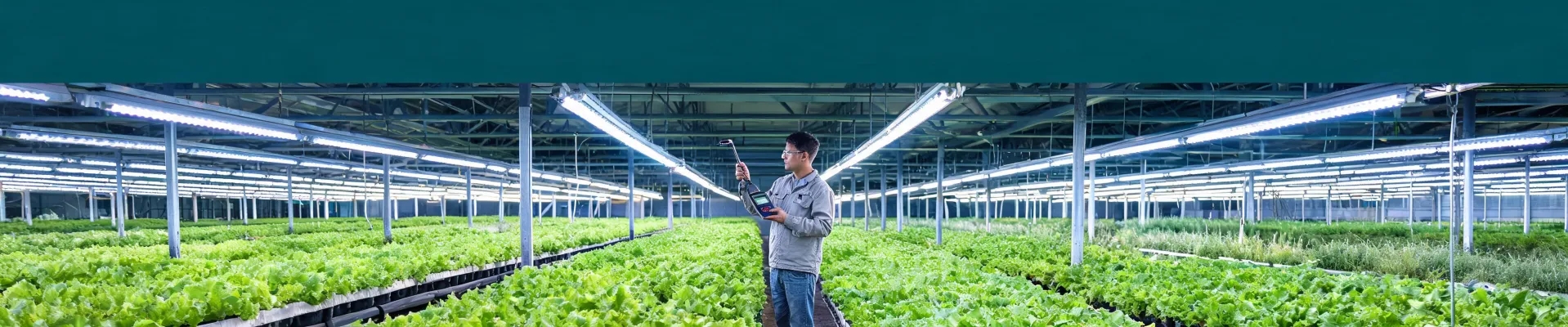
It's built for commercial horticultural operations. The kind running veg or flower rooms at scale, hanging fixtures in a grid, controlling the whole room as a system. Wide spread, high output, meant to be specified in multiples rather than one at a time.
Here's the part the spec sheet won't tell you: it isn't the right fixture for every room. Low ceilings, odd room geometry, a 12-light operation where you replace fixtures one by one as they die — the math doesn't land the way you'd hope. The datasheet tells you what the light does. It doesn't tell you whether it fits your facility. That's on you.
Q2: When should you not buy the RS 1900e?
Three cases, honestly:
- Your electrical service can't carry the load. High-output fixtures clustered in a grid pull real amperage. If you're already near panel capacity, the service upgrade can cost more than the lights.
- Your HVAC and dehumidification aren't sized for the change. Swapping fixture types changes your room's heat and humidity profile. I've watched a grower save on lighting and then spend the delta twice over on cooling.
- You're buying one fixture to test. Some products you can pilot with a single unit. This class of fixture is a system decision. A one-light test tells you almost nothing about a 60-light room.
None of that makes the product bad. It makes it specific. If you're outside those three cases, it's a reasonable candidate — go get quotes and test data.
Q3: What do most buyers miss when comparing grow lights?
Most buyers focus on photon output and price per fixture and completely miss the cost of everything around the fixture: service upgrades, HVAC capacity, mounting hardware, controls, and — the one that bites hardest — uniformity at the canopy edge.
The question everyone asks is how many lights do I need for X square feet. The question they should ask is what's my uniformity target across the footprint, and does this layout actually hit it? Two layouts with identical fixture counts can produce very different results at the walls.
And if anyone quotes you an energy-savings percentage, ask for the underlying test data. Per FTC Green Guides (16 CFR Part 260), efficiency and environmental claims have to be substantiated with evidence before they're published. If a supplier can't produce the report behind their number, that is your answer.
Q4: How do you vet a track lighting supplier without getting burned?
Painful one for me. In 2018 I approved a 340-piece track lighting order from a supplier who quoted UL-listed fixtures. What they actually shipped was a fixture with a UL recognized driver — which is a completely different thing and does not satisfy most commercial submittals. We caught it at submittal review, not at receiving. Cost: 3-week delay plus $2,400 in expedited freight to swap drivers on site.
What I do now, every time:
- Ask for the listing certificate, not the word listed. Certificate number and the exact model it covers.
- Confirm the certificate names the complete fixture assembly, not a component inside it.
- Get the same documentation for the spare parts you'll order in year three.
Three questions. Ten minutes. Would have saved me a month.
Q5: What does a commercial lighting specification guide need that most guides leave out?
The section everyone skips is what you'll accept as equal.
Most specs say something like or approved equal and stop there. That phrase is where projects go sideways, because it hands the decision to whoever's reading it that week. Write down what equal means: same lumen output within a stated tolerance, same CCT and CRI range, same beam distribution, same control protocol, same listing. Now the substitution conversation takes an hour instead of three weeks.
The second thing missing: mounting and alignment tolerances. Nobody writes them, everybody argues about them on site. For track runs longer than about 20 feet, put a number in the spec. It'll feel pedantic. It'll also be the clause that saves your install schedule.
Q6: What surprised me about OEM and private label lighting programs?
Never expected the biggest friction to be labeling and documentation compliance. I assumed tooling and MOQ would be the hard part. It wasn't. Getting the marking, the model numbering, the safety-file documentation, and the country-of-origin declarations aligned with what our retail customers required — that ate the calendar.
I have mixed feelings about private label in general. On one hand, it's real differentiation and it locks in margin that resale never gives you. On the other, you're now responsible for every claim on that box, including the ones your contract manufacturer wrote. That's a lot of exposure for a logo. What reconciled it for me was treating the spec document as the product — if the spec is tight, the program works. If it's loose, you find out in year two.
Q7: What's the one question nobody asks a lighting supplier?
What happens when fixture number 47 fails eight months in?
Everyone asks about price, lead time, and warranty length. Almost nobody asks about the spares and replacement process: How fast can you ship a matching unit? Is the replacement the same revision, or a newer one that doesn't match the rest of the room? What's the RMA turnaround? Who pays freight?
If you're running 200 fixtures in a commercial space, a single failure is a nuisance. Ten failures across two years is a maintenance program, and if you haven't designed for it, you'll be explaining the mismatch to a facility manager at 7am. Ask the question before you sign. The vendors who have a real answer will give it to you in one paragraph.

Clara Whitmore
Clara Whitmore is a lighting photometry and LED source analyst specializing in bulbs, tubes, strips, panels, and integrated luminaires. She interprets IES LM-79 measurements and TM-30 color rendition data through luminous flux, efficacy, intensity distribution, CCT, chromaticity, fidelity, and gamut metrics. She writes evidence-led comparisons for specifiers selecting source formats and luminaires for commercial interiors, industrial spaces, or horticultural systems where measured optical and color performance matter.