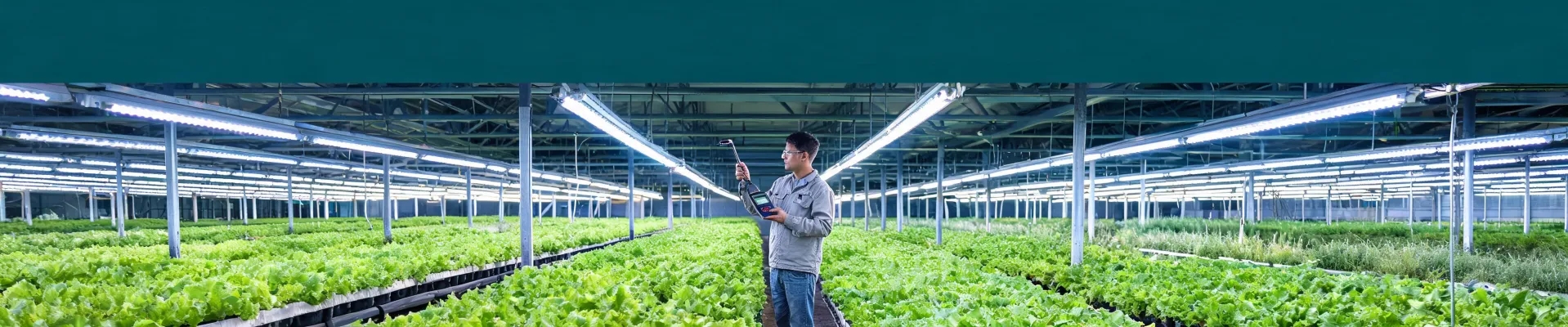
I'm the quality and compliance manager at a commercial lighting distributor. Last year I reviewed more than 2,400 incoming fixtures, including a lot of Gavita grow lights, and rejected close to 3% on first pass. Maybe 2.7%—I don't have the dashboard in front of me. Most fixes were small. But they all had the same root cause: a mismatch between what the buyer expected and the buying model they used.
If you're looking for Gavita under canopy lights or top-light fixtures, you have two main paths. Path A is to buy stock Gavita through an authorized greenhouse lighting distributor. Path B is to work with a spotlight manufacturer or factory on an OEM or private label line of your own. They sound different. They are. Let's compare them on four dimensions: spec control, compliance, lead time, and brand ownership.
I'd rather spend 10 minutes explaining these options than deal with mismatched expectations later. An informed customer asks better questions and makes faster decisions.
First, What 'OEM' and 'Private Label' Actually Mean
Let's settle the light fixture OEM vs private label discussion before we go further. The terms get mixed up all the time. OEM, or original equipment manufacturer, means you define the specification and a factory builds to that spec. You own the design and the risk. Private label is different. The factory already has a design. You select it, maybe change the color of the housing or the driver, and put your name on it. The factory remains the engineer. I say 'maybe' because there are plenty of private label deals where the only change is the logo.
Stock Gavita is neither of those. The Gavita team designed the fixture, tested it, and published the spec. You buy it as-is. That sounds limiting, and sometimes it is. But you also inherit years of field data and someone else's engineering competence. If you're a distributor, that's usually a good trade.
Dimension 1: Spec Control—and the Risk You Don't Expect
With stock Gavita, spec control is zero. You can't ask for a different beam angle or a custom spectrum. That's a disadvantage. But here's the counterintuitive part: zero control also means zero responsibility for the design. You don't have to prove that the PPF map is accurate or that the driver can handle expected voltage swings. The design has been through real greenhouse installations. You're buying a track record, not a promise.
With OEM/private label, you get control. You can specify a spectrum optimized for leafy greens, choose a different connector, or add your brand. But every choice becomes yours to verify. In Q1 2025, I tested a private label sample that claimed a PPF output about 8% higher than what our integrating sphere measured. The manufacturer said the report was 'typical' and that tolerance was expected. We rejected the batch. That decision delayed the project by three weeks and forced 100% testing on the next run.
I only became strict about verification after ignoring a supplier's spec and approving a 300-unit order without independent photometric testing. It cost us $18,000 in rework and a very awkward call with the customer. Now every OEM/private label contract includes an independent photometric test clause. Stock Gavita doesn't need that clause. That's a quiet advantage.
Dimension 2: Compliance and Certification
For greenhouse lighting distributors, compliance is usually the deciding factor before price. A stock Gavita fixture ships with certifications already handled. That might be UL/ETL listing, DLC status, CE for export, or any of the other acronyms your project requires. You don't have to compile the file. You just need to verify that the current listing is valid. As of early 2026, the DLC qualified products list is the place to check for horticultural fixtures that qualify for many utility rebate programs. Search the official list, not a supplier's website. A fixture can gain or lose status over time.
With OEM/private label, your name on the product makes you the responsible party. The manufacturer may offer a test report, but you're the one who has to defend it if an inspector, customer, or insurance carrier asks questions. I've seen quotes with 'UL certification' included as a line item, and the model number didn't appear in the UL directory. Always check the directory, not the label.
Under canopy lights deserve extra attention. They're positioned lower in the growing environment, closer to humidity, water splashes, and mechanical abuse. Ingress protection rating matters more here than on an overhead fixture. A private label under canopy fixture without an IP rating is a future moisture claim. A Gavita under canopy light has been through the testing Gavita considers adequate. That's not a guarantee for every greenhouse condition, but it's a much stronger starting point.
Dimension 3: Lead Time and Flexibility
Stock Gavita fixtures are typically available through distributors within days or a few weeks. If your project has a fixed installation date, that matters a lot. OEM/private label is a different calendar. Production lead times of eight to sixteen weeks are realistic, plus sample approval and certification cycles. I want to say ten weeks is typical for a simple private label build, but don't quote me on that. Component availability alone can push it.
This is where I see the biggest mistakes. A buyer falls in love with building their own brand and forgets that the greenhouse opening doesn't care about your branding timeline. I dodged a bullet with a customer who wanted a custom fixture with their logo on the heat sink. The greenhouse expansion was four months out, and after we estimated sample, tooling, and compliance, the calendar didn't work. They switched to a stock Gavita order, landed the fixtures in under two weeks, and made their opening date. The custom project moved to next year, when it was a decision, not an emergency.
On paper, private label made more margin. But my gut kept saying the deadline would break us. It wasn't a pleasant choice. It was a binary struggle between brand ownership and a signed lease. The lease won.
Dimension 4: Brand Ownership and the Real Cost
Stock Gavita builds someone else's brand. If you're a distributor, that's not a moral problem. You make margin on the fixture, and you can attach service, installation, and project design. But you're renting brand equity instead of owning it. Gavita controls the spec, warranty terms, and packaging. If their strategy changes, you adapt.
Private label and OEM let you build an asset that survives the relationship. The catch is that the cost isn't just cost of goods. You own the warranty reserve, spare parts, technical training, support calls, failed units, and whatever happens when the factory ships a bad batch. In commercial lighting, a $300 fixture can generate a $1,200 labor call if it fails inside a greenhouse. That is the part of the total cost that never appears on an invoice.
If you're working with a spotlight manufacturer, make sure they understand horticultural photometry, not just residential beam angles. A spotlight manufacturer can build a beautiful fixture and still get the PPF map wrong. Ask for horticultural test data. Ask how they measure. Which integrating sphere? Which goniophotometer? Under what ambient temperature? Their general lighting credentials are not enough.
There is a satisfying feeling when a private label product runs right the first time. After the spec meetings, test reports, and approval samples, a clean production run is the payoff. But there is also a sinking feeling when a 'minor' component substitution appears in the final units. Private label is not a side project. It's a second business line.
So, Stock Gavita or OEM/Private Label?
Choose the stock route if you need proven fixtures fast, you want simple compliance, your customers ask for Gavita by name, or you don't have a person who can digest test reports and argue with engineers.
Choose OEM/private label if you have enough volume, you're building a proprietary brand, you can absorb a bad first run, and you have the patience to verify every claim before you trust it.
And the middle path? Many successful distributors carry stock Gavita for the core top-light and under canopy lineup, then add a small private label line for gaps that Gavita doesn't fill. That's not indecisive. That's matching the buying model to the project. An informed customer asks better questions and makes faster decisions. That's the outcome I care about most.

Clara Whitmore
Clara Whitmore is a lighting photometry and LED source analyst specializing in bulbs, tubes, strips, panels, and integrated luminaires. She interprets IES LM-79 measurements and TM-30 color rendition data through luminous flux, efficacy, intensity distribution, CCT, chromaticity, fidelity, and gamut metrics. She writes evidence-led comparisons for specifiers selecting source formats and luminaires for commercial interiors, industrial spaces, or horticultural systems where measured optical and color performance matter.