I've been handling OEM and wholesale lighting orders for eight years. In that time, I've made expensive mistakes—roughly $47,000 worth before I started keeping a serious checklist. I share these notes because B2B lighting sourcing keeps repeating the same failure: buying price instead of certainty.
Here is my opinion: in commercial lighting, the cheap quote is usually the expensive choice. Not because the price is wrong, but because the promise behind it is weak.
This is not a theory. I learned it partly from Gavita grow lights, of all products.
Why I Started Looking At Spec Sheets Like a Contract
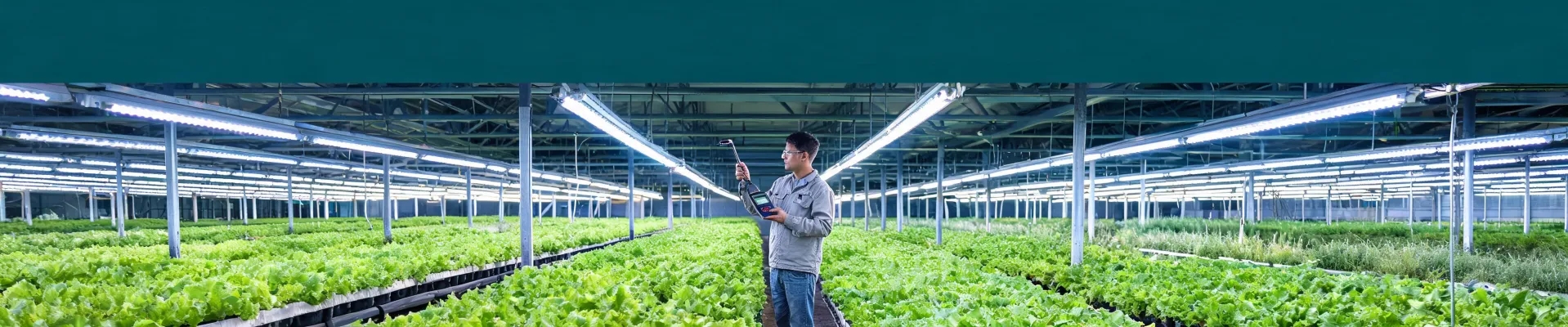
When we first started stocking Gavita grow lights, I treated spec sheets like marketing. Then we bought a batch of no-name under-canopy bars to compare. We ran both for 72 hours and measured the PPFD map with a $1,200 quantum meter. The no-name bars did not match their own map by a wide margin. The Gavita under canopy lights stayed within their stated tolerance. That is not brand magic. That is documentation.
What most people don't realize is that spec sheets are often copied from competitor datasheets. A factory can build a similar-looking downlight with a different driver, a different thermal path, and zero test data. Then the 'equivalent' product behaves differently when dimmed, after warm-up, or after six months of thermal cycling.
The Downlight Private Label Trap
If you buy downlights for private label, you are the brand. That is not a marketing phrase; it is a legal problem when something goes wrong. In 2017, I approved a purchase of 2,400 downlight housings from a supplier that was $0.85 per unit cheaper than our usual factory. The samples looked fine. The first batch came in and our compliance manager caught a mismatch between the approved UL certification record and the actual markings on the product. Per UL 1598, markings and construction are tied to the listing. If the product does not match the file, the listing does not apply. We had to relabel 2,400 units, send 800 replacements, and explain a late delivery to a customer. The savings at the unit level were about $2,040. The rework, shipping, and delay cost us $4,100. The cheap downlights were more expensive before installation even started.
I don't have hard data on industry-wide defect rates. What I can say anecdotally is that in our last 200 order evaluations, 8-12% of 'certified' quotes had a document issue that would have affected approval or inspection. That's a lot of risk hidden in a small price gap.
What a Downlight Wholesale Cost Guide Should Actually Include
Most buyers focus on per-unit pricing and completely miss the other costs that appear after the purchase order. A practical downlight wholesale cost guide has to include these five things:
- Unit price with freight and pallet charges
- Driver brand and warranty (the part that fails first)
- Certification documents dated within the current program cycle
- Lead time: guaranteed or estimated
- Consistency between runs and reorder availability
For U.S. commercial projects, I use the DLC Qualified Products List. As of April 2026, the current technical requirements are published at designlights.org; verify them before you approve an order.
As of Q1 2026, four-inch commercial downlight quotes we received from wholesale suppliers ranged from $7.80 to $34.50 per unit. The low quote had no dimming specs, no driver brand, and a one-line note: 'certificate available after order.' The high quote included a five-year warranty, DLC-qualified product documentation, and a signed delivery date. Check current pricing with your rep, but the process issue is the same: read the quote as a system, not a unit price.
Certainty Is Worth a Premium
That brings me to my core sourcing lesson. In September 2022, we needed 600 under-canopy bars for a client's rollout. The factory offered 'three weeks, likely' at a 12% discount. We took it. The shipment arrived at six weeks and one day. The installation crew sat idle for two weeks, the store opening slipped, and the electrician's change order added $7,800 to the project. The discount on lighting was about $2,100. We lost money on every light we 'saved.'
The question everyone asks is 'what's your best price?' The question they should ask is 'what's included in that price?' If the price includes a delivery date you can rely on, and a spec sheet you can verify, then it is not a premium. It is insurance.
Let me be clear: I do not mean every cheap quote is dishonest, or that every expensive quote is solid. A low price with proper paperwork and a realistic timeline can be a great deal. But when a deadline is fixed, an uncertain cheaper option is a bet. In B2B lighting, bets show up as change orders.
What About Buying the Cheapest and Hoping?
Someone will say compliance only matters if you get inspected. Maybe. But if you're doing downlight private label, the liability lands on your company, not the factory. Another objection is 'our orders are small, so we can't demand guarantees.' That is not true. Even with a 100-unit order, you can require a signed timeline and a certificate. If a supplier will not provide either, that is a clue.
My experience is based on about 200 mid-sized orders in commercial and horticultural lighting. If you're buying 500,000 units from a low-cost country, your math and leverage are different. I can't speak to that segment with confidence. But I can tell you the discipline is the same: chase facts, not just prices.
Why Gavita Is the Example That Sticks
Gavita grow lights are not magic. What I value is that their documentation lets you hold them to their claims. The Pro and CT series have detailed spec sheets; the under canopy lights include coverage maps. A buyer can make a decision without guessing. That is what commercial lighting sourcing should look like for downlights too. A good supplier is one that can explain what a product will do, and then let you verify it.
So here's my final position: the cheapest downlight quote is the one with verified specs, a signed timeline, and a compliance chain you can defend. The most expensive quote is the one that fails after installation. I've paid the difference so you don't have to.

Clara Whitmore
Clara Whitmore is a lighting photometry and LED source analyst specializing in bulbs, tubes, strips, panels, and integrated luminaires. She interprets IES LM-79 measurements and TM-30 color rendition data through luminous flux, efficacy, intensity distribution, CCT, chromaticity, fidelity, and gamut metrics. She writes evidence-led comparisons for specifiers selecting source formats and luminaires for commercial interiors, industrial spaces, or horticultural systems where measured optical and color performance matter.