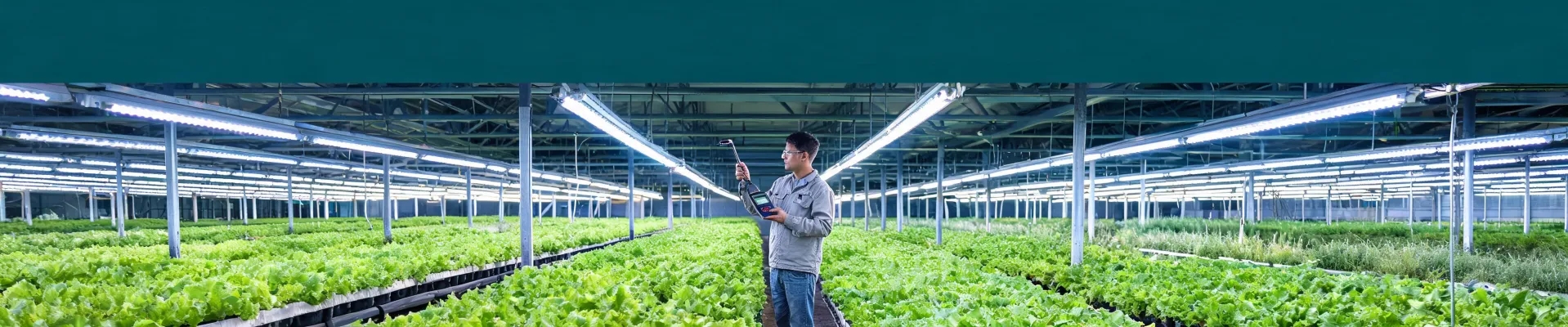
After six years and roughly $180,000 in lighting procurement, I've landed on a conclusion that sounds obvious but almost nobody in distribution acts on: the unit price on a grow light quote is one of the least important numbers on the page. The Gavita Pro 1700E LED grow light isn't the cheapest fixture we carry. It's the fixture that survived our total cost analysis—and that's why it's on our shelves.
Unit price is the number you put in the spreadsheet. TCO is the number you see at the end of the year.
If you're evaluating Gavita grow lights for wholesale, private label, or your own distributor lineup, here's the short version:
- Verify compliance documentation before you negotiate price. One DLC listing mismatch can kill a rebate-funded order worth more than your margin on ten pallets.
- Total cost includes freight terms, warranty logistics, packaging damage rates, and claims labor. The vendor with the lowest quote often has the highest hidden cost.
- Small first orders are a filter. A supplier who treats your trial order like a favor isn't a partner—they're a vendor who'll disappear when things break.
- For track lighting, "standard" is not a specification. Track type, voltage, and circuitry are the real specs. Get those wrong and you pay twice.
Where This Comes From
I'm a procurement manager at a 25-person lighting distributorship in the Pacific Northwest. I've managed our supply budget—roughly $150,000 a year across commercial, LED, and horticultural lines—for the past six years. I've negotiated with more than 40 vendors, and I've logged every order in a cost tracking spreadsheet the whole team can see.
I built that spreadsheet after getting burned on hidden fees twice. The first time was a "free setup" offer that cost us $450 in line items nobody mentioned. The second was a "premium" supplier whose warranty process required us to pay return freight to a depot 2,000 miles away. Not ideal, but workable. The third time, I had a system.
I'm telling you this because "trust me" isn't a spec. And because this guide is written for the small and mid-size buyers that big suppliers tend to ignore. Some of the best terms we've ever gotten came from vendors who treated our first $3,000 order like it mattered.
What Actually Drives Cost in LED Grow Light Procurement
Our TCO template has nine lines. When we first started, we quoted on two: unit price and shipping. Then we learned the hard way that margin dies in the details:
- Freight terms. FOB origin means the unit price is cheap until the freight bill lands on your dock. FOB destination shifts that risk to the seller. Same fixture, very different cost.
- Compliance documentation. DLC listing, UL certification, FCC compliance. If the manufacturer can't provide current paperwork, you're not buying a fixture—you're buying a liability. Many utility rebate programs require DLC-listed products, and one mismatched model number can disqualify an entire order.
- Warranty logistics. Who pays inbound freight on a return? Who covers labor? Is there advanced replacement? A 5-year warranty with a cross-country depot is worth less than a 3-year warranty with advanced replacement. I learned that one the expensive way.
- Packaging and damage rates. Thin cardboard and tight pallets are a gamble that becomes your problem—not the manufacturer's—the moment a fixture arrives cracked.
- Repairability. If your team can't swap a driver in the field, every failed fixture becomes a full-unit replacement. That's a five-figure line item if enough units fail.
- Cost of money. A 90-day lead time ties up capital. A 30-day lead time costs more per unit but keeps cash flowing for the next order.
Here's the counterintuitive part: a higher-priced vendor often wins on total cost. Not because they're nicer—because their documentation is complete and their claims process doesn't eat your margin. We've dropped brands whose fixtures were cheap but whose failure rate erased the savings. We've also kept premium lines that cost more per unit but never produced a chargeback.
In Q2 2025, we compared three 650W-class grow lights for our greenhouse customers, including Gavita's Pro 1700E. The lowest quote was 11% under the highest. After adding freight to our warehouse, compliance review time, and the labor cost of processing warranty claims, the gap dropped to about 3%. And none of that accounts for the cost of a failed fixture at a commercial grow—which isn't a refund, it's a relationship.
The Pro 1700E and the Compliance Check
I'll be direct: we stock the Pro 1700E because it made our technical review embarrassingly easy. Driver specs, photometric data, IP rating, wiring diagrams—the file arrived complete. That's rare. Most grow light spec sheets are marketing brochures with numbers attached.
It wasn't always this disciplined. In year two, I skipped a DLC verification on a fixture from a different brand because I thought "what are the odds a big brand has a listing problem?" The odds caught up with me when a customer's utility rebate application got rejected because the model number didn't match the DLC database. We covered the rebate out of pocket. $1,200 gone because I didn't spend ten minutes checking a public database.
Now, every SKU gets a compliance check before it enters the catalog. For greenhouse fixtures specifically, I require:
- An IP rating that fits the environment. IP65 for washdown areas is the baseline for our customers.
- Published LM-80 data that covers the operating temperature range—not just a pleasant lab condition.
- Driver specs I can actually read. If I can't identify the driver, I can't plan repairs, and I don't trust the dimming curves.
- UL and FCC documentation with a current date. Old paperwork is the same as no paperwork.
The Pro 1700E passed all four checks on the first pass. Simple. That's not a reason to buy on its own—but it's exactly the friction-free review that moves a decision from "maybe" to "approved."
Track Lighting Specifications: The 'Standard' Trap
Commercial track lighting is a different animal, and it's where I made my rookie mistake.
In my first year, I approved 500 feet of "standard track" for a hotel retrofit. The spec sheet said standard. The vendor delivered standard track. The problem? Standard isn't one thing. H-type, J-type, and L-type track systems are physically different—different geometry, different connectors, different fixture mounts. The existing ceiling used a different system than what I'd ordered. Cost me a $600 redo and a painfully awkward call with the general contractor.
The vendor wasn't wrong. They shipped exactly what the quote said. I just didn't verify the track type. Lesson: "standard" and "compatible" are meaningless in commercial lighting without a system reference.
For distributors building a spotlight buying guide—or writing track lighting specifications for a project—these are the details that actually matter:
- Track system. H, J, or L. Match what's already in the ceiling, not what looks good in the catalog.
- Circuitry. Single-circuit is fine for simple spaces. Need zone control? That's two-circuit or three-circuit track—a SKU-level detail, not a "yes we do that" detail.
- Voltage. 120V and 277V are not interchangeable in most commercial settings. A 277V track on a 120V spec won't fail immediately—it'll fail inspection.
- Dimming compatibility. Forward phase, reverse phase, 0-10V, DALI. The track head and the dimmer have to agree. "Dimmable" tells you nothing.
- Accessory ecosystem. Can you source connectors, pendants, and surface mount kits from the same manufacturer? If not, you're building an inventory puzzle your warehouse will hate.
A supplier who can't tell you exactly which track system their fixtures fit hasn't done the distribution work. We've passed on otherwise decent spotlight lines because the manufacturer's documentation was a mess. Documentation, again, is a feature.
Grow Light Private Label: Read the Fine Print on Warranty
Grow light private label is where the margins are—and where the traps hide. We launched a private label program in 2024, and if I could redo one decision, it would be the warranty agreement.
Here's what happened. Our agreement gave us a 2-year warranty from the manufacturer. We offered customers 3 years, assuming the buffer would cover us. When the first claims arrived, we found out the manufacturer expected us to cover inbound freight and labor on every return. The "cheap" arrangement cost us more per claim than the average fixture margin. The program lost money in year one. Actually, it lost money in the first two quarters; the third quarter was just less bad.
Looking back, I should have negotiated three things in writing before we printed our logo on the box:
- Who pays inbound freight on warranty returns. If it's you, add roughly $40–60 per claim to your cost model.
- Whether advanced replacement exists. If your customer waits for a repair cycle, you're the one who hears about it.
- The failure-rate threshold for batch returns. If a specific production run fails at a disproportionate rate, someone has to own it. Get that in writing.
Given what I knew then—which wasn't much about greenhouse failure modes—the original choice made sense. I just wouldn't repeat it. Every agreement since has a warranty logistics section with actual numbers instead of "mutually agreed terms."
One more thing about private label: minimums. A lot of manufacturers won't talk to you unless you're ordering container quantities. That's their right, but it filters out the very distributors who'd stay loyal when they grow. We still remember that Gavita's private label conversation didn't start with "how many pallets?" It started with "what do you need to test the market?" Small doesn't mean unimportant—it means potential.
When This Guide Doesn't Apply
This guide is for distributors, wholesalers, and procurement people. If you're a home grower buying a single fixture, ignore almost all of it. Buy the light that fits your tent and your budget. Compliance checklists and TCO spreadsheets matter when you're buying in multiples—that's the whole point.
It also doesn't apply when you're on a deadline. If you have four weeks to finish a commercial retrofit, you don't have time for a six-week vendor evaluation. The safest vendor in that situation is the one you already know, even at a premium. Speed is a form of cost, and sometimes it dominates the analysis.
And a final honest note: we don't carry every Gavita SKU. We carry the ones our customers actually ask for—the Pro 1700E, the CT 1930E for glasshouse operations, the UV supplement series, and a few commercial fixtures for our track lighting business. TCO analysis tells you how to buy. It doesn't tell you what to buy. That part requires your own market knowledge, and a willingness to be wrong often enough to learn the difference.

Clara Whitmore
Clara Whitmore is a lighting photometry and LED source analyst specializing in bulbs, tubes, strips, panels, and integrated luminaires. She interprets IES LM-79 measurements and TM-30 color rendition data through luminous flux, efficacy, intensity distribution, CCT, chromaticity, fidelity, and gamut metrics. She writes evidence-led comparisons for specifiers selecting source formats and luminaires for commercial interiors, industrial spaces, or horticultural systems where measured optical and color performance matter.