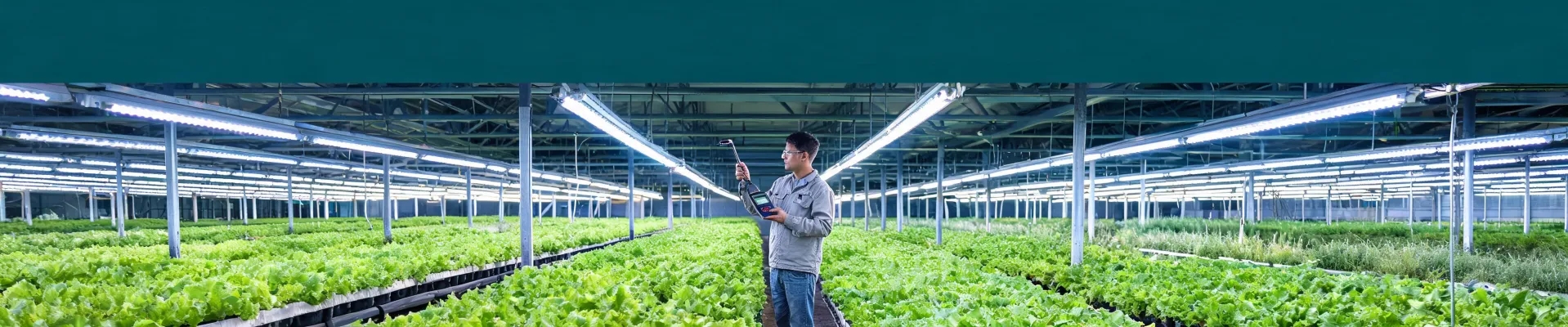
If you're sourcing bulk grow lights, don't start with the per-unit quote. Start with exact model, supply model, and compliance pack. For Gavita grow lights—especially a specific SKU like the Gavita HGC906410 RS 1900E grow light—the difference between a smooth rollout and three months of returns usually comes down to three checks: the SKU on the PO, whether the order is OEM or private label, and whether the light fixture manufacturer can repeat the same spec, packaging, and paperwork on the next shipment.
Three checks. That's it. Not five. Not a 40-page RFP. But if you skip them, you'll feel it later.
Why I stopped trusting the lowest upfront quote
When I took over purchasing in 2020, I assumed the lowest upfront quote was the right place to start. Three budget surprises later, I learned that total cost of ownership—not unit price—decides the project. I'm the office administrator for a 180-person company. I manage facilities and lab supply ordering—roughly $420,000 annually across 11 vendors. I report to operations and finance, which means I get to see the invoice after the excitement wears off.
In 2024, we consolidated a lighting order across two rooms and one small greenhouse. We had quotes from a brand-name distributor, a wholesale grow light supplier, and a light fixture manufacturer that offered both OEM and private label. On paper, the private label option was attractive. It was not the full story.
I went back and forth between the established Gavita channel and a lower-cost private label for two weeks. Established offered traceability; private label offered flexibility. Ultimately we chose the option with documented specs and replacement parts because one missing driver connector would have pushed the install past the grant deadline. The risk wasn't worth the delta.
OEM vs private label for horticultural lighting: what actually changes
Here's the thing: horticultural lighting OEM vs private label is not just a logo decision. It changes who owns the spec, who handles warranty, and what happens when a batch fails.
OEM usually means the light fixture manufacturer builds to your spec or a mutually agreed spec. You may control housing color, connector type, driver brand, cable length, and packaging. Private label usually means you put your brand on an existing platform. You get speed and lower tooling risk, but less control. Sometimes less control is fine. Sometimes it is a trap.
The counterintuitive part: OEM is not automatically more expensive, and private label is not automatically cheaper. I've seen private label quotes come in higher because the supplier had to reserve production capacity, create custom cartons, and manage a smaller MOQ. I've also seen OEM quotes work because we accepted the manufacturer's standard driver and only changed the label. Specs, compliance, supply. In that order.
If you're comparing a Gavita HGC906410 RS 1900E grow light to an OEM equivalent, don't stop at wattage. Ask about driver version, dimming protocol, connector type, mounting hardware, and whether replacement parts will be available in 18 months. A fixture is not a light bulb. It's a small system.
Where Gavita fits in a bulk grow light order
Gavita is not a no-name bulk grow light. That matters for two reasons: traceability and channel expectations. If your project specifies Gavita grow lights, your procurement file should show the exact model and the authorized supply path. If you're an OEM or private label buyer, you may be sourcing similar horticultural lighting under your own brand—and that's where the paperwork gets messy.
For a model like the Gavita HGC906410 RS 1900E grow light, I would not accept RS 1900E alone on a quote. I want the full SKU, the current spec sheet, and a written statement that the driver, connector, and mounting kit match the sample I approved. (This was back in 2024, and our first quote had two versions of the same fixture listed under one line item.) That one omission cost us a week.
Bulk grow light orders also need a serial or batch tracking method. Not because every fixture fails, but because if one does, you need to know which rooms are affected. A simple batch code on the carton is enough. If the supplier can't do that, escalate.
The 8-point pre-PO checklist I use now
We didn't have a formal spec-approval process. Cost us when a shipment arrived with the wrong connector—not wrong enough to reject the whole pallet, but wrong enough to stop installation. The third time something like that happened, I created this checklist. Should have done it after the first time.
- Full SKU, not nickname. Confirm the exact model, including the Gavita HGC906410 RS 1900E grow light if that's the reference. Match it to the spec sheet.
- Supply model in writing. Is this OEM, private label, or standard distribution? Who owns the warranty?
- Sample approval. Keep a signed sample or photo set. Driver, connector, lens, mounting hardware, label.
- Compliance file. Ask for safety listings, declarations, and testing documents. Don't repeat marketing claims you can't substantiate. Per FTC guidelines (ftc.gov), advertising claims must be truthful, not misleading, and supported by evidence. That applies to lighting brochures too.
- Packaging and labels. Private label orders should have a packaging proof. OEM orders should show what stays and what changes.
- MOQ and lead time. Get the MOQ by SKU, not by product family. Mixed cartons can change the lead time.
- Replacement parts. Drivers, connectors, hanging kits. If they're not available, your 24-month plan has a hole.
- Invoice and RMA path. Before the PO, verify who invoices, who handles returns, and how credits are issued. The vendor who couldn't provide proper invoicing cost us $2,400 in rejected expenses. I don't sign without this now.
That list is not glamorous. It's also the lowest-effort insurance I've found. Five minutes of verification beats five days of correction.
What this approach doesn't solve
This checklist won't tell you which spectrum is right for your crop. I'm not a horticultural scientist. It won't replace a lighting layout or a proper energy model. And it won't make a one-off purchase worth the hassle; if you need two fixtures, buy from an authorized distributor and move on.
It also won't fix a bad supplier relationship. If a light fixture manufacturer keeps changing specs without notice, the checklist just documents the problem faster. That's still useful—you can exit earlier.
For bulk grow light projects, the goal isn't to win the quote. It's to make the install, invoice, and replacement cycle boring. Boring is good. Boring means nobody calls you at 4:45 p.m. asking why half the room has the wrong connector.
If you're comparing horticultural lighting OEM vs private label, start with the supply model. Then check the SKU. Then check the paper. The price comes last, not first.

Adrian Flores
Adrian Flores is an architectural and decorative lighting analyst specializing in pendant lights, chandeliers, wall lights, floor lamps, table lamps, and track lighting. He applies IEC 60598-1 luminaire requirements and photometric data to examine beam angle, shielding, surface temperature, mounting geometry, dimming compatibility, and glare. He writes practical guides for designers and buyers balancing visual character with usable illumination, safe installation, maintenance access, and total project cost.